Part 3 – “The Water Doctor”

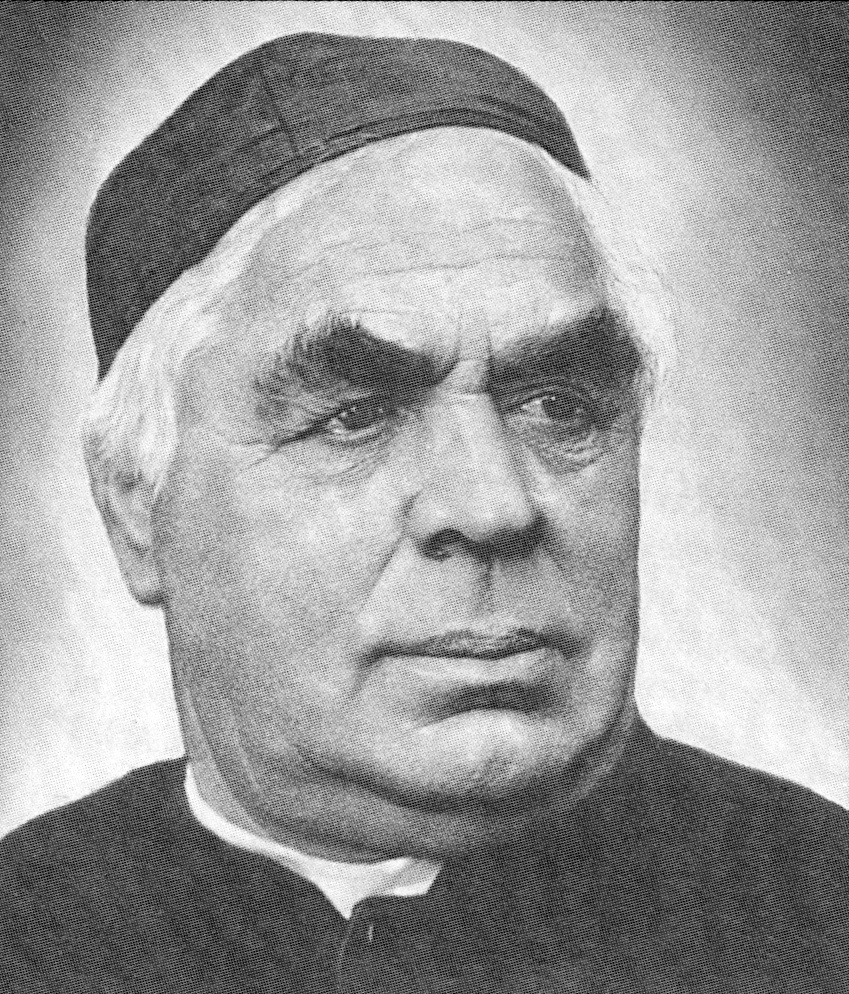
Father Kneipp

The water doctor

Sebastian Kneipp was by no means the inventor or the first one to use ‘water’ for healing. The Persians used water therapy 5000 years ago, the Romans did several hundred years ago followed by a decline caused by an outbreak of venereal diseases. (Too many unwashed bodies sitting in the same pool) Two medical doctors, Father Siegmund and son Johann Siegmund Hahn are credited with bringing the idea of using water to improve health back to life in the very early 18th century. The little book “The Effect of Water unto and into the Human Body” (loosely translated) was the next BIG step in the developing water therapy. Before S. Kneipp discovered this book and used its recommendations, got well and is now known as “The Water Doctor” several other personalities using their own form of water therapy need to be mentioned.

A farmer’s son, Vincent Priessnitz in Austria with similar experiences as the later living Kneipp. Johann Schroth, who developed the “Schroth Kur” involving some water therapy, extreme fasting with very light vegetarian food, walking and interesting ‘dry’ and ‘wet’ drinking days. The ‘wet’ days starting with a glass of light wine. This “Kur” is still offered in Oberstaufen, Bavaria and people from far and wide attend. Another, a very sick man coming from USA was Benedict Lust who spent time with Father Kneipp as well as attending the Oberstaufen Kur, got well and started the “natural healing movement” in America. He studied medicine and became one of the founders of modern Naturopathy on his continent. There were a number of others, especially in the UK, who contributed to the development.

Father Kneipp started out with just cold water. He insisted to get warmed up before any treatment through wood splitting or fast walking and having a bed rest covered in blankets after the treatment to induce the body to heat up and sweat out the disease causing impurities. The rule is “no cold treatment on a cold body.” To go back to bed for up to an hour after any prescribed water treatment is still followed to this day. The reason is to get the body to respond, create warmth and thereby also affect the immune system. During the last twenty years of his life (he died 1897) Father Kneipp gradually changed his approach. As he saw not just tough hard working men but more and more aristocrats, weaklings in his estimation who had to be ‘built up’ he came from cold water to alternate and from full body immersion or ablutions to partial body treatments and warned ‘no two treatments on different body parts one after the other.’ So if the legs were treated in the morning you did not get a treatment for the arms or the upper body until the afternoon. There should be at least three hours between applications. For physiologic reasons the medical profession confirmed the wisdom of it, once they got involved.

“I bequest my system to the medical profession with the challenge to keep it, improve it but mostly, make it accessible to all.” That was written in his testament. Over the years following his death there were disagreements between the Brotherhoods who had received his sanatoria and different doctors. After WWI wounded and recovering soldiers were sent to Wörishofen for rehabilitation. During the time of the Great Depression until after WWII there was a decline but the flood of wounded soldiers during and after WWII caused a resurgence of the “Water Cure”. A few years after the West German Republic was founded and life had stabilized, the German Insurance companies paid for a “Kneipp-Kur” for their members when prescribed by a medical doctor. It proved less expensive than other methods of rehabilitation. In the nineteen-eighties the Insurance companies even started to build their own sanatoria. The Austrian Government approved a study with 15.000 people led by trained Kneipp-Doctors which proved without a doubt that the group treated with conventional PLUS Kneipp treatments recovered much faster than the group treated the old way and reduced the health care cost by three times.

An International Kneipp Organisation and a Kneipp Doctors Association were founded before Kneipp died and they encompass now thousands of people worldwide. You’ll find Kneipp groups in almost every German town and in most of Austria, Switzerland and other European countries as well as Africa. More than anywhere else Kneipp Spa sanatoria are all over Germany, often the treatments combined with climatic or terrain cures. The full “Kur” consisting of three or four weeks, requires one to be under medical supervision, and now rests on five pillars:

  1. Water: Treatments consisting of all forms of water: Cold, warm, alternate, steam; full body treatments or partial treatments with water from washings, immersions, ablutions, packs, body wraps partial or full treatments according to the health issues diagnosed and prescribed by a certified Kneipp doctor. They are administered by a certified Kneipp Therapist.
  2. Herbs: The use of the healing power of herbs inside and out. Herbal infusions or extractions in all bath treatments.
  3. Food: Simple, healthy, wholesome nutritional food, diet if doctor recommended. Herbal teas although Kneipp also allows a wheat beer on occasion. At this point I would like to mention that Kneipp was the first to collect and catalogue herbs and healing plants which became the base for what we now know as “Naturopathy” and “Homeopathy.” Another man very much involved in this development was Kneipp’s former patient, Benedict Lust from America who is the “Father of Naturopathy” in USA.
  4. Exercise: Active and passive exercise. All forms of exercise from yoga to walking, biking and everything in between. Passive exercise consists of all forms of massage used to increase circulation.
  5. Emotional and spiritual balance: Kneipp said: “In all my years of treating people I have never found any healing taking place until emotional and spiritual balance was restored.”

                 “DO NOT FORGET YOUR SOUL”

Very refreshing water stepping

Very refreshing water stepping

The easiest water treatments are the ‘water stepping’ and the cold ‘arm bath’. All Kneipp Spa cities and most Kneipp Groups in villages and towns have established water stepping sites along their hiking and walking trails in forests, meadows, and many resting places in parks. After a good hike the water stepping is very refreshing and surely will avoid swollen and tired legs. The water usually comes from a stream and is quite cold. You walk through the basin two or three times like a stork, lifting the leg out of the water for an exchange of air-water, air-water until the cold “bites”. Now it’s time to get out and walk on the adjacent lawn until your feet are dry and starting to get warm; sit down on a bench and put socks and shoes back on. Just use your fingers to rub the place between the toes dry to avoid the moist warm spots that fungus likes.
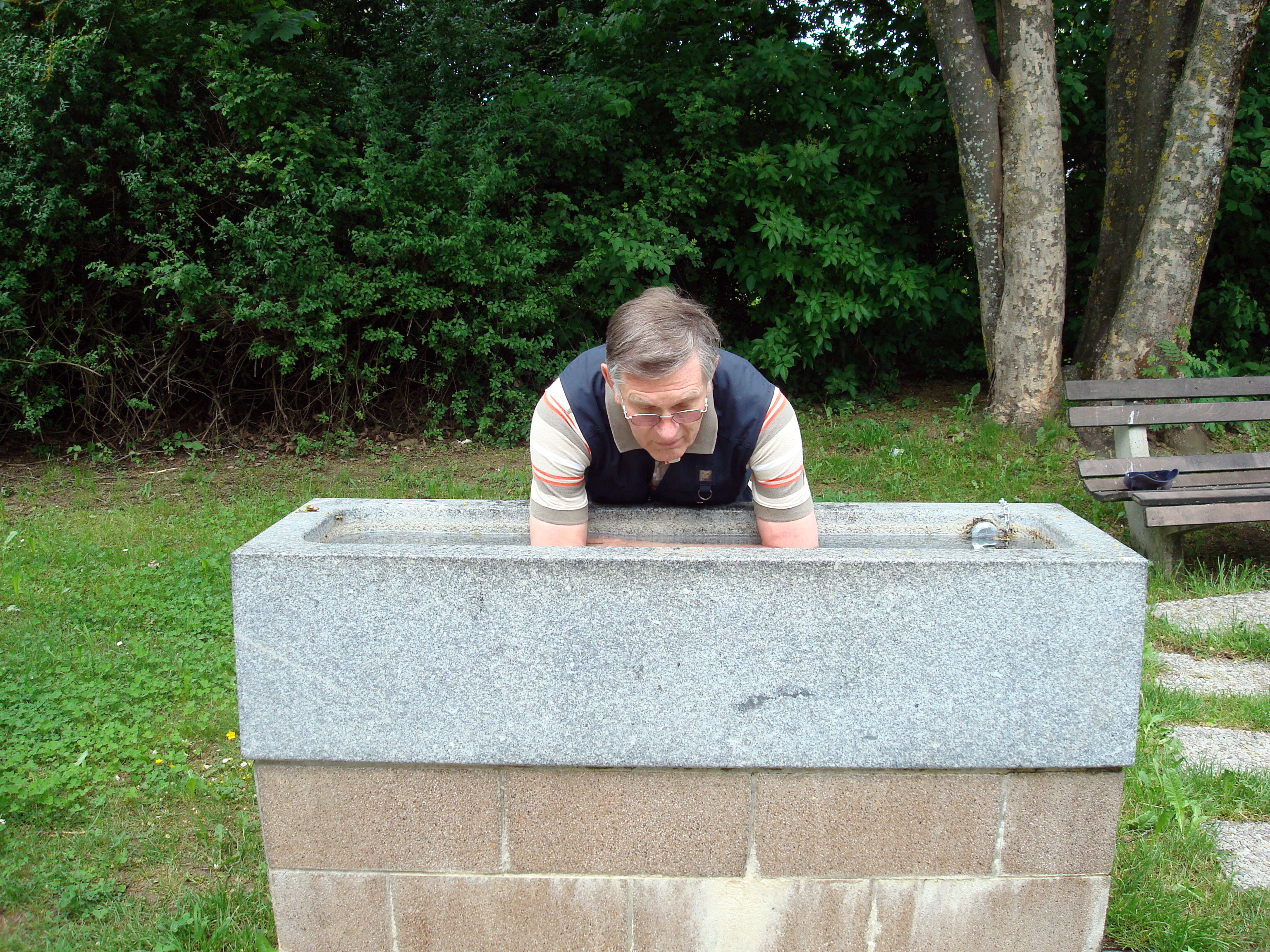
Arm bath after a long bike ride

Arm bath after a long bike ride

Usually next to the stepping basin is also an arm bath trough. A sign tells you NEVER do both, the stepping and the arm bath. Many people prefer the stepping for the incredible feeling of wellbeing. The arm bath feels refreshing as well, it especially clears your head, lifts your mood, and in general is good for your heart, lungs, brain. Take a deep breath before you dip your right arm in first, followed by the left and   e-x-h-a-l-e   deeply. Now breathe normally. Count to about twenty or thirty or wait until the cold ‘bites’. Lift the arms out, stroke the water off with your hands and swing the arms until dry while walking around on the nice lawn next to the stepping basin. Make sure the hands and arms get warm again. It feels good to wear a long sleeved shirt or something of that nature after the bath.

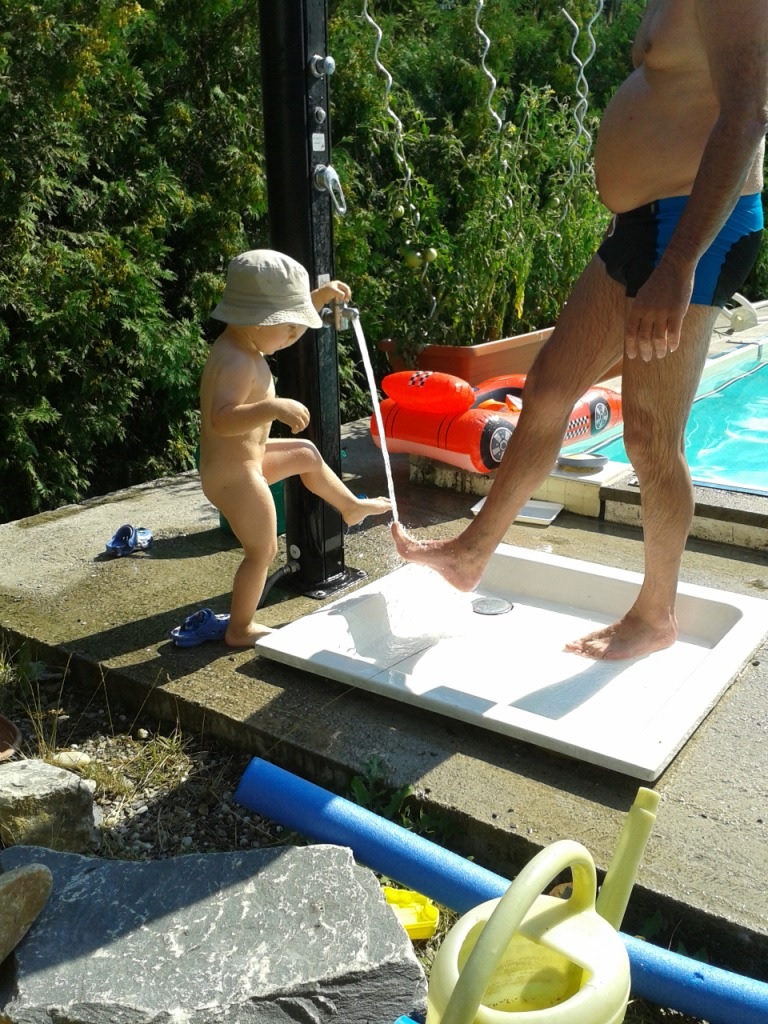
In both cases, water stepping or arm bath, – do not use a towel to dry the skin! Stroking the water drops off and letting the air dry you, is the water doctor’s prescription! By the way, you can do water stepping in your bath tub and a cold arm bath in your sink at home.

my first bookFor detailed advice on how to use water for healing at home, order my inexpensive booklet with photos from: https://giselleroeder.com/bookstore/ or send me a message on my FB page https://www.facebook.com/WeDontTalkAboutThat since I still have a few copies for the special price of $7.00 plus (approximately) $4.00 postage.

Part 2 – “The Water Doctor”

1-image0

Early Sanitoria in Woerishofen

Can you imagine the triumphant reception when Father Kneipp returned from Rome to his small little village? Not excommunicated, but praised by the Pope? The simple folks at home had trouble pronouncing and calling him ‘Monsignor’ – but he just laughed and said ‘don’t even try, I am what I always was, your ‘Father Kneipp’. He had been sent to Wörishofen by the Archbishop to hide him away, to get him away from the ‘water splashing’ and just be the Father Confessor to the nuns of the existing convent in a small village in the middle of nowhere. These nuns were mainly second and third daughters of rich aristocrats who couldn’t be “married off “, a privilege reserved just for first born babies, sons to inherit and daughters to marry other heirs. The nuns had spent their days singing and praying and were shocked when Father Kneipp told them “Ora et Labora” – pray and work, because work is a form of praying. He ordered them to tend the overgrown gardens, plant and harvest vegetables for the convent’s dinner table and establish an herb garden. They had to perform kitchen duties and clean their own quarters. Tears and complaints about ruining their soft white hands in dirt and sun did not result in suspension from work; pretending to be sick or having a sore back resulted in being treated with water.

The convent was close to bankruptcy despite owning fast stretches of land, meadows and acreages, forests and streams. Father Kneipp found the acreages and meadows were “sour” but knew the farmers would not accept his advice, the advice of a priest, who knew how to change it. Therefore he invented “Fritz” and wrote booklets about “Fritz, the successful Farmer”, “Fritz the Bee Keeper” and several others. The advice was followed and the land became rich and fruitful, the farmers were happy and the convent thrived with “Fritz’s” help.

Despite his book “My Water Cure” to keep them away, health seekers and especially poor people kept coming. The laundry room of the convent became the first treatment center. The odd items used in this “Wash House” are displayed in a specially built hut at the ‘Promenade” in what is now ‘Bad Wörishofen’. Several nuns and handpicked men became helpers and the first therapists. A few curious doctors asked permission to attend Father Kneipp’s hour of seeing people and hoped ‘to trip’ him. The deep knowledge of the human condition and his uncanny right diagnosis, but especially his healing success puzzled them. Some stayed on to learn, others went home all over Europe to start their own ‘Kneipp Spa’. An ever increasing stream of visitors with no accommodations aside from hay barns enticed entrepreneurs to start building hotels, guest houses and restaurants. Kneipp had written more books. He used the royalties and the donations freely given by the wealthy to build two sanatoria, the “Sebastianeum” and the “Kneippianum” and a wonderful “Children’s Hospital” where a mother or father could stay with their sick child until ‘cured’. Kneipp, once upon a time a very poor boy, was now considered “rich” but in truth he did not own anything. He donated those buildings to different catholic brotherhoods (i.e. the Benedictines) to run and take care of other health seeking brothers. There is a rumor the “Sebastianeum” was empty on many nights – and since one entrepreneur had built a hotel for nuns close by that’s where the brothers could be found… Don’t take my word for it! The Children’s Hospital was given to a convent and run by nuns.

Presnt Promenade Bad Woerishofen

Promenade Bad Woerishofen

I have stayed in the now, available for both sexes, “Sebastianeum” (168 beds) several times. I always felt close to Father Kneipp as all his advice and his teachings are followed there. I consider him to be one of my spiritual fathers. The “Kneippianum”, still run by nuns today, was developed into a highly specialized clinic for heart disease, employs the best doctors; it owns all the diagnostic machines and tools to diagnose and treat patients scientifically, always complemented by Kneipp therapy.

Let’s go back to Kneipp’s history. He saw up to 200 patients a day. He treated everybody the same, calling them by their first name, rich and poor. He ordered everybody to go barefoot and split wood for exercise, including the Archduke of Austria as well as the Maharadsha with forty attendants from India. Kneipp invented the sandal to give the feet the much needed ‘air’. He visited the Children’s Hospital daily. He fulfilled his duties in the convent as Father Confessor for the nuns as well as his duties when he was voted in as the village priest. He was always available for the farmers who now trusted his wisdom about agriculture. He was called to many surrounding villages to treat or spiritually help the ones who could not come to him. He held daily lectures in an open area about the different aspects of health, often attended by up to 5.000 people. Pearls of wisdom about each aspect he was ranting and raving about made it into our day:

“Fresse and saufe wollet se all” = you all want to eat and drink like pigs but nobody wants to die. When you feel you have eaten you have already eaten too much.”

2-image0-001

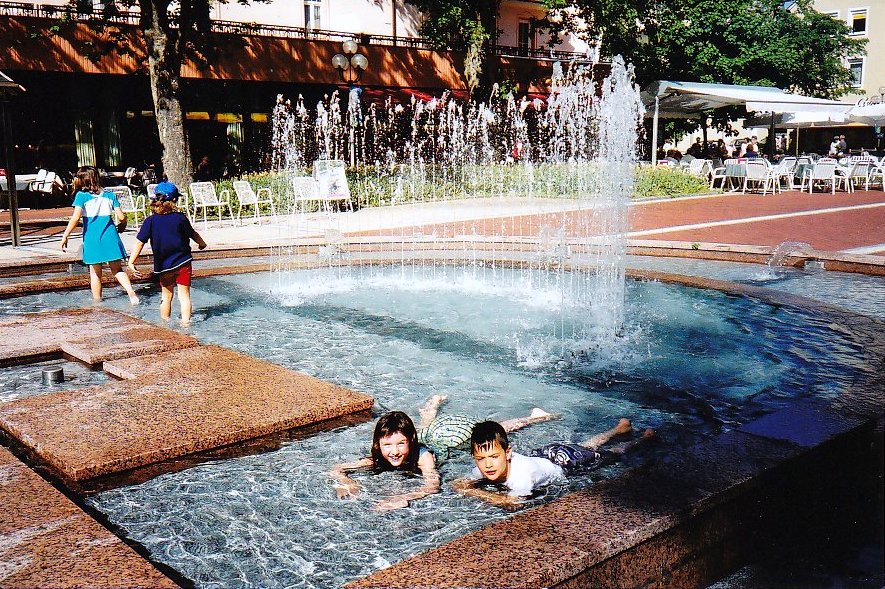
Bad Woerishofen has many fountains – kids love them!

Part 3 will deal with his treatment system as it was developed and used to this day.

German Unification Day

Tree re-unitedThe People of Germany have a special cause for celebration today! It’s their “Unification Day”. East and West Germany were two countries since the close of WWII. They were united in 1989 and are happy to be “ONE COUNTRY” again. For me, having lived through WWII and seen the total devastation but emigrated to Canada in 1963, it is absolutely amazing what and how much the people of Germany have achieved. From saving and cleaning each brick from the rubble their cities were, rebuilding totally destroyed ones and now enjoying one of the highest living standards in the world. My sister tells me not to be blinded by the luxuries visible because despite all, there are many pensioners and  unemployed who have trouble making ends meet with the high cost of living and expensive rents. And still, the country is a strong pillar in the European Union, maybe even the strongest.

When I saw the photo of this tree this morning, placed by someone on Facebook, I couldn’t help but think of the divided Germany and the long years it took to grow together again. Just as the tree shows the healthy growth on top of the united two halves, so does Germany. Let’s hope the roots are strong enough to hold up the ever growing ‘crown’.  For me, – the 5th of October is also worthy of memory. It was the day I escaped East Germany. To this day my heart beats faster just thinking about it. Hundreds of thousands escaped to the ‘Golden West’ risking life and limb. Finally, they built “the wall” to keep their people ‘in’, not to keep unwanted people ‘out’.

For you, who want to know more about the history and rebuilding of Germany since WWI, through WWII and the after effects without reading large history books pick up my compelling book “We Don’t Talk About That” with the compressed political background easy to understand and, as some readers say “understand for the first time” why and how it all happened. The story you’ll read is one of an ordinary German family which stands for thousands of others who lived through the same trials and tribulations but to this day ‘don’t want to talk about that’.

German flagThe Germans have a very good reason to celebrate their special day. Nobody, absolutely nobody, ever expected it to happen; to be able to climb, dance on or hack at, scrape and tear down the Berlin Wall, without any shots fired, without another war happening.

TO BE UNITED AND BE ONE WONDERFUL COUNTRY AGAIN…

Father Kneipp, the “Water Doctor”

Actually I thought my doctor would laugh at me when I gave him my book “Healing with Water.”

“I accept it”, he said, “and I’ll read it.”

He knew I had been to the Kneipp spa city of Wörishofen in Bavaria several times and always came back much improved. He had asked me a couple of years ago what they do there but he couldn’t quite wrap his head around it. A doctor never has enough time to talk of other things but what is ailing his patient right then and there. Some weeks ago I had come back to learn of my test results. The first thing he said was “I read your book. I like it. I have to read more. I’ll get myself a hose…”

Can you understand how I wished I could explain more to him? But no, a doctor is always in a hurry to see the next patient. There is no time. I was inspired by what he said and decided I’ll tell YOU about the history and how the “water treatments” came to influence the health system in Europe during the 19th century.

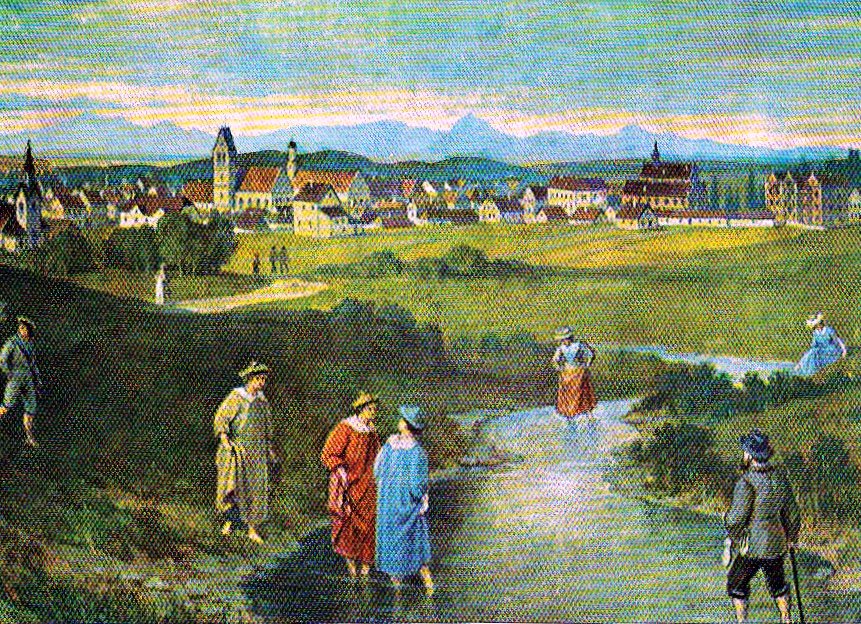
Bad Worishofen

Remember the cow?

Imagine a little boy, born to a poor weaver’s family in 1821. He had to work as soon as he could walk. His mother collected edible weeds and healing plants. He learned eagerly, and with great interest. At only four years old he had to earn his keep by herding a farmer’s cows out into the meadows. When a cow tripped and hurt her leg when drinking from a small stream little ‘Bastian’ was afraid he would get punished for the cow limping. He watched her stepping into the stream, standing there in the ice cold alpine water, lifting the hurt leg up and after a few seconds putting it back down. It went on for nearly an hour. When driving them home the cow walked normally. He never forgot that experience. At seven years old at dinner, consisting of just boiled potatoes, he reached for the little salt shaker, just as his dad was doing, to sprinkle it over the potatoes. His mom slapped him “You don’t earn your salt yet…” During the winters he had to help his dad in the basement with the weaving. As a young lad he started to spit blood.

“Don’t worry”, his dad said, “all weavers spit blood.”

Cold water foot bath

Children naturally love water

Already at a very young age he expressed his wish to become a priest. They seemed to be well fed and they could be in the beautiful basilica they attended Sundays, any time they wanted. “If God had wanted you to become a priest He would have given you rich parents.” He hardly had any schooling, knew only what the cobbler in the village tried to teach the young to at least be able to read and write. But our little guy was determined to enter the church. One problem was that he had to learn Latin. Nobody wanted to help him until he approached and convinced an uncle, himself a priest in another town. His uncle found a school for him and he taught him Latin in the evenings. As a teenager he got a rampant lung disease and was laid off for a long time. He thought of the cow in the stream and started to jump daily into the cold waters of the Danube. He did not own a towel so he would get dressed quickly and run home as his blood circulation was heating up his body. Incredibly, he recovered and finally, at 27 years of age and against all odds he was accepted at the priest seminary of the university in Munich. Working in the university gardens, having very little food and studying long hours he got TB again. He came across a little book in the university library, written a century earlier by two doctors Hahn (father and son) about the ‘Effect of Water into and unto the Human Body’. He had nothing to lose and started following their program. He could not jump into a river but he used the watering can behind the university garden shed to “water” himself. Again, he harnessed the disease and other students came to him, begging to be treated as well. I don’t have to tell you about the difficulties he got into because of it but despite everything – in 1852 he had reached his goal: He passed the rigorous health test and he was ordained as a priest.

Years later with many ups and downs he became worldwide known as “Father Kneipp – The Water Doctor.” He could never say ‘no’ to a poor soul needing not only spiritual but also physical help and couldn’t afford a doctor. During a cholera epidemic he was the only one looking after the sick, dying and dead. He was referred to as the “Cholera Chaplain”. He was a much loved priest but over time he also developed a system of water treatments. First only the poor, then the aristocrats, even Royals and the rich and famous came to his small hamlet to be “cured”. The church was very annoyed with him since he was supposed to be looking after the souls and not the bodies. To keep the people away he wrote his first book “My Water Cure”. At first, no publisher wanted to print it but finally one was willing and estimated no more than 500 could be sold. The book sold more copies than the Bible and was translated into 17 languages. People did not stop coming. Doctors and pharmacists complained bitterly about him and achieved an order for Kneipp to come to Rome. The church planned to excommunicate him. The Pope interviewed him, dressed as a simple monk the evening before the ‘trial’. Before the ‘monk’ left he asked Kneipp for advice on his sleeping problems and decreed that Kneipp was “driven to help and heal” and not at all for financial gain. The next day the Pope praised Kneipp publicly and assigned him the title ‘Monsignor Kneipp’. As he received the Pope’s blessing the Holy Father announced:

“I want you to go home and keep on healing.”

I will tell you more of the system Sebastian Kneipp developed. His legacy was left to the medical profession with the challenge to “Develop my system further and make it accessible to all.” It is known as “complementary medicine” and saves the insurance companies a bundle.

I was certified as a Kneipp-Therapist in Germany. I wrote my little book “Healing with Water” to help people on the American Continent who knew nothing about this simple method to stabilize their health.
(Available from: Amazon – Chapters/Indigo – Barnes & Noble)

Father KneippFather Kneipp advised:

“He, who has no time to spend a few minutes a day for his health will have to have time to be sick for weeks, months, or even years.”

Party – Party – Party!

Party timeCome on, pretty girl, I know you are a party animal, put on your party dress, don your party hat, get into the party spirit, become the life of the party, get ready to join the party waiting for your birthday party to get going on the party boat and by no means be a party pooper!

Bad news: A man of the hunting party got lost, now you have to join the search party because you are part of the rescue party.

Important for your country: A governing political party calls an election. If you are a member of any party, be it the Conservative Party, the Liberal Party, the New Democratic Party or a party by any other name you have three choices: 1. become a passionate supporter and volunteer to help your party, 2. decide you couldn’t care less because the party leaders never do what they promise anyway (but in that case don’t complain if the ‘wrong’ party wins!) or 3. be adamant to use your RIGHT to vote for the party who’s platform you support.

There are so many uses of the word “PARTY”. Some sarcastic, cynical or even humorous person tried to explain how a political party consists of a means for a lot of politicians to have their own way of conducting politics. What is or are politics? Take the word apart: ‘Poli’ in Latin or Greek means ‘many’, and ‘tics…’ you know what ‘tics’ are and what they do. Tics are bloodsuckers, says Wikipedia.

I remember in the sixties I visited Ottawa, the Canadian capital, and I also toured the Parliament Building and attended the House of Commons. I was shocked when, during the question period, they were screaming at each other and some of their comments were surely insulting. But it was exciting. I came home and announced to my husband I wanted to join a party, make a difference and get really involved. He just laughed and said “You? My God, when they call you names and threw insults at you, you would just break down and cry! No, my dear, you are not made to be a politician!” I knew he was right.

Occasionally a new party forms because someone has good ideas to improve the way a governing party runs the country. This someone tries to get likeminded people together and sometimes they succeed to make a difference in party politics. Many years ago a friend invited me to a meeting of about a dozen people. We met in the living-room of her apartment. A small number of people had registered a ‘Reform Party’ in Canada. The leader, Mr. Preston Manning, was not an impressive figure but a down to earth man who honestly wanted to make things better for his countrymen. I wanted to support the movement and became a member with a very low membership number. When I was called upon to join the volunteers and man one of the recruiting tables during a public membership drive I copped out because I was too busy. I went to a Rotary meeting where Mr. Manning was the speaker and felt very sorry for him because he was not groomed to be a leader yet. He also repeated himself often and I could sense he was very uncomfortable amongst all the Rotary business people. I left the meeting during the discussion after his speech. When I came out of the meeting room door many media men with huge cameras surrounded me and started to ask questions as if I had been the speaker. They wanted to know what I thought, what the speaker had said, what the questions were during the discussion. I was very professional and answered carefully. Later that evening several friends phoned me during the “News” telling me they had seen me on TV. I waited for the next news and was shocked how they had manipulated my answers and what I seemingly had said. What I really had said was totally different. Since that experience I try to stay out of the media limelight or would answer “no comment”. The Reform Party later merged with the Progressive Conservative Party to form the Conservative Party of Canada. The word “progressive” was dropped.

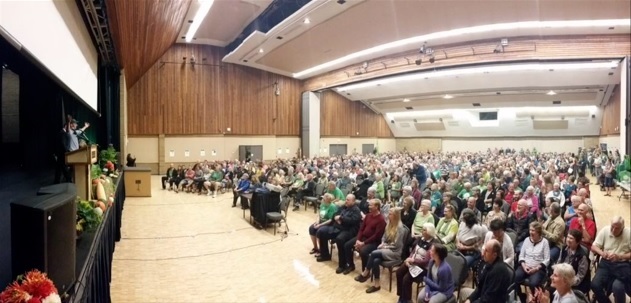
I think it must be close to fifty years since I had almost become involved in party politics. I have always taken my right to vote very seriously and never missed one election. Another is coming up in my country. The female leader of the “Green” movement had captured a seat at the last election in 2011 and apparently has made quite an imprint across the country and internationally. She was going to speak in my town and introduce her local candidate for our riding, Paul Manly. With a small group of neighbors we went to a rally held in the exhibition hall, curious if the “Greens” could reach their audience goal of about 500 – 700. I have never attended any such meeting and couldn’t believe what was happening. The room filled up, hundreds of people were standing at the door until the many volunteers had removed the curtains hiding a few hundred more chairs and they streamed in. Every seat was taken. There was standing room only and many people waiting outside left because there was “no more room in the inn”.

Packed meetingOver a thousand people attended. I was awestruck by the energy emanating from the crowd. The leader, Elizabeth May, has incredible presence and knowledge and answered every single question thrown to her. She asked how many people were in the room who had not made up their mind who to vote for. A lot of arms went up. Her advice was to carefully listen to speeches, news, to every party leader and no matter what party they vote for, it is important to go and VOTE. She is aware that her party is too young to form the government but the “Greens” will support the others and work TOGETHER for the good of Canada.

Green rallyI find it is blatant discrimination that she is not invited to participate in joint party debates on radio or TV. Why is that? Are the male ‘contenders’ afraid of this smart lady who has a memory like an elephant and can answer any and all questions across the political spectrum? She remembers and quotes statements the other leaders have made at whatever meetings years ago, – with absolutely no written notes. She speaks freely; she explains and recalls, she has a platform almost too good to be true from child care to eliminating university tuition to senior care, pharmacare, climate change and the economy, nothing has been left out. She has been able to attract an incredible lineup of able candidates across the country and it will be very interesting to see what will happen when the date of the election comes around: October 19th 2015.

How Reading and Writing Influenced my Life

An on-line interview with Tina Frisco:

‘Little Red Riding Hood’, ‘Hansel and Gretel’, ‘Snow White and the Seven Dwarfs’ and ‘Rapunzel’ were the fairy tales my grandma told or read to me many times when I was a small kid. They stuck in my head and I believed they were true stories. These stories had a huge influence on my imagination. Even today I take some television shows to heart in such a way that I lose sleep over murders or behaviour unexplainable to me and I have to be reminded: “Don’t get upset, – these are just stories…”

Tina Frisco had definite questions for me and she made it easy to give her open and honest answers. Maybe for you, my reader, they provide a glimpse into my “inner workings”. Enjoy!

http://tinafrisco.com/blog/guest-authors-artisan-garden/giselle-roeder/

Climate Change, Weather or Just Mother Nature?

image0 (4)

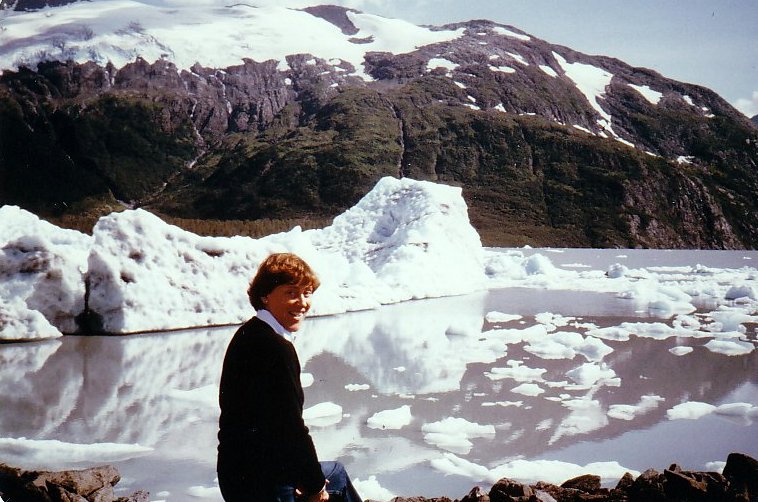
Alaska 1982

My first trip to Alaska was in 1982. I was overwhelmed by the beauty of this State, the mountainous terrain and especially the glaciers, their pristine ‘white’ and as the sun hit the ice was very blue, like a summer sky. I marvelled at the apparent flowing of ice into a colorful meadow with thousands of wildflowers. You could walk to the edge of it. Cruising to the Columbia Glacier Bay we had to wait for hours to see any ‘calving’ – the breaking off of shanks of ice and plunging into the sea. Seals with their round black shining eyes and seabirds were waiting on ice floats for a passing fish and elegantly diving in or sliding off to catch their meal. What impressed me most was the incredible stillness and on and off the cracking in the glaciers sometimes evolving in a roar when a large piece just slid off and, causing a huge fountain of water, disappeared. Our cruise ship crew would lower a life boat and try to bring up some big pieces of ice. Some of the crew were masters in creating fantastic carvings which would grace the midnight buffet tables. We were treated with the smaller pieces in special drinks and if you would let the ice melt or take it into your mouth it tasted good. We were even allowed to keep the tall fancy glasses as souvenirs.

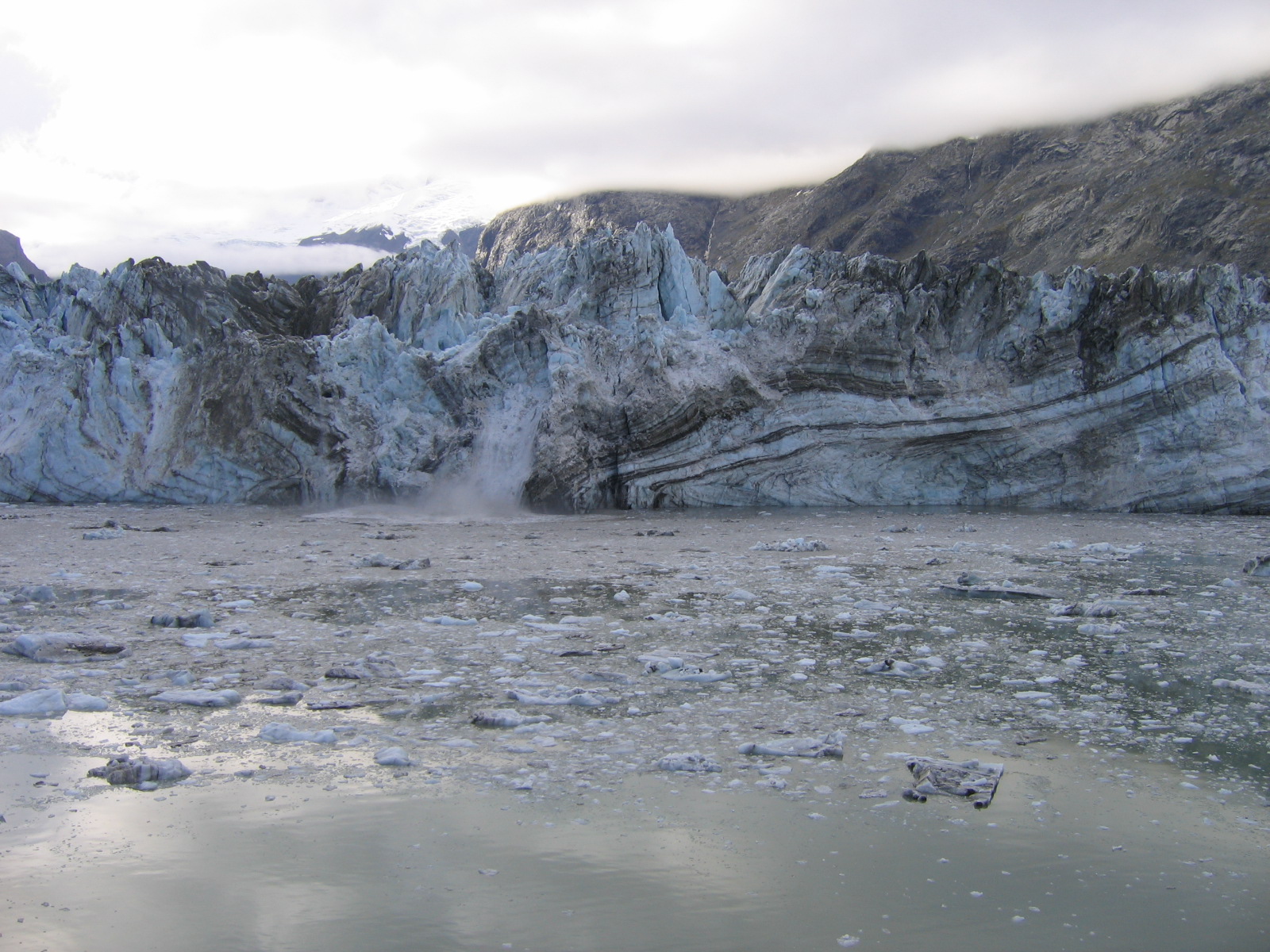
Alaska 2006

Alaska 2006

I have been back to Alaska during the years since on eleven other cruises up to 2012. Each time I would try to see the same sights I had seen during my first visit. The flowing ice river into the meadow had retreated each time and by now has disappeared altogether. The glaciers look ‘dirty’ – no more the pristine white color. The calving happens every few minutes and no life boat is lowered anymore to pick up ice floats for carvings or drinks. Maybe the laws have changed? I noticed that the wildlife has disappeared as well. The Mendenhall Glacier close to Juneau, the capital of Alaska, has retreated quite a long way, – it seems to be lower as well. I wonder if the water level has gone up with all this melting ice. What about the sea life, like whales, fish and other creatures, is their living environment changing? You betcha! The water is warming up as well and is not livable for certain other species. ­

Climate change? Environmentalists and naturalists have been talking about it and warning us for years, but incredibly, a lot of leading politicians do not believe in it. The other day I heard a fabulous group of singers perform a song with the line “He doesn’t believe in climate change because it’s not on the stock exchange” – making fun of a certain political leader.

Mendenhall Glacier Alasca

Mendenhall Glacier Alasca

What about the floods we have been experiencing? What about the hundreds of fires caused by lightning or stupid peoples’ behaviour (cigarette butts & camping fires) burning down unbelievably huge numbers of square miles of forest in Canada and valuable land in California repeatedly, year after year? What about the appearance of bears and cougars in our cities? What about the drought in the wettest part of Canada for instance? No snow during the winter and no rain for four months, but unusual spells of hot weather? Or in other areas so much snow that neighbors had to shovel out neighbors. No grass for animal grazers, storms uprooting huge trees taking boulevards and lawns with them like carpets, damaging cars, houses and killing if someone is at the wrong spot at the wrong time. Hail the size of golf balls and even larger causing billions of dollars in damage. Is all this due to bad weather? Is Mother Nature punishing us? Or do we face a serious case of climate change? Do we have to start thinking of building a copy of ‘Noah’s Arc’ to save the known species?

Alaska 2012

Alaska 2012

Just some thoughts of mine and I know I’m not the only one having this on my mind. If you haven’t thought along these lines, start thinking. What can we do about it before it is too late? We are able to fly to the moon or to Mars, even land a space probe on a distant comet – but we do not seem to have the political will to save the only planet that should matter to us: Planet Earth!

Share your thoughts by posting a comment.


A Bad Hair Day, Hair is in or Hairy Politics?

Bad hair day

I couldn’t help it. I had a really good laugh when by chance I read an article in the National Post written by Canada’s ‘Queen Bee’ writer Margaret Attwood. She gets awards left, right and centre for every new book she writes. One could turn “Green with Envy” – but I have to admit as of yet I have never finished reading a whole book of hers. Oh yes, I have started several. But this column in the National Post is hilarious. I would give her another award for it!

http://news.nationalpost.com/full-comment/hair-is-in-the-election-season-air-but-is-it-crucial-to-your-vote

Click on it and read it for interest or read it for fun. I was surprised that it was published at all and then I read a day or two later that it had been taken off the website by the editor but then a censored version was re-published an hour or so later. I would love to see the original, – or is what I read, the original? Oh Margaret, – I congratulate you on this dare devil write up, I love how you tackled a political ‘question’ with humour!

Kids and Kittens

Kittens - 2

Me – feeding our cats sausage

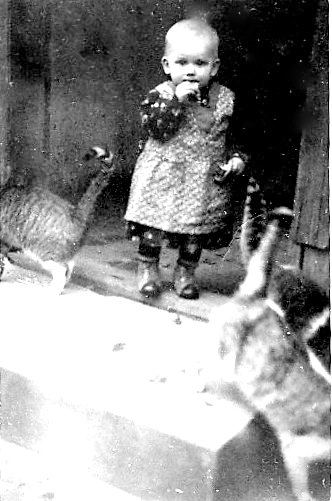
Cats were always around when I grew up. Mother had her cat ‘Molly’, Father had a gorgeous but fairly old cat ‘Peter’ he had owned already as a bachelor. Granny, who lived in the “Granny flat” part of our house, had a cat she called ‘Katzi’. They all were free to come and go and also choose who they wanted to play with, or sit with, or be stroked by. Katzi and Molly preferred to stay away from us children. Essentially they were “mousers”, – meaning they were not ‘house cats’. Tthey lived in the barn or stables of our small farm, hunting mice and rats. Sometimes Father would put a cat down into the root cellar when he had seen mouse droppings. They did a rather good job in doing what they were supposed to do. They did not eat all they hunted. Sometimes Father found a row of dead mice or rats lined up, the cat sitting there, looking up at him expecting a ‘thank you’, which they promptly got in form of words and strokes. To me it always seemed his strokes were worth more than ours.

Kittens - 3

My greatest love

My cousin Renate’s cat had several young kittens when I was nine. My sister Christel and I each got our very own little kitten. Christel’s cat was all black with yellow eyes; mine had a white underbelly, white boots on its hind legs and white shoes on its front legs. She otherwise had a mottled grey coat, but also had one white ear and a white nose. I called her Mooshie. I loved her more than my dolls. Often I dressed her in doll’s clothing and let her sleep in my doll carriage. Once, she got scared and jumped out and tried to run away. She repeatedly stepped on the dress she wore and tumbled about. It was very funny and we laughed heartily. My father happened to see the cat and gave me a good lesson: “If you love Mooshie, you won’t do that again. If she has to defend herself she will not be able to do so and if she climbs up a tree she will not be able to come back down.”

That happened in the same year when my mother’s cat Molly had a very bad eye infection and my father had to shoot her. It disturbed me greatly. He explained he was being kind to the cat. He cried when he shot his own old cat, Peter, a year later, when it was full of arthritis and could not walk anymore. Peter looked my dad straight into the eyes as if he knew what was coming. It was a very emotional moment for me. I will remember the expression in Peter’s eyes forever. I always wanted to have a cat like him.

One sunny afternoon we older kids were sitting on the broken steps leading up to our house and talking about this and that. The weather was very warm and we were bored. Looking up I saw my cat, Mooshie, coming towards us carrying what I thought was a mouse. She came right up to me, put the little thing down in front of me, looked me in the eye and said, “Meow” with a question mark.

“Mooshie”! I called out, “What is that?” She looked at me again and, after another “Meow,” left us, walking away purposefully.

We were amazed, not bored anymore. I picked up the little squirming thing and everyone agreed it was a baby kitten. It did not even have its eyes open yet, was naked and looked weird. After a few minutes, Mooshie came back with another one. She repeated the scenario with the “Meow” and left again. This happened two more times. When she had brought four of those little critters, she stayed with us and started licking them. Mother had heard our excited voices and had come to see what caused the racket. She was very helpful and understanding when I said I needed to have a bed for the little cat family. She brought a carton and an old baby blanket. We made a little nest and placed the kittens in the middle. Mooshie jumped in and curled around them. The babies found the food supply and suckled. It was fascinating and we watched for a long time.

It must have been a week later when Christel’s black cat, “Moorly”, a sister to mine, had babies as well. She had been smart and had them in Christel’s doll carriage in the house. She refused to move out of it, scratching and biting. None of our cats was allowed to stay in the house overnight. Even when it was raining or snowing, they were grabbed from the warm cozy place on the sofa or on a lap and heartlessly placed outside the house door. Father or Mother, whoever did the deed that evening, would put us off with, “There are enough warm places in the stables and barns; they know and they’ll be all right.” Christel agreed to have her doll carriage put in the barn so that the cats could stay in it. The bedding was all ruined but that was no big problem. It was simply replaced when Mother knew Moorly was in the house for her milk. The cats always got milk and the same food we had.

Sister Edith with Mom's new cat

Sister Edith with Mom’s new cat

It was fascinating to us how they developed from little naked blind mouse-like beings to the cutest playful kittens. Day and night we were talking and thinking of our little babies, no more boredom, and naturally we assumed we could keep them all. What a shock when our parents explained to us it wasn’t possible, – all of them needed to go to other houses. One by one they were picked up and we shed a tear or two when it came to the last one. Our only consolation was we knew all the people and they promised we could come and visit any time. I don’t remember if we ever did. The bombing had increased and the on-ground fighting of WWII had entered into Germany and everybody had other worries, even we children had to face it. Life changed dramatically.

Those were the cats of my childhood. The story is an excerpt from, and you can read more of the particular time in my book “We Don’t Talk About That”. There were other cats in my life later: Prince Eugene, another Mooshie, Minka, Max, two little goats and several poodles. But they will appear in my second book, the sequel to “We Don’t Talk About That.”

Books, Books and More Books…

Next to dogs books are my best companions. They don’t fight with me and when they ‘annoy’ me I can just close them and put them away. The material I have read might go around and around in my head; sometimes I understand but always I want to know more and I open them up again a day or a few hours later. Even a book I don’t totally like I will finish because I know there must be a reason the writer wrote it. I dissect the story. I sometimes think about how I would re-write it, or parts of it. But that’s not what I wanted to talk about today. I want to tell you of the books I have read so far this year. Most of them have a connection to my own book “We Don’t Talk About That”. My writing created an incredible thirst in me to know more about war history, especially WW I and WW II. So I started reading instead of writing my next book.

“The Officer’s Code”

officers-code-lyn-alexander-paperback-cover-artLyn Alexander’s way of telling a story puts you right into it. You identify with one of the characters and you become that person. In this book you re-live the life of a young English man who could not satisfy his father since he did not like to study law and take over the family practice. He failed and as punishment was sent to Germany to study in Heidelberg and “prove” himself. He married a German girl, changed his name to his mother’s German aristocratic name ‘von Schellendorf’ and fought on the German side during WWI. An incredible story based on fact and fiction .

Versailles Legacy“The Versailles Legacy”

This is the second of four books in what is known as “The Schellendorf Series” by Lyn Alexander. It puts us in the picture of a Germany in tatters and the impossible hardships imposed on the country by the ‘Versailles Treaty’ after the war is lost. The German Representatives argued the stipulations laid on Germany would be counter-productive. A young Austrian WWI corporal, Adolf Hitler, promised jobs and bread and peace for all Germans and his hypnotic speeches swayed many mistrusting Germans to vote for him because they had nothing to lose but everything to gain. The years between 1920 and 1939 lead to WWII.

English General“The English General”

Once you read those first two books you cannot help but want to read the third one. The establishment of Hitler’s ‘Thousand Year Reich” brought many changes. The old military, the Reichswehr, with the former generals in charge tried everything to stop the new developments but one after the other mysteriously disappeared or was killed. They also plotted to assassinate Hitler but he always got away. One of Hitler’s close allies established the “Brown shirts”, known as the SA which numbered in the hundred-thousands already during the 1936 Olympics. The young Englishman became a German General and deeply ingrained within him was “the Code of honour”. We see him struggle with blackmail by his birth country while once again fighting for Germany during WWII.

Ghosts of War“The Ghosts of War”

This, the fourth book in the ‘Schellendorf Series”, finally helps us understand a lot of what happened when the Allied Forces entered Germany. Imprisonment, lies, deceit, interrogations, and, to top it all off, the Nuremberg Trials where the blackmailing English arranged that the famous lawyer, the father of our by now beloved General defends him. His return to England, the ups and downs during the years after 1945, and his secret visits to Germany.

I never mentioned General von Schellendorf’s wife but she plays a huge part throughout all four books, love, deceit, lies, divorce, her re-marriage and abuse by her demented father. At the end of book four we hope for reconciliation and maybe a joint new venture in Heidelberg. Once you read these books and you travel to this wonderful city you’ll know it. These four books feel so “real” that you think you lived through it all. In time I’ll read them again.

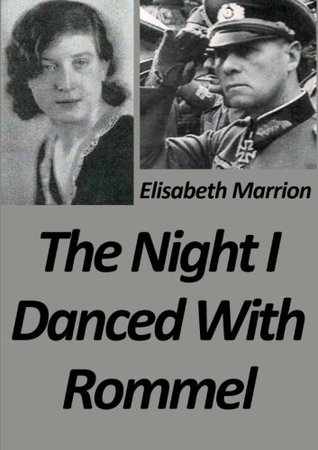
Night I Danced with Rommel“The Night I danced with Rommel”

Elisabeth Marrion wrote this heart wrenching memoir of her mother’s life. Married to a soldier who fathered a baby every time he was on leave, her mother had to look after and somehow provide food for five small children. Dealing with the bombing of her hometown of Hildesheim, and being a hands-on woman a lot of neighbors relied on her. When her husband was transferred to Africa to fight alongside General Rommel she was relieved of the scary thought of him being killed in Russia. As the story moves on General Rommel’s Regiment happens to be stationed in this city for a few days on their way to France and she was singled out by him to do the first dance during a party the towns-people organized to honour him.

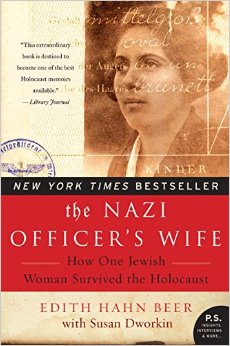
Nazi Officers Wife“The Nazi Officer’s Wife”

Two authors, Edith H. Beer and Susan Dworkin told the story of Jewish women who married Nazi Officers to save their lives. In many cases the husbands had no idea they were Jews. These women were known as “U-Boats” or “Submarines” living normal lives when they were everything else but normal. This story is gripping, has been made into a movie, documentaries and has received worldwide accolades. It is hard to believe what the author, Edith, has endured during the time of the Nazi take-over of Austria to the end of the war living in the Russian occupied Germany. I had no idea that these women even existed and was touched to my deepest soul after reading this book.

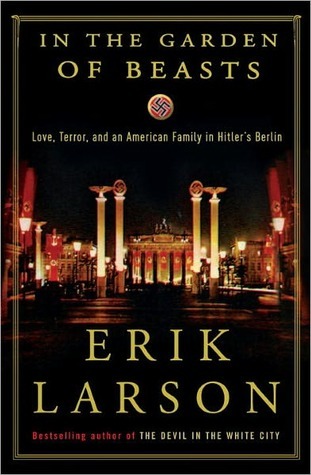
Garden of Beasts“In the Garden of Beasts”

Eric Larson does not need an introduction. In this book he tells the story of the American Ambassador to Berlin during the early years of Hitler’s reign. The book is based on hundreds of letters to the American President, the diaries of the daughter and one is overpowered by the incredible research Larson must have done over several years to write this book. It is rather a lengthy book and towards the end I felt as if I myself went through WWII again. Exhausted.

Louisa-Elliott-Book-Cover2“Louisa Elliot”

How I loved this book by Ann Victoria Roberts, a gifted writer! The novel is set in York in the 19th Century and involves a family drama that sometime just takes your breath away. Despite the fact that it has about 700 pages (e-book) I was sorry when it ended. Not a surprise to me when I found out that it sold over a million copies when it first came out. Luckily there was another book for me to read following this one, called

Liam-Story-Book-Cover-20121“Liam’s Story”

Also a big book and I tell you, this one occasionally makes your blood boil. How can a writer write books that you simply cannot put down? How can she make you identify and suffer with the protagonist? How does a brain like Ann’s work to come up with these tales just because she happened to find a small diary of a family ancestor? Each novel can stand on its own but read “Louisa” first…

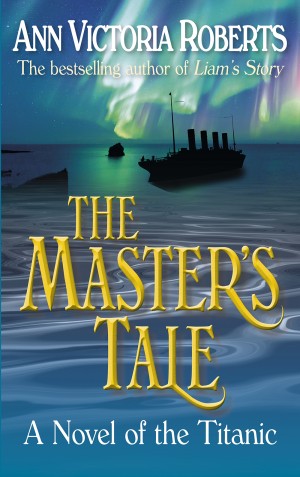
MasterstalecoverSMALL-e1427439366841“The Master’s Tale”

Another Ann Victoria Roberts book – this one is based on her research about Captain Smith, Captain of the unsinkable “Titanic”. She portrays the rich and famous guests, the interactions of many of them, love triangles, affairs, and intrigues. When the ship hits the iceberg you can hear the cries, you will feel the cold water and you see the listing of the big ship from your life boat and finally see it disappear as if it had never been.

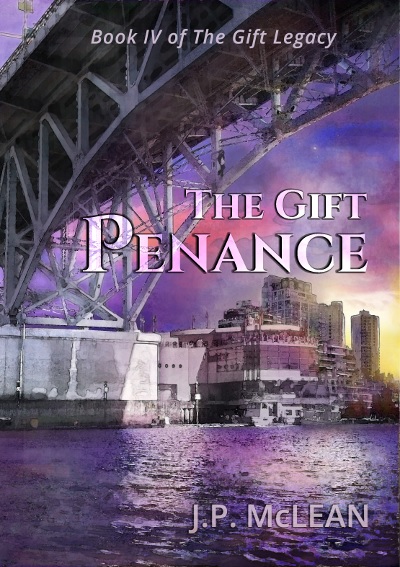
Gift of Penance“The Gift Pennance”

Jo-Ann McLean writes ‘thrillers’. I have never read thrillers and cannot recall how, or when, I read a couple of chapters of this book on Linkedin, Amazon (Look Inside) or perhaps came across Jo-Ann’s website. Because it involved kayaking I wanted to read more. The story is set in Vancouver and since I know and lived in this fair city I was intrigued. When I started reading I realized I had never ever read a book like it, totally fictional and an imagination I can only marvel at. Some scenes in it caused me to contact her (bless the Internet!) and ask what her family or her husband thinks about some of the scenes. This book is part of a series, the previous one is the “Gift Legacy” but I have not read it.

“North of Normal”

North of NormalCea Sunrise Person took seven years to write this shocking memoir of her childhood, growing up during the ‘counter culture’. Her grandfather moved the family from California to the North Country wilderness. They were growing pot, smoking and selling it, living off the land, fishing and wildlife. Periods of plenty changed with periods of hunger. Little Cea’s home was a tipi/tepee shared with her very young mother and a number of other adults who thought nothing of nudity, open sex, changing partners. Cea invented her own games and amused herself without contact with other children until she had to go to school. Seeing the first pair of underpants and a fancy frilly dress made her realize that there was another life out there and she had only one wish: To survive the crazy life she was living and her ‘crazy family.’ After her book was published her friends asked her: “How did you ever turn out so normal?”

“The Glass Castle”

Glass CastleI had no idea what living in the sixties for the people who chose to live the ‘free life’ was like and I must admit that the book “North of Normal” had deeply disturbed me. Friends, whom I told about it, encouraged me to read ‘The Glass Castle” – a similar book by Jeannette Walls. The language is not quite so vulgar because Jeannette’s parents were actually educated, but they chose a life of nonconformity, poverty and their children had to fend for themselves. When hungry the older two went through garbage bins and ate what others had thrown away. Their clothing was bought in Thrift shops. They were dirty, they smelled and other children did not want to have anything to do with them. Jeannette could be compared to Cea in ‘North of Normal’ as both girls were trying to get an education and create a better life. Both succeeded. Paramount bought the movie rights to this book. It has been a bestseller for years and Jeannette has been interviewed repeatedly.

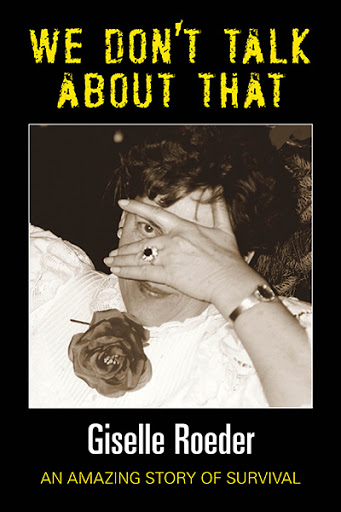
We Dont Talk About That“We Don’t Talk About That”

This is the book I am re-reading now. It came out in April 2014, I have read it before, but I am surprised how it “gripped” me again. Another one of those books “hard to put down.” I am so sorry not to have more time to read. But I have to write. My readers are constantly reminding me and asking “when is the sequel coming out? Are you writing it? How far into it are you?”

I have given you a number of fantastic books to consider reading. None of them will disappoint you. So, – find a cozy corner and READ books – books – books. Live in a different world for a while, a different time zone, on a different continent or even a different dimension. Enjoy!