Life is interesting – on the ground or in the air

After flying for three hours, landing and walking out of the arrival airport you are surprised by the different type of air you breathe, and, looking around, by the totally different colours surrounding you. It’s March, and you have just left a green landscape, blooming cherry trees, daffodils and some tulips behind. Now, with a slight little shock, even if you knew about the possibility – you look at leftover snow at the edge of the roads, icy frozen heaps at corners where the snow has been piled up and lots of puddles hiding the potholes and nothing but grey cars. You ask me “Why grey cars?” I should have told you, nobody washes their car here during the winter months because of the chance of frozen door locks. In spring, they don’t because as soon as you enter the traffic it’s covered in mud again anyway. I couldn’t believe seeing part of the residential streets looking like rivers. Why is the water not draining away? Are all the drains plugged up with leftover leaves from last fall? Or is it all the sand washed towards the drains and forming little dikes? Only three hours away from almost ‘paradise’ I was still in the same country: Canada. Several time zones across this land and variations in weather make you feel you are somewhere totally different.

Boarding to fly home

I left Vancouver Island by Harbour Air flying with a float plane. With small suitcases and seated tightly together with only a few people you are flying over beautiful little islands and in just seventeen minutes you are landing on a river not too far from Vancouver International Airport. A shuttle bus brings you there and you are lucky not to get lost among thousands of people milling around you. After passing long lineups in the international terminal, I was actually surprised to see how few people were flying to other destinations at the domestic terminal. But don’t be fooled, the planes are full. It’s just that the check-in is very well organized and orderly. There were lots of self-check-in machines, different places for baggage drop-off and other counters for people who can’t make friends with any machine. I am one of the people who prefers a live person!

Checking into the Clarion Hotel in Winnipeg they were so welcoming as if I were the proverbial ‘lost son’, sorry, daughter. The car licence plates proclaim that you are in “Friendly Manitoba” – if you can read it because of the mud covering everything. The next day I got lost in the shopping center across from the hotel. I couldn’t find my way out. I asked an elderly lady for directions. She started to explain but then decided to accompany me as it was easier. We walked through the whole shopping center and all the way across the parking lot, crossed the muddy streets and jumping over puddles. On the way she told me about, and showed me, her beautiful daughter living and working in Hollywood. We stood outside the hotel door until we shivered and I asked her inside. We exchanged e-mail addresses. That is Winnipeg, Manitoba – were the most friendly and helpful people you might ever encounter live.

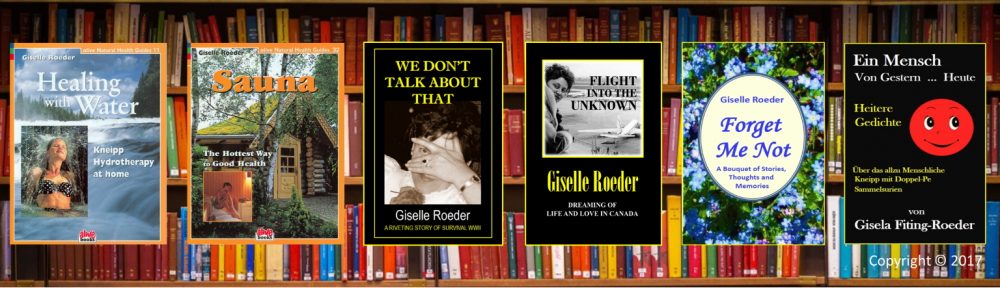
Intro Forget Me NotAt my book signing at Chapters Polo Park, lots of people were standing around my table. They listened to mine and told some of their own stories and, in two hours, I laughed more than I had laughed in two years! My shopping center rescue lady, Dorothy, was among them. And Audry was there, an e-mail friend, who had written to me after she had read and was impressed by my book. The thought that it might be “healthy” for me to move back to this fair city (Oh yes, thirty-two years ago I had lived there) went through my head. What is the weather, the mud, the puddles and the snow when you are laughing? But I realized that I was the cause for the laughter that evening. Why? Because I was happy. I picked funny stories to read. I am a people person, I like to share my stories and I love the people who listen and react to me by sharing their own stories. We all became part of an extended family. It felt good.

Title slideThe absolute highlight of my trip was meeting the charming and experienced interviewer Dahlia Kurtz at the CJOB Radio Station. She is a rather small and pretty person, but a force to be reckoned with. I would like you to meet her yourself, sit back and listen to our exchange on air. Dahlia has interviewed Nobel Prize winners, world leaders, inventors and many other dignitaries but she is herself, sensitive to the expression of feelings and has a knack of keeping, or getting you back on track.

Here is the link to the YouTube video of my interview:

Interview on CJOB, Winnipeg

Title slide - CJOBI was interviewed today by Greg Mackling of CJOB 680 in Winnipeg. You can hear the interview on YouTube at https://youtu.be/a0gjX3cIAoU

Many thanks to Greg and the staff at CJOB for allowing me this opportunity to talk about “We Don’t Talk About That”

The ‘Beheaded’ Rose

DSC02601Don’t think it is easy for me to tell you this story. It should be one of the chapters of the sequel to my book “We Don’t Talk About That”. It is a little love story but it really isn’t a love story. Read it and decide for yourself what you want to call it.

I met Hannes two months too late. Had we met two months earlier something might have become of it. Maybe. Maybe not. He had such an infectious laugh, such as I had never heard from a man and never did again. I knew he would never do or try something I would not want. He was ‘comfortable’ like an old pair of shoes, more like a brother and I felt at ease when I was with him. I still kept him at arm’s length. Why? There were several reasons. One, I was afraid I could fall in love with him. Two, he was in the middle of a divorce even it was a friendly one. Three, he was from the Rhineland and the Rhinelanders had a reputation for being ‘light weights’, people who didn’t take life too seriously. Fourth, he was Catholic and I was Lutheran, a match my parents would not approve of, even if neither of us were religious church goers. Fifth, I was in love with a little girl in Canada who needed a new mommy. Her father and I had been pen friends for two months and he wanted to marry me. But the main reason was I was afraid, simply afraid that a man who was obsessed with me, who had stalked me for years would be true to his promise to ruin any relationship I would ever have with another man. “If I can’t have you, nobody else will.” I had told Hannes all about it. Hannes listened, talked to me and made me see all sides, he pointed out the pros but mainly the cons about going to Canada. He sounded exactly like my father who thought I had gone totally bananas. “Canada! Marry a man you didn’t know, divorced and with a daughter? Nuts!” The problem was my compassion for that little girl, after seeing the photos with the sad eyes. I just couldn’t get her out of my mind. After I had met the grandparents in Wiesbaden I was lost. They didn’t even give me a chance to back out. I wasn’t strong enough. And I didn’t know I was being manipulated. The word did not exist in my vocabulary or my thinking.

Hannes became my best friend. He helped me plan my emigration. We went to the zoo in Hamburg, to a fabulous Indian Restaurant and sampled the “Indian Rice Table” with 23 little bowls containing different delectable types of food. We visited the “Pferdestall” a famous kind of pub/bar in an original horse barn. We attended “A Midsummer Night’s Dream” on the stage under the stars in the Herrenhäuser Gardens in Hanover.  Until I started to get very involved with my Canadian penfriend and his parents and sadly, my friendship with Hannes somehow tapered out. It was the end of a time with lots of laughter for me but I didn’t realize it until much, much later. When I was living in Winnipeg in Canada I got terribly homesick. I wrote to Hannes telling him about my life. He was married to a lady he had seen in the theater. He wrote “I had noticed her legs and they reminded me of you.” He had approached her during intermission, they had a glass of champagne and the rest is history. Hannes and I remained in contact.

It was a few years later when I visited Germany again. I had arranged a meeting with the last company I worked for since I wanted to import their skin care line to Canada. I had been instrumental in developing a number of the creams. Before flying home I planned to visit my sister in Hamburg and since Hannes lived there he picked me up at the train station. He handed me a beautiful long stemmed dark red ‘Baccara Rose’. We walked across the busy plaza in front of the station to his parked car. After he put my suitcase in the trunk he opened the door for me. We both were a bit shy, not yet at ease as we had been during the two months in the past when we had laughed a lot. I held the rose and my purse with one hand, trying to arrange my fancy coat which had a split in the back so the two sides could be lifted and you would not sit on it. I changed the flower from my left to me right hand and arranged the coat around me with the other. Finally I was seated with both coat tails on my lap. Hannes asked “is everything in now?” We looked at each other when I replied, “yes everything is in”. He closed the door and walked around the car to his side. As he was inserting the car key I noticed I had only the stem of the rose in my hand. I felt the shock right down into my tummy:

“Hannes, look” I whispered with a tiny voice. Hannes grabbed his steering wheel, put his head on his arms and slowly, quietly said “Just like us. It’s our story. A beheaded love story, a beheaded rose. I should have seen the rose wasn’t in when I closed the door. Should we stop by a flower shop and I buy you a new one?”

We decided against it. After a while driving along Hannes started to laugh. His Rhineland humour had taken over and he thought the whole episode was really very funny. I was sorry to have lost the beautiful flower head but I saw the weird humour in it as well. Actually, because of the accident, – I never forgot the rose.


Nobody ever expected this

“Yesterday had been a day like all the other days during the last year and a half since the Russians invaded Germany. Everybody working at Junkers Aero Space, a former Nazi company researching and building aero planes in Dessau, was doing their job. It was incredible that the Soviet Government did not stop operations after their occupation but had the plant rebuilt, kept the work force and even expanded it. It was a direct violation of the Yalta agreement stating that Germany was not allowed to produce armaments. “

A reader of my book “We Don’t Talk About That” had sent me an e-mail asking if we might be able to meet. She and her brother lived about 30 km away, so we met halfway in a small café. The story they had to tell was shocking news to my ears. I never had read or heard about it.

At the end of WWII the technological achievements of Germany during the war proved a challenge and an opportunity for the two new world powers, the USA and the Soviet Union. Germany had excelled in futuristic technologies, especially in the area of aerospace. Both powers were quick to gather the top German scientists and engineers and relocate them to their countries. Wernher von Braun was the best known scientist taken to the USA to support their rocket program. The story of Junkers Aerospace was virtually unpublicized, the company being located in the eastern part of Germany. Junkers had been the most advanced aircraft manufacturer worldwide at the end of WWII with such concepts as the “discovery of the area rule, operation of jet engines on its aircraft, cabin pressurisation and designs involving forward swept wings.” With the cold war looming and the arms race both powers tried to outdo the other in the aftermath of WWII.

I could hardly believe it when my guests told me that Junkers had been rebuilt and, at the end of June 1946 employed 3.325 people sworn to strict secrecy, a slip of the tongue punishable by death. Their father was one of those workers. They themselves were small children. The German employees lived in the small city built around the plant tightly controlled by the Soviets. Nobody had ever expected a re-location of this huge company to the Soviet Union. But, all equipment and personnel of Junkers was to be re-located. At its peak 4.000 Soviet secret service and military personnel were involved in the planning and execution of the plan. Re-location plans were talked about when an airplane built there could not be tested because the runway was too short. But it never occurred to the employees and unbeknownst to them the plane was shipped to Russia. It was the start of something traumatic.

With not even a hint on the morning of the 22nd October 1946, more than a year after the invasion, hard knocks on every house door woke the occupants. Military trucks were standing ready to be loaded with whatever every family decided to take with them as they were told of a re-location. Trains were waiting at the station. They did not have much time to plan or pack, – just get ready. They also had no idea where their final destination was. After a very long uncomfortable journey they had arrived at a small village built of simple “Finnish” prefab houses about 100 kilometers from Moscow. The village even had a German church, a German school and some small shops. Their father’s job as an engineer had been an important one in Germany as well as it was now in Russia. Some families had asked to leave their families in Germany but the appeal was ignored and not answered.

These two people, sitting with me at a small table drinking coffee, told me the story of their life in Russia. They were small children, three and five years old, they went to school in Russia, learned what it meant “not to talk about it”, referring to topics talked about at home. Incredible hardships, one of the worst being the Russian winters and living in a very cold and drafty house were part of their daily life. The Germans were teaching Russian employees all they knew and in many cases a certain comradery developed between them.

Seven years later talk about going “home” started to circulate. Little by little certain families were picked up and left town but their turn had not come yet. Another year went by and finally the family could go home but the father still had to stay. They sold almost all of their possessions hoping to start fresh in a new Germany. They knew two Germanys had been established, the German Democratic Republic (DDR) and the BDR, the western part. The family was relocated to East Berlin and the Mother tried to re-establish old connections. She soon realized that she would like to be in West Germany. A job offer for her husband by a Mannheim company would be available once he returned from Russia.

My two guests told me that it wasn’t all “just bad”. The total re-location of people and workplace had created a German island in Russia. Close friendships were established, neighbours helping neighbours, entertainment was ‘home made’ and the shortage of almost everything led to creativity and do it yourself projects. More children were born there and considered this place their home. A number of people had married a Russian and did not want to go back to Germany. However, now, many years after the deportation and living in Russia for eight years, people have gone back to visit remaining friends and see the further development of their little village into a town and come back with stories about the incredible hospitality they have experienced. Many of these former special workers are now living all over the world and the older generation starts to thin out. The connections between these people having lived in Russia against their will is incredibly strong and after fifty years the first and now more regular anniversary reunions have been organized where it all started: In Dessau, Germany.

There still are so many untold stories out there, seventy-five years after the horrible war. It is so hard to believe that soldiers, people, children had no say in what happened to them, they were moved by cruel hands like chess figures. There is so much we still don’t know.

Remember: Lest we forget.

Interview for VIU Elder College Lecture

EscapeI was interviewed by Gregor Craigie from the On The Island program on CBC Radio One this morning. The interview is reproduced in this YouTube video: https://youtu.be/ax9-0rcdSbk

The lecture takes place at 10:00 a.m. on Nov 7th at the Nanaimo campus of VIU.and is entitled “My Escape from Germany after WWII”.For details see: https://www2.viu.ca/eldercollege/courses.asp#sss

Part 2 – “The Water Doctor”

1-image0

Early Sanitoria in Woerishofen

Can you imagine the triumphant reception when Father Kneipp returned from Rome to his small little village? Not excommunicated, but praised by the Pope? The simple folks at home had trouble pronouncing and calling him ‘Monsignor’ – but he just laughed and said ‘don’t even try, I am what I always was, your ‘Father Kneipp’. He had been sent to Wörishofen by the Archbishop to hide him away, to get him away from the ‘water splashing’ and just be the Father Confessor to the nuns of the existing convent in a small village in the middle of nowhere. These nuns were mainly second and third daughters of rich aristocrats who couldn’t be “married off “, a privilege reserved just for first born babies, sons to inherit and daughters to marry other heirs. The nuns had spent their days singing and praying and were shocked when Father Kneipp told them “Ora et Labora” – pray and work, because work is a form of praying. He ordered them to tend the overgrown gardens, plant and harvest vegetables for the convent’s dinner table and establish an herb garden. They had to perform kitchen duties and clean their own quarters. Tears and complaints about ruining their soft white hands in dirt and sun did not result in suspension from work; pretending to be sick or having a sore back resulted in being treated with water.

The convent was close to bankruptcy despite owning fast stretches of land, meadows and acreages, forests and streams. Father Kneipp found the acreages and meadows were “sour” but knew the farmers would not accept his advice, the advice of a priest, who knew how to change it. Therefore he invented “Fritz” and wrote booklets about “Fritz, the successful Farmer”, “Fritz the Bee Keeper” and several others. The advice was followed and the land became rich and fruitful, the farmers were happy and the convent thrived with “Fritz’s” help.

Despite his book “My Water Cure” to keep them away, health seekers and especially poor people kept coming. The laundry room of the convent became the first treatment center. The odd items used in this “Wash House” are displayed in a specially built hut at the ‘Promenade” in what is now ‘Bad Wörishofen’. Several nuns and handpicked men became helpers and the first therapists. A few curious doctors asked permission to attend Father Kneipp’s hour of seeing people and hoped ‘to trip’ him. The deep knowledge of the human condition and his uncanny right diagnosis, but especially his healing success puzzled them. Some stayed on to learn, others went home all over Europe to start their own ‘Kneipp Spa’. An ever increasing stream of visitors with no accommodations aside from hay barns enticed entrepreneurs to start building hotels, guest houses and restaurants. Kneipp had written more books. He used the royalties and the donations freely given by the wealthy to build two sanatoria, the “Sebastianeum” and the “Kneippianum” and a wonderful “Children’s Hospital” where a mother or father could stay with their sick child until ‘cured’. Kneipp, once upon a time a very poor boy, was now considered “rich” but in truth he did not own anything. He donated those buildings to different catholic brotherhoods (i.e. the Benedictines) to run and take care of other health seeking brothers. There is a rumor the “Sebastianeum” was empty on many nights – and since one entrepreneur had built a hotel for nuns close by that’s where the brothers could be found… Don’t take my word for it! The Children’s Hospital was given to a convent and run by nuns.

Presnt Promenade Bad Woerishofen

Promenade Bad Woerishofen

I have stayed in the now, available for both sexes, “Sebastianeum” (168 beds) several times. I always felt close to Father Kneipp as all his advice and his teachings are followed there. I consider him to be one of my spiritual fathers. The “Kneippianum”, still run by nuns today, was developed into a highly specialized clinic for heart disease, employs the best doctors; it owns all the diagnostic machines and tools to diagnose and treat patients scientifically, always complemented by Kneipp therapy.

Let’s go back to Kneipp’s history. He saw up to 200 patients a day. He treated everybody the same, calling them by their first name, rich and poor. He ordered everybody to go barefoot and split wood for exercise, including the Archduke of Austria as well as the Maharadsha with forty attendants from India. Kneipp invented the sandal to give the feet the much needed ‘air’. He visited the Children’s Hospital daily. He fulfilled his duties in the convent as Father Confessor for the nuns as well as his duties when he was voted in as the village priest. He was always available for the farmers who now trusted his wisdom about agriculture. He was called to many surrounding villages to treat or spiritually help the ones who could not come to him. He held daily lectures in an open area about the different aspects of health, often attended by up to 5.000 people. Pearls of wisdom about each aspect he was ranting and raving about made it into our day:

“Fresse and saufe wollet se all” = you all want to eat and drink like pigs but nobody wants to die. When you feel you have eaten you have already eaten too much.”

2-image0-001

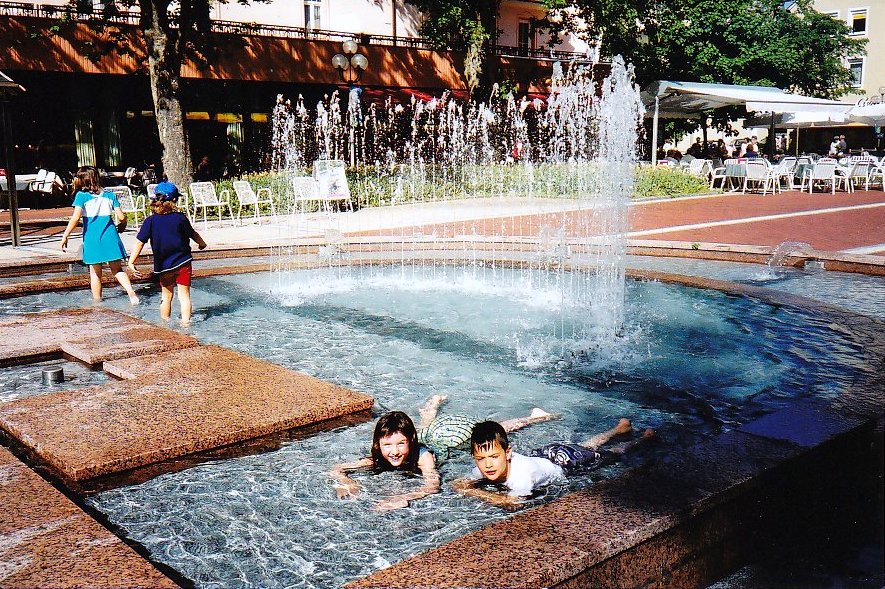
Bad Woerishofen has many fountains – kids love them!

Part 3 will deal with his treatment system as it was developed and used to this day.

German Unification Day

Tree re-unitedThe People of Germany have a special cause for celebration today! It’s their “Unification Day”. East and West Germany were two countries since the close of WWII. They were united in 1989 and are happy to be “ONE COUNTRY” again. For me, having lived through WWII and seen the total devastation but emigrated to Canada in 1963, it is absolutely amazing what and how much the people of Germany have achieved. From saving and cleaning each brick from the rubble their cities were, rebuilding totally destroyed ones and now enjoying one of the highest living standards in the world. My sister tells me not to be blinded by the luxuries visible because despite all, there are many pensioners and  unemployed who have trouble making ends meet with the high cost of living and expensive rents. And still, the country is a strong pillar in the European Union, maybe even the strongest.

When I saw the photo of this tree this morning, placed by someone on Facebook, I couldn’t help but think of the divided Germany and the long years it took to grow together again. Just as the tree shows the healthy growth on top of the united two halves, so does Germany. Let’s hope the roots are strong enough to hold up the ever growing ‘crown’.  For me, – the 5th of October is also worthy of memory. It was the day I escaped East Germany. To this day my heart beats faster just thinking about it. Hundreds of thousands escaped to the ‘Golden West’ risking life and limb. Finally, they built “the wall” to keep their people ‘in’, not to keep unwanted people ‘out’.

For you, who want to know more about the history and rebuilding of Germany since WWI, through WWII and the after effects without reading large history books pick up my compelling book “We Don’t Talk About That” with the compressed political background easy to understand and, as some readers say “understand for the first time” why and how it all happened. The story you’ll read is one of an ordinary German family which stands for thousands of others who lived through the same trials and tribulations but to this day ‘don’t want to talk about that’.

German flagThe Germans have a very good reason to celebrate their special day. Nobody, absolutely nobody, ever expected it to happen; to be able to climb, dance on or hack at, scrape and tear down the Berlin Wall, without any shots fired, without another war happening.

TO BE UNITED AND BE ONE WONDERFUL COUNTRY AGAIN…

Upcoming Special Event

I am proud to be included in this event at the West Vancouver Memorial Library

West Van Library logo


For immediate release
In My Own Words to chronicle four memorable memoirs at Memorial Library
Thursday, June 11, 2015, West Vancouver, B.C. – One grew up off the grid in the wilds of BC. Another helped a woman with Down’s syndrome write her Cinderella story. One spent her formative years in East Germany during the Second World War. Another wrote lovely letters to his children about his experiences as a father and lawyer. Join us for these and other stories at 7 p.m. on Wednesday, June 24 at In My Own Words, a memoir panel featuring four eclectic and fascinating local writers, moderated by celebrated author E.R. Brown.
“We’re always excited to celebrate literary talent,” says Information Services Department Head Pat Cumming. “For this panel, we gathered an entertaining range of personalities, adventures and stories. Having the always enigmatic E.R. Brown on hand to moderate the panel is the icing on the cake. It’s going to be a great night.”
– In North of Normal, Cea Sunrise Person recounts the story of her wilderness childhood, her unusual family and how she survived both.
– David Roberts wrote Letters to His Children from an Uncommon Attorney after his daughter convinced him to write his stories down “before he dies.” The result is this at times humorous, at others harrowing, memoir of a father, husband and attorney.
– Writing with Grace, by Judy MacFarlane, explores the challenges and perseverance of an aspiring writer with Down’s syndrome as she tries to fulfill her dream of writing a book.
– In We don’t Talk About That, Giselle Roeder tells the often hushed story of growing up in Second World War Pomerania and her post-War move to East Germany.
– Moderator E.R. Brown is the author of the Edgar-nominated Novel Almost Criminal.
All of the authors participating in the panel are available ahead of time for interviews and photos. Please contact David Carson at the phone number or email address below to make arrangements.
More information about the Memoir Panel is available on our website.
-30-
Media Contact David Carson, Communications and Event Coordinator 604.925.7407 dcarson@westvanlibrary.ca

Learning to Kayak #Kayaking #EastGermany

Getting that balance right

Getting that balance right

It was probably the best thing that could have happened to me: Afred, a young man in charge of the kayak racing team, came to my office to get the permission stamps for the team to go to a regatta taking place in a different city. As I asked him questions he invited me to come to a training session and see if I would like to join the club. Well, I said ‘yes’ right away and his girlfriend Christa showed me how to get in and out of a kayak. Balancing wasn’t easy as I was trying to sit in that narrow nut shell. When I mastered it without tipping over I was in love, – in love with the novelty of it and in love with the water. Christa also let me try out the KII. I became obsessed with kayaking, I was determined to be in the top group and secretly even promised myself to become better than all the other girls. And, you know what?

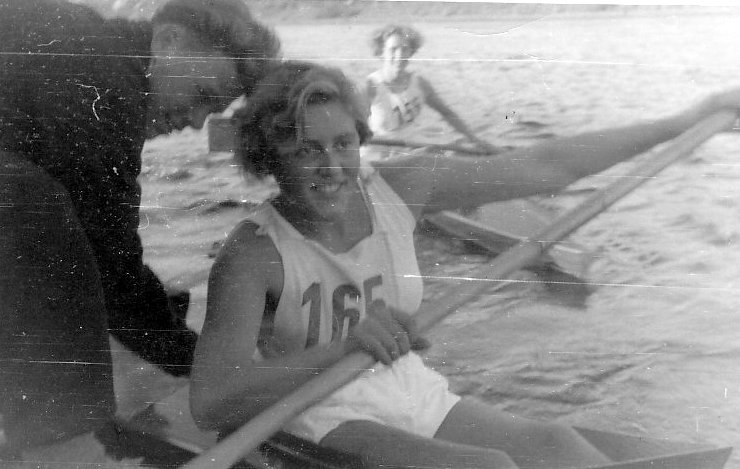
image1It was only a year later that I won the District Championships in the KI over 500 and over 3.000 meters. Mind you, after the 3.000 meter race I fell out of the kayak as soon as I crossed the finishing line. Christa, my trainer and also my KII partner was disappointed because up to now she had won all the races. But we won the 500 and the 3000 meters in the KII, it made up for it.

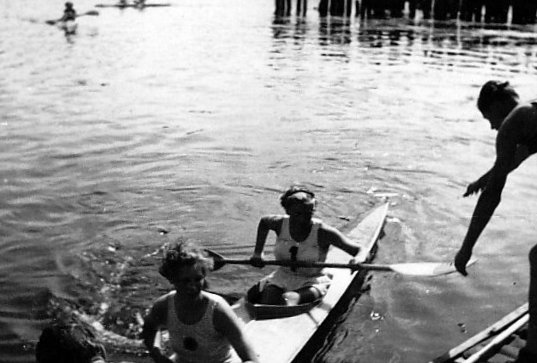
image3We became very close friends. Even now, more than sixty years later we are still close but mostly in telephone contact since we live on different continents. She saved nearly forty five years of the letters I wrote to her from Canada after my emigration. She gave them to me last time I saw her. To read them again was quite a revelation for me. In my memoir “We Don’t Talk About That” you’ll enjoy reading about my kayaking and the great love I had for my own paddle boat “Max”. The best years within my first 30 years I cover in that book have to do with the water, my boat and my desolation in leaving it behind when I had to escape from East to West Germany. As it happened, my racing abilities helped me to find a job in West Germany. I am sad to say that I never reached the top groups again. I just had to work too many hours and did not have as much time for the necessary training.

image2You might find it interesting that in East Germany every sport was very highly promoted and financially supported, it hardly cost anything for either memberships or competitions,– but in West Germany you were on your own. And as I made very little money I could not really afford to participate anymore either. When I was 5th once at a competition I dropped out. I thought it was better if people remembered me and said “oh, she was good” rather than “yaaah, she got too old and had to drop out”!


start 'em early

Start ’em early!

Did you know they now have real racing kayaks for kiddies? And train them very early? Just like Austrian kids start to ski as soon as they can walk, at the Baltic Sea where I lived the kids can start at two or three years old getting into a kayak. Amazing! Start to train early for future Olympics? Yes, the children are our future in more ways than one. Kayaking is healthy, you breath fresh air, develop muscles but mainly around the upper body. So training included running, all-body exercises and during the winters we went to gymnastics and played competitive table tennis. One more thing: The comradery. I give it ten points out of ten. It’s wonderful and becomes a big part of your life. I just LOVED it.


May Day, May Day – Dance Around The May Pole

May FestMay Day is a traditional holiday in several European countries but for me the intriguing part is what leads up to it in Bavaria. A few weeks before the first of May the young males of every village go scouting for the straightest and tallest tree in the surrounding forests. Once they find “the one” they have to guard it to avoid it being claimed by the young men from another rival village. Before anybody can cut any tree they need permission from the Forestry to cut it down and bring it home. Once permission is granted the tree is marked. Now the dangerous game of protecting your own tree and trying to steal another marked for another village is in full swing. The young men of every village, and there are many villages every few kilometers, get involved and they are busy every night with the protection of “their tree” because attempts to succeed are made by every single one. Why? If one village or another succeeds in ‘stealing’ a tree the loser has to pay for all the beer they will drink during that year whenever there is a chance or they get together. I wonder how much beer is already consumed during the cold nights protecting their prospective tree!

Marching BandThe tree has to be cut and brought home in the old fashioned way, no machinery allowed. It also has to be erected without any help of modern conveniences. Ropes and muscle power is what’s needed. The bark is removed in a certain way to leave a design according to tradition in the particular village. Once the tree is “up” a wreath, called a “crown”, is hung at the highest possible spot, often they even attach another small tree on top to reach even greater height. Eighty or even hundred meter high May poles are not rare. All the way down from the top carved logo signs from every profession in the village or city are attached. I gather that those professions, be it a tailor, shoemaker, farmer, hotelier or even the church have to pay to have their painted carvings depicting the profession on the May Pole. And they are proud to do so! Most villagers get pretty sightinvolved in the erection of the tree and especially the celebrations during and after they completed the task. Since it is hard work without any mechanical help the men get very thirsty and again lots of beer will find its way into thirsty throats. Usually there is a brewery in the village or close by and they have a fresh brew, the May brew, which surely has to be tested as well. After the May Pole is proudly standing and secured the people hurry home because now they have to prepare for another happening.

April the 30th is ‘Walpurgis Night’. It’s an anxious and frightening night for all the villagers. It is the night when all the witches are loose and they do some crazy things and no one stops them. One year I happened to be in the beautiful Bavarian Health Resort city of Bad Wörishofen and my hosts were taking all their lawn chairs, terrace furniture and garden ornaments into their hallway. They explained to me that these items could end up in a totally different part of the city or even hidden in places you wouldn’t think of looking for them, in some cases overturned or broken. Police? Forget Scan-003.BMPit. After all, the police do not deal with ‘witches’. It’s free rein to do mischief without being punished. Mostly it’s all done in good fun. During breakfast next morning we had a really good laugh because something “new”, never done before, had happened. All the street signs were covered and new names making fun of certain officials or happenings in the village were placed on top. The one most people got a kick out of was “Roter Platz” (Red Square) at the centre surrounding the statue of Father Kneipp, the “Water Doctor”, a priest who had made this city famous during the 19th century. (As a matter of fact, at least 95% of the population still make their living catering to the “Water Kur” guests.) This plaza had recently been tiled with red tiles and the former grass and the flower beds had been removed. The old-timers in the city didn’t like the transition and this joke did not go over too well with the Mayor’s office either. However, the old street names were restored within a few hours.

The first of May is a big holiday! Literally everybody has been praying for sunshine and, with luck, the weatherman has listened. People gather in their old fashioned costumes around the “Kurhaus”, the bands tune their instruments and in good time a parade winds its way throughout the city aiming to end the march at the May Pole. There are lots of stalls with bratwurst, pretzels and beer (of course!), herring buns and home-made torts and cakes hosted by the different women’s groups. There is coffee, ice cream, sugar puffs and drinks for the children and more beer for the ones who 1 - 2 - 3happened to be lucky enough to find a seat for the rest of the day. The bands play their catchy tunes, the folk dancers as young as two years old or ninety congregate around the May Pole and do their infectious dances and lots and lots of cameras click to catch the excitement. When the official part is over the pubs fill up and the new fresh Maybock beer leads to the downfall of many a drinker who overestimated their capacity to “hold their beer”. But May Day is fun, it’s so much fun! If you ever have a chance to experience it, – rather than aiming for a big city, try to find a smaller village and mingle with the ‘natives’. And be sure not to overestimate your capacity for the Maybock!