Summer Reading #Ann_V_Roberts

For those of you interested in historical novels you may want to seek out two re-published books by Ann Victoria RobertsLouisa Elliott and Liam’s Story for your summer reading pleasure.
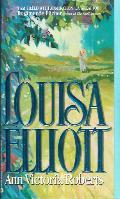
  • Louisa ElliottLouisa ElliottThis classic romance, exquisitely told, is the sweeping chronicle of the life and loves of a remarkable woman-Louisa Elliott. Proud and determined, she battles to overcome the stigma of her illegitimate birth in the pitiless sums of York during the reign of Queen Victoria. An indomitable heroine, she is adored by her gentle, poetic cousin Edward, yet is irresistibly drawn into the passionate arms of Robert Duncannon-a handsome and dashing dragoon officer whose love could destroy forever Louisa’s cherished dream of respectability. Breathtakingly sensual, sparkling and alive with sumptuous period detail, LOUISA ELLIOTT is a magnificent work-a moving and unforgettable reading experience that touches the heart and enriches the soul.
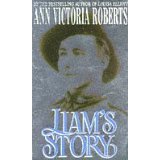
  • Liam's StoryLiam’s Story – Continuing the story of the historical novel “Louisa Elliot”, this is a tale of lost innocence, family conflict and an overwhelming but impossible love.
Book getting rave reviews #WeDontTalkAboutThat

I am pleased when I see flattering reviews from readers of We Don’t Talk About That but it is both humbling and heart warming to receive rave reviews from established UK historical authors such as Bob Pickles and Ann Victoria Roberts. Check the REVIEWS tab above to see what they have said.

#Horses – and their shoes

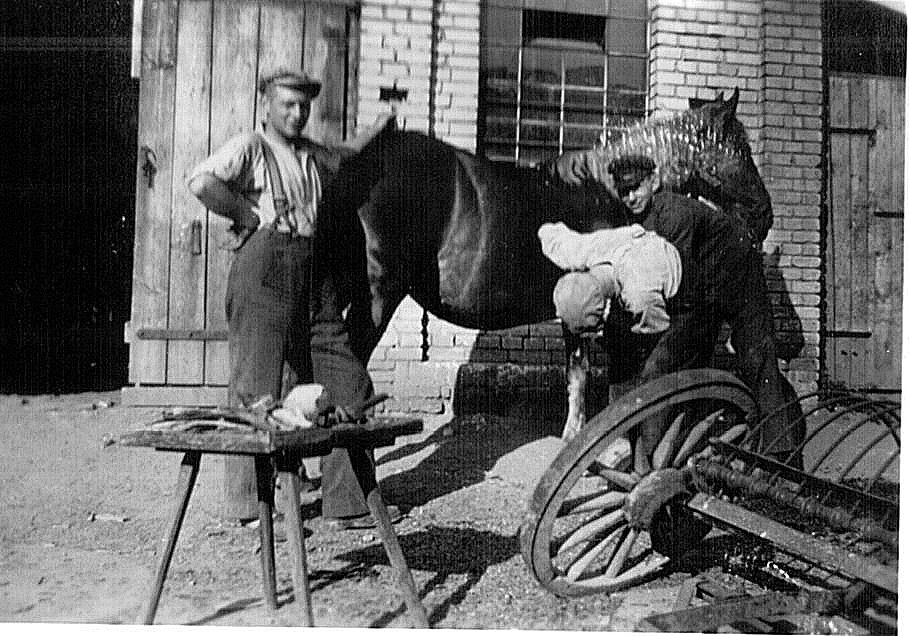
Erich Fiting-Helmut & ?

Shoeing a horse at Father’s smithy.

Do kids nowadays have a chance to see how a horse gets new shoes? Or do they experience the special “smell” when the red-hot iron horseshoe is fitted onto the horse’s hooves? Or do they hear the “swish” when the blacksmith places the iron in cold water for a second or two before he places and fits it on onto the horse’s hoves, one at a time, lifted up sometimes by another man, usually an apprentice? Would they even know what a farrier is? Hardly. I remember it well. I know about the ‘swish’. I remember what it smelled like. I remember being afraid the horse would be hurt. How can the glowing iron not hurt? And the long nails with the almost square head that go into the horseshoe to hold it in place? How can the horse stand it? I didn’t realize then that the bottom of the horse’s hooves are something like a very thick callous, or a very thick toe or finger nail of ours, no nerve endings in it. Only once have I seen a horse bucking and I was afraid my dad would get hurt.

Our own horse Lotte was conscripted in 1939. My dad explained ‘the Führer needs her for the war.” I asked, “Can’t he use another horse? Why our Lotte?” Yes, why our Lotte. It wasn’t just our Lotte. There is a short chapter about it in my book “We Don’t Talk About That”.

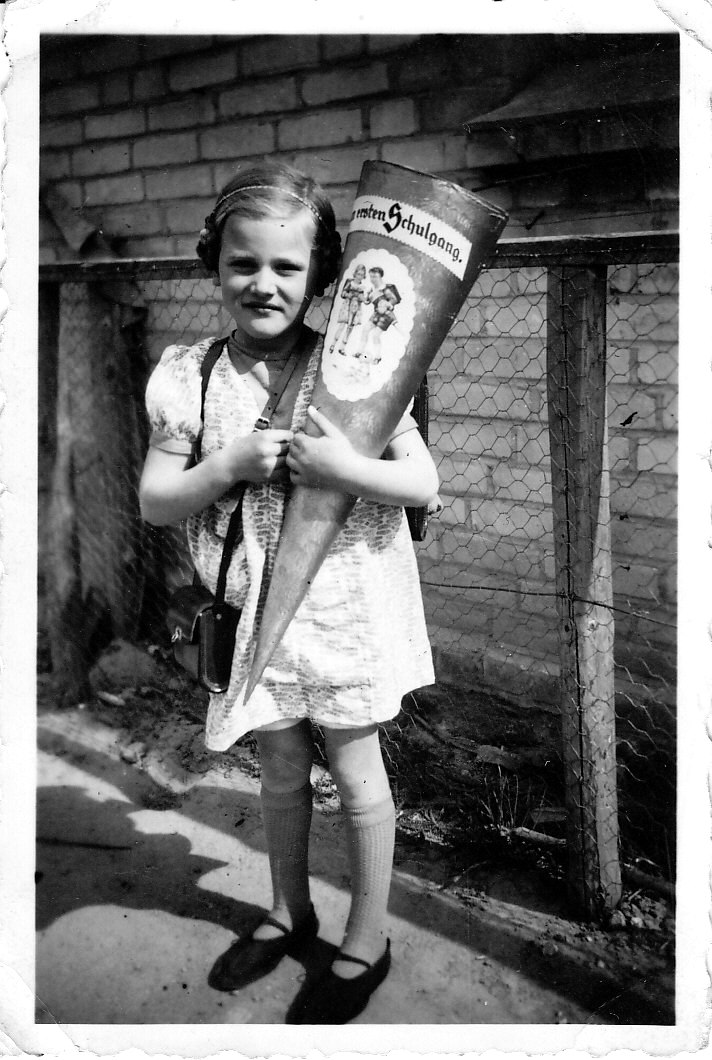
Gila-First Scool Day

First day at school with a horn of plenty (not!).

Omi-Mutti m. Ingrid - Tuti-Manfred-Christel-Dieter-Gisela - Siegfried

A family outing to the lake. Omi-Mutti m. Ingrid – Tutti-Manfred-Christel-Dieter-Gisela – Siegfried

I could hardly wait to go to school to learn to read, to be independent from Granny reading to me. It was in spring 1940. It was exciting to look forward to the big “School cone” and all the goodies in it. How disappointing to find very little – but then, – even a six year old knew there was a war going on. Pretending to be happy I was fighting tears, – just look at the photo. But soon the summer holidays stretched out for two long months and our cousins from the Island of Rügen came. We played our usual games and were happy to go to the lake with Mom, Granny and Aunt Tutti. She plays a very important role in the book. You’ll meet her again…

A Five Star Review #bookreview

A British author of WW I books has written the following glowing review of “We Don’t Talk About That” after reading the book in 3 days and giving it a 5 star rating on Amazon in the UK.

Bob Pickles (from Amazon.co.uk):

Giselle Roeder’s book is a vital piece of the jigsaw of suffering in World War II (& representative of civilian suffering in all conflicts). It could well have been a story of the tragedy endured by Jews, Gypsies or Polish intelligentsia perpetrated by the Nazis. It is not : it is from the other viewpoint – that of a German family (Pomeranian) caught up in a relentless & ruthless revenge policy endorsed by Stalin himself by rampaging & victorious Russian troops determined to wreak havoc on a nation who so equally ravished their own country & population. Revenge is indeed violently exacted upon the females of all ages by the terrifying & simple phrase “Frau, Komm” . Anyone who knows their history will understand the terror behind these powerful two short words. Not since the Japanese visited their venom on the innocents of Nanking or Manilla has rapine acts of such propensity been perpetrated in so condensed a period or area.
Nonetheless, ‘Gila’ & her family endure, comfort & protect each other through all adversities of starvation & illness, separation & violence in its many forms to seek salvation & safety of a kind in the West Germany of post-war Europe. Gila’s subsequent determination to educate herself & find a satisfying & humanly rewarding career is inspirational to today’s doubting youngsters. If it were not so harrowing, it should be desired reading in schools & given the same historical literary importance as “The Diary of Anne Frank”. To be read alone with a strong drink perhaps – a fine testament to the unquenchable spirit of survival & hope with the help of a few ‘angels’ along the way. My only criticism is the abrupt ending which cries out for the developing story of Gila’s emigration to Canada & adventures & subsequent career & personal life there – we all like a happy ending!
Buy, read and learn the balance of history & why the current campaign supported by Angelina Jolie & others against rape in conflict is such an important but seemingly futile message of hope. “Without hope, we are but grains of sand washed into an ocean of despair”.

Just for the “ell” of it

Google and World Cup

I see that the Google search engine has been busy and managed to catch one of my readers too absorbed in my book to put it aside even for a soccer game – https://www.google.ca/logos/doodles/2014/world-cup-2014-12-5204175918989312.2-hp.gif

If you don’t spot him immediately check out the L of Google. He obviously reaches the end of a chapter.

Breaking News

A lucky escape

Our sister Edith sometime after he supposed drowning

Our sister Edith sometime after her supposed drowning

Here is a piece of my family history of which I was totally unaware until after I had written “We Don’t Talk About That”.

Edith is my youngest sister and was the baby that barely survived our trek on the road to nowhere. She recently celebrated her 70th birthday and when I spoke to her on that occasion I mentioned the fact that my book had just been published. In that conversation she asked if I had included the story of her drowning. This was the first I had ever heard of this tragedy.

My sister Christel escaped from East Germany after me in 1956. As was required by the authorities she surrendered her East German passport pending issuance of a West German one. During this interval she received first a telegram, then a letter, stating that “Edith has drowned, come home immediately”. Without travel documents she was in no position to “go home” but was, quite naturally, most upset to learn of our youngest sister’s demise.

Shortly thereafter my father who was, by now, allowed to leave East Germany because if he failed to return it would be one less pension to be paid went to visit Christel in Hamburg. Christel met him at the train station dressed in black as she was in mourning for Edith. Father asked why on earth she was dressed all in black whereupon she burst into tears and said it was because of Edith’s death. Father was astounded to learn of his youngest daughter’s drowning since he had, only that morning, left her at home. Christel explained about the telegram and showed him the letter. He was able to recognize the writing as that of a neighbour living in the attic suite above my parents’ home and it became evident that this neighbour was a Stasi agent.

The telegram and letter had been a ruse to try to get Christel to return home where she would have faced 30 years imprisonment for having defected to the west. What a lucky escape she had. Why have I never heard about this before? Is this another instance of “We Don’t Talk About That”?

Hurray – It’s Out!

The book can be ordered now

Book buying“We Don’t Talk About That” is now available from the Friesen Press Bookstore. Go to  the on-line bookstore to place your order.

Happy shopping, enjoy the book and please feel free to comment by clicking on the balloon above right.


The Next Stage

Proof Reading

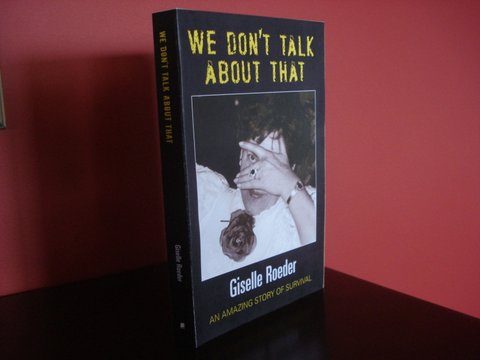
We Don't Talk About That

Book Mock-up

Finally I can talk about it again: The manuscript of my book “We Don’t Talk About That” has just arrived for my first “Revision”.  As soon as I complete my job and all is correct the next stages of  the publishing process can begin after I have accepted a second round of revision. It now is up to me how soon I finish all my re-reading and then the book will hopefully be available  in February.