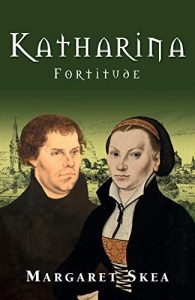
 I just finished reading this book. All along, I was wondering how the author, Margaret Skea, would have been able to find so much material during her limited time in Wittenberg. I asked myself repeatedly, “Is this fiction, based on truth? Is this a biography of Katharina von Bora?” Or is it “intelligent fiction?” When I read the author’s comments at the end of the book and learned that IT IS fiction, I couldn’t believe it. Written in the first person, it was so real, I was Katharina, or I was next to her, holding my breath, prayed with her, felt her despair… What an exceptional writer! If I had the time, I would want to read every one of Ms. Skea’s books. Notably, the prequel “Katharina: Deliverance,” telling of her childhood in a convent, her vows as a nun, her escape, her meeting with Dr. Martin Luther, the former monk.
Like ghosts, the people in the book are occupying my head every hour of the day. How did Ms. Skea, the English-Scottish writer, ever come up with the idea to write about this German woman, the nun who became Mrs. Martin Luther? How did she get to ‘know’ her and the people around her so intimately? Are there history museums in Wittenberge with lots of details about the 16th Century and Dr. Martin Luther, the reformer standing up to the mighty Catholic church and the Pope? Did she find a book that she translated? This idea ran through my head because it is absolutely incredible how anyone could write this story and transport the reader back into THAT time, feel close to the characters, the setting, the history… I am in awe. King Henry was also starting his ‘reform’ in England because the Pope would not allow him to divorce his Catholic wife. My honest opinion? The beginning is a bit slow, some German words don’t make much sense, ‘Wirtschaft’ for one – that word has many meanings, but Weddings are not one of them.
When I questioned the author, here is what she writes:
“To give you a bit more background to the fact/fiction division – I didn’t want to write screeds at the end – it is fiction, but all the key events actually happened – I just had to flesh them out and try to bring them alive.
We know Frau Jessner was fined for abusing the Luthers publicly, we know they had a pet dog named Tolpel, we know the land Katharina persuaded Martin to buy, we know a lot of the discussions that were had at Dr. Luther’s ‘Table Talk’ and some of Katharina’s contributions to them etc, etc.
We know a lot of what she did, but not why, nor do we have documented evidence of what she thought. I worked backwards, trying to imagine what sort of a character she must have been to do this or that. I loved the experience of trying to see it all through her eyes. Obviously, the interactions with her women friends were the most fictional bits – but again we know a lot about who was in the Lutherhaus and roughly when, and rough dates for miscarriages for her and for her friends and rough dates for the deaths of friends and of children. Ditto for family deaths, the visit of her brother Hans and so on. I did have a fairly tight framework to work to – which (mostly) helped!
I guess you could say it is a complex blend of fact and fiction. Great news for me if, when reading, you couldn’t see the seams between them!!”
No, I couldn’t see the seams between them. I didn’t know very much of Katharina, Martin Luther’s wife. Just that she was a former nun and bore him seven children, of which four lived. Now, learning of her extra-ordinary life with this controversial man, I want to know more about him, the Reformer of the Catholic Religion, Dr. Martin Luther, one of the most important and unforgettable men in church history.
Do I recommend this book? Wholeheartedly, even if partially fiction, it provides an intimate look into the lives of women and the history of the early sixteenth century. Margaret Skea, the author, is known for ‘knowing her history’ – she has written several other historical novels.
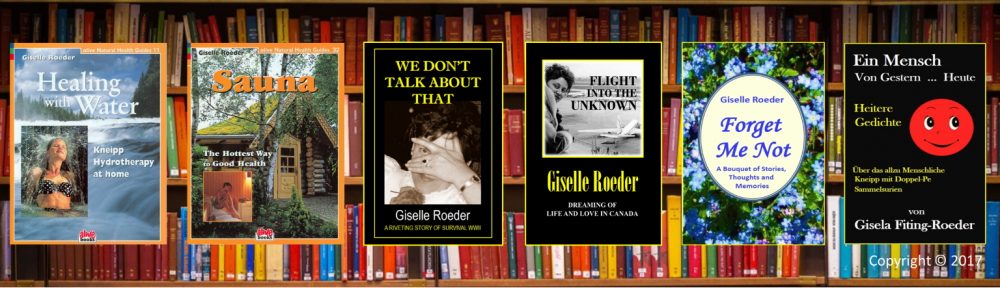
 You know I have written several books, one of them, “We Don’t Talk About That” – the memoir of my first thirty years – has made it around the world through ninety countries. YOU, my readers, have been asking and are waiting for the continuation. “What happened next?” was asked by many of you. You will get the answer in 2019. I have just started chapter eighteen of the sequel. Let me know if you want to be on the list for the first people who get the notice when it is ready!
 Then there is my little German Poetry book “Ein Mensch von Gestern – Heute.” A tongue-in-cheek book in verses about the things people born during the last century had and have to contend with. This happy book makes a wonderful present for your German friends. Actually, it gives my German friends, who can not read English, a glimpse into my life.
 Dear Giselle, I read your book, “We Don’t Talk About That.” Was there anything I didn’t know before? Factually, nothing (I touch this subject in my books as well). Emotionally, a lot, overwhelming, goosebumps all over the body most of the time: at some points from horror, at others – from joy there were lovely, loving, and supporting moments with the people you met, with the members of your family, and even some enemies (the kind doctor). It took me some time to gather the courage to write to you because there was an overwhelming feeling – shame and guilt for what my people – Soviets, Russians – made to your people, especially to the women, children, the civil population at large. Reading all these details was devastating to me. Some stories shattered my heart. Many brought me to tears, one of them when your parents reunite after your father returned from Siberia. I’m so glad he had. I’m thankful for your understanding (as I feel it) that the Soviets mirrored what Wehrmacht and SS troops committed in the Soviet Union. Most likely, there were no mass rapes, not with such brutal outbursts at least, but rapes they were. The lives of ordinary people – on all sides – were trampled and destroyed. I’m proud of you, Giselle. Of your battle to survive, of remaining human, supporting, and kind at the time when many broke, of the achievements of your life. I expressed my impression in my review on Amazon. Thank you for your book, which is a rare glimpse at the subject that was taboo for so long.
 The Cruel Romance tells the story of four young people on their different paths through WWII. The fates of a Russian country girl, a Soviet intelligence officer, a German violinist, and a Russian intellectual are irrevocably intertwined in the war not of their choice, forcing them to navigate the unconscionable moral compromises of life. Who will survive? And, at what price? The story’s conclusion is set in our time.
  Click on
  It was a bit cooler today, we had some rain last night. By far not enough here in Bavaria while they had heavy thunderstorms in other parts of Germany. During the morning, after my water treatment and massage, I packed up some clothing I don’t need anymore and went looking for a Salvation Army container to donate it. I saw a Red Cross shop, just looked in for curiosity sakes. I could not believe a) the quality of their donated offers, and b) the prices. 2.00-3.00-5.00 or 7.0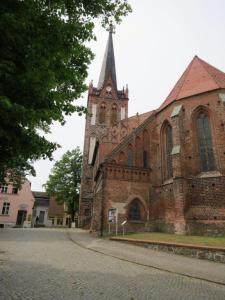


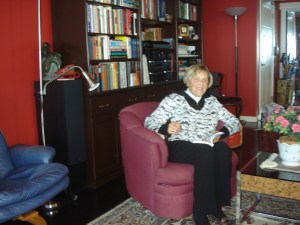
 Author of “How (the Bleep) Did I Get This Old”? Syndicated Columnist, Huffington Post Blogger.
 Giselle Roeder