The ‘Beheaded’ Rose

DSC02601Don’t think it is easy for me to tell you this story. It should be one of the chapters of the sequel to my book “We Don’t Talk About That”. It is a little love story but it really isn’t a love story. Read it and decide for yourself what you want to call it.

I met Hannes two months too late. Had we met two months earlier something might have become of it. Maybe. Maybe not. He had such an infectious laugh, such as I had never heard from a man and never did again. I knew he would never do or try something I would not want. He was ‘comfortable’ like an old pair of shoes, more like a brother and I felt at ease when I was with him. I still kept him at arm’s length. Why? There were several reasons. One, I was afraid I could fall in love with him. Two, he was in the middle of a divorce even it was a friendly one. Three, he was from the Rhineland and the Rhinelanders had a reputation for being ‘light weights’, people who didn’t take life too seriously. Fourth, he was Catholic and I was Lutheran, a match my parents would not approve of, even if neither of us were religious church goers. Fifth, I was in love with a little girl in Canada who needed a new mommy. Her father and I had been pen friends for two months and he wanted to marry me. But the main reason was I was afraid, simply afraid that a man who was obsessed with me, who had stalked me for years would be true to his promise to ruin any relationship I would ever have with another man. “If I can’t have you, nobody else will.” I had told Hannes all about it. Hannes listened, talked to me and made me see all sides, he pointed out the pros but mainly the cons about going to Canada. He sounded exactly like my father who thought I had gone totally bananas. “Canada! Marry a man you didn’t know, divorced and with a daughter? Nuts!” The problem was my compassion for that little girl, after seeing the photos with the sad eyes. I just couldn’t get her out of my mind. After I had met the grandparents in Wiesbaden I was lost. They didn’t even give me a chance to back out. I wasn’t strong enough. And I didn’t know I was being manipulated. The word did not exist in my vocabulary or my thinking.

Hannes became my best friend. He helped me plan my emigration. We went to the zoo in Hamburg, to a fabulous Indian Restaurant and sampled the “Indian Rice Table” with 23 little bowls containing different delectable types of food. We visited the “Pferdestall” a famous kind of pub/bar in an original horse barn. We attended “A Midsummer Night’s Dream” on the stage under the stars in the Herrenhäuser Gardens in Hanover.  Until I started to get very involved with my Canadian penfriend and his parents and sadly, my friendship with Hannes somehow tapered out. It was the end of a time with lots of laughter for me but I didn’t realize it until much, much later. When I was living in Winnipeg in Canada I got terribly homesick. I wrote to Hannes telling him about my life. He was married to a lady he had seen in the theater. He wrote “I had noticed her legs and they reminded me of you.” He had approached her during intermission, they had a glass of champagne and the rest is history. Hannes and I remained in contact.

It was a few years later when I visited Germany again. I had arranged a meeting with the last company I worked for since I wanted to import their skin care line to Canada. I had been instrumental in developing a number of the creams. Before flying home I planned to visit my sister in Hamburg and since Hannes lived there he picked me up at the train station. He handed me a beautiful long stemmed dark red ‘Baccara Rose’. We walked across the busy plaza in front of the station to his parked car. After he put my suitcase in the trunk he opened the door for me. We both were a bit shy, not yet at ease as we had been during the two months in the past when we had laughed a lot. I held the rose and my purse with one hand, trying to arrange my fancy coat which had a split in the back so the two sides could be lifted and you would not sit on it. I changed the flower from my left to me right hand and arranged the coat around me with the other. Finally I was seated with both coat tails on my lap. Hannes asked “is everything in now?” We looked at each other when I replied, “yes everything is in”. He closed the door and walked around the car to his side. As he was inserting the car key I noticed I had only the stem of the rose in my hand. I felt the shock right down into my tummy:

“Hannes, look” I whispered with a tiny voice. Hannes grabbed his steering wheel, put his head on his arms and slowly, quietly said “Just like us. It’s our story. A beheaded love story, a beheaded rose. I should have seen the rose wasn’t in when I closed the door. Should we stop by a flower shop and I buy you a new one?”

We decided against it. After a while driving along Hannes started to laugh. His Rhineland humour had taken over and he thought the whole episode was really very funny. I was sorry to have lost the beautiful flower head but I saw the weird humour in it as well. Actually, because of the accident, – I never forgot the rose.


Nobody ever expected this

“Yesterday had been a day like all the other days during the last year and a half since the Russians invaded Germany. Everybody working at Junkers Aero Space, a former Nazi company researching and building aero planes in Dessau, was doing their job. It was incredible that the Soviet Government did not stop operations after their occupation but had the plant rebuilt, kept the work force and even expanded it. It was a direct violation of the Yalta agreement stating that Germany was not allowed to produce armaments. “

A reader of my book “We Don’t Talk About That” had sent me an e-mail asking if we might be able to meet. She and her brother lived about 30 km away, so we met halfway in a small café. The story they had to tell was shocking news to my ears. I never had read or heard about it.

At the end of WWII the technological achievements of Germany during the war proved a challenge and an opportunity for the two new world powers, the USA and the Soviet Union. Germany had excelled in futuristic technologies, especially in the area of aerospace. Both powers were quick to gather the top German scientists and engineers and relocate them to their countries. Wernher von Braun was the best known scientist taken to the USA to support their rocket program. The story of Junkers Aerospace was virtually unpublicized, the company being located in the eastern part of Germany. Junkers had been the most advanced aircraft manufacturer worldwide at the end of WWII with such concepts as the “discovery of the area rule, operation of jet engines on its aircraft, cabin pressurisation and designs involving forward swept wings.” With the cold war looming and the arms race both powers tried to outdo the other in the aftermath of WWII.

I could hardly believe it when my guests told me that Junkers had been rebuilt and, at the end of June 1946 employed 3.325 people sworn to strict secrecy, a slip of the tongue punishable by death. Their father was one of those workers. They themselves were small children. The German employees lived in the small city built around the plant tightly controlled by the Soviets. Nobody had ever expected a re-location of this huge company to the Soviet Union. But, all equipment and personnel of Junkers was to be re-located. At its peak 4.000 Soviet secret service and military personnel were involved in the planning and execution of the plan. Re-location plans were talked about when an airplane built there could not be tested because the runway was too short. But it never occurred to the employees and unbeknownst to them the plane was shipped to Russia. It was the start of something traumatic.

With not even a hint on the morning of the 22nd October 1946, more than a year after the invasion, hard knocks on every house door woke the occupants. Military trucks were standing ready to be loaded with whatever every family decided to take with them as they were told of a re-location. Trains were waiting at the station. They did not have much time to plan or pack, – just get ready. They also had no idea where their final destination was. After a very long uncomfortable journey they had arrived at a small village built of simple “Finnish” prefab houses about 100 kilometers from Moscow. The village even had a German church, a German school and some small shops. Their father’s job as an engineer had been an important one in Germany as well as it was now in Russia. Some families had asked to leave their families in Germany but the appeal was ignored and not answered.

These two people, sitting with me at a small table drinking coffee, told me the story of their life in Russia. They were small children, three and five years old, they went to school in Russia, learned what it meant “not to talk about it”, referring to topics talked about at home. Incredible hardships, one of the worst being the Russian winters and living in a very cold and drafty house were part of their daily life. The Germans were teaching Russian employees all they knew and in many cases a certain comradery developed between them.

Seven years later talk about going “home” started to circulate. Little by little certain families were picked up and left town but their turn had not come yet. Another year went by and finally the family could go home but the father still had to stay. They sold almost all of their possessions hoping to start fresh in a new Germany. They knew two Germanys had been established, the German Democratic Republic (DDR) and the BDR, the western part. The family was relocated to East Berlin and the Mother tried to re-establish old connections. She soon realized that she would like to be in West Germany. A job offer for her husband by a Mannheim company would be available once he returned from Russia.

My two guests told me that it wasn’t all “just bad”. The total re-location of people and workplace had created a German island in Russia. Close friendships were established, neighbours helping neighbours, entertainment was ‘home made’ and the shortage of almost everything led to creativity and do it yourself projects. More children were born there and considered this place their home. A number of people had married a Russian and did not want to go back to Germany. However, now, many years after the deportation and living in Russia for eight years, people have gone back to visit remaining friends and see the further development of their little village into a town and come back with stories about the incredible hospitality they have experienced. Many of these former special workers are now living all over the world and the older generation starts to thin out. The connections between these people having lived in Russia against their will is incredibly strong and after fifty years the first and now more regular anniversary reunions have been organized where it all started: In Dessau, Germany.

There still are so many untold stories out there, seventy-five years after the horrible war. It is so hard to believe that soldiers, people, children had no say in what happened to them, they were moved by cruel hands like chess figures. There is so much we still don’t know.

Remember: Lest we forget.

Interview for VIU Elder College Lecture

EscapeI was interviewed by Gregor Craigie from the On The Island program on CBC Radio One this morning. The interview is reproduced in this YouTube video: https://youtu.be/ax9-0rcdSbk

The lecture takes place at 10:00 a.m. on Nov 7th at the Nanaimo campus of VIU.and is entitled “My Escape from Germany after WWII”.For details see: https://www2.viu.ca/eldercollege/courses.asp#sss

German Unification Day

Tree re-unitedThe People of Germany have a special cause for celebration today! It’s their “Unification Day”. East and West Germany were two countries since the close of WWII. They were united in 1989 and are happy to be “ONE COUNTRY” again. For me, having lived through WWII and seen the total devastation but emigrated to Canada in 1963, it is absolutely amazing what and how much the people of Germany have achieved. From saving and cleaning each brick from the rubble their cities were, rebuilding totally destroyed ones and now enjoying one of the highest living standards in the world. My sister tells me not to be blinded by the luxuries visible because despite all, there are many pensioners and  unemployed who have trouble making ends meet with the high cost of living and expensive rents. And still, the country is a strong pillar in the European Union, maybe even the strongest.

When I saw the photo of this tree this morning, placed by someone on Facebook, I couldn’t help but think of the divided Germany and the long years it took to grow together again. Just as the tree shows the healthy growth on top of the united two halves, so does Germany. Let’s hope the roots are strong enough to hold up the ever growing ‘crown’.  For me, – the 5th of October is also worthy of memory. It was the day I escaped East Germany. To this day my heart beats faster just thinking about it. Hundreds of thousands escaped to the ‘Golden West’ risking life and limb. Finally, they built “the wall” to keep their people ‘in’, not to keep unwanted people ‘out’.

For you, who want to know more about the history and rebuilding of Germany since WWI, through WWII and the after effects without reading large history books pick up my compelling book “We Don’t Talk About That” with the compressed political background easy to understand and, as some readers say “understand for the first time” why and how it all happened. The story you’ll read is one of an ordinary German family which stands for thousands of others who lived through the same trials and tribulations but to this day ‘don’t want to talk about that’.

German flagThe Germans have a very good reason to celebrate their special day. Nobody, absolutely nobody, ever expected it to happen; to be able to climb, dance on or hack at, scrape and tear down the Berlin Wall, without any shots fired, without another war happening.

TO BE UNITED AND BE ONE WONDERFUL COUNTRY AGAIN…

Kids and Kittens

Kittens - 2

Me – feeding our cats sausage

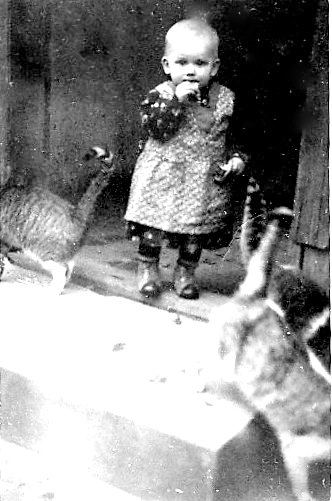
Cats were always around when I grew up. Mother had her cat ‘Molly’, Father had a gorgeous but fairly old cat ‘Peter’ he had owned already as a bachelor. Granny, who lived in the “Granny flat” part of our house, had a cat she called ‘Katzi’. They all were free to come and go and also choose who they wanted to play with, or sit with, or be stroked by. Katzi and Molly preferred to stay away from us children. Essentially they were “mousers”, – meaning they were not ‘house cats’. Tthey lived in the barn or stables of our small farm, hunting mice and rats. Sometimes Father would put a cat down into the root cellar when he had seen mouse droppings. They did a rather good job in doing what they were supposed to do. They did not eat all they hunted. Sometimes Father found a row of dead mice or rats lined up, the cat sitting there, looking up at him expecting a ‘thank you’, which they promptly got in form of words and strokes. To me it always seemed his strokes were worth more than ours.

Kittens - 3

My greatest love

My cousin Renate’s cat had several young kittens when I was nine. My sister Christel and I each got our very own little kitten. Christel’s cat was all black with yellow eyes; mine had a white underbelly, white boots on its hind legs and white shoes on its front legs. She otherwise had a mottled grey coat, but also had one white ear and a white nose. I called her Mooshie. I loved her more than my dolls. Often I dressed her in doll’s clothing and let her sleep in my doll carriage. Once, she got scared and jumped out and tried to run away. She repeatedly stepped on the dress she wore and tumbled about. It was very funny and we laughed heartily. My father happened to see the cat and gave me a good lesson: “If you love Mooshie, you won’t do that again. If she has to defend herself she will not be able to do so and if she climbs up a tree she will not be able to come back down.”

That happened in the same year when my mother’s cat Molly had a very bad eye infection and my father had to shoot her. It disturbed me greatly. He explained he was being kind to the cat. He cried when he shot his own old cat, Peter, a year later, when it was full of arthritis and could not walk anymore. Peter looked my dad straight into the eyes as if he knew what was coming. It was a very emotional moment for me. I will remember the expression in Peter’s eyes forever. I always wanted to have a cat like him.

One sunny afternoon we older kids were sitting on the broken steps leading up to our house and talking about this and that. The weather was very warm and we were bored. Looking up I saw my cat, Mooshie, coming towards us carrying what I thought was a mouse. She came right up to me, put the little thing down in front of me, looked me in the eye and said, “Meow” with a question mark.

“Mooshie”! I called out, “What is that?” She looked at me again and, after another “Meow,” left us, walking away purposefully.

We were amazed, not bored anymore. I picked up the little squirming thing and everyone agreed it was a baby kitten. It did not even have its eyes open yet, was naked and looked weird. After a few minutes, Mooshie came back with another one. She repeated the scenario with the “Meow” and left again. This happened two more times. When she had brought four of those little critters, she stayed with us and started licking them. Mother had heard our excited voices and had come to see what caused the racket. She was very helpful and understanding when I said I needed to have a bed for the little cat family. She brought a carton and an old baby blanket. We made a little nest and placed the kittens in the middle. Mooshie jumped in and curled around them. The babies found the food supply and suckled. It was fascinating and we watched for a long time.

It must have been a week later when Christel’s black cat, “Moorly”, a sister to mine, had babies as well. She had been smart and had them in Christel’s doll carriage in the house. She refused to move out of it, scratching and biting. None of our cats was allowed to stay in the house overnight. Even when it was raining or snowing, they were grabbed from the warm cozy place on the sofa or on a lap and heartlessly placed outside the house door. Father or Mother, whoever did the deed that evening, would put us off with, “There are enough warm places in the stables and barns; they know and they’ll be all right.” Christel agreed to have her doll carriage put in the barn so that the cats could stay in it. The bedding was all ruined but that was no big problem. It was simply replaced when Mother knew Moorly was in the house for her milk. The cats always got milk and the same food we had.

Sister Edith with Mom's new cat

Sister Edith with Mom’s new cat

It was fascinating to us how they developed from little naked blind mouse-like beings to the cutest playful kittens. Day and night we were talking and thinking of our little babies, no more boredom, and naturally we assumed we could keep them all. What a shock when our parents explained to us it wasn’t possible, – all of them needed to go to other houses. One by one they were picked up and we shed a tear or two when it came to the last one. Our only consolation was we knew all the people and they promised we could come and visit any time. I don’t remember if we ever did. The bombing had increased and the on-ground fighting of WWII had entered into Germany and everybody had other worries, even we children had to face it. Life changed dramatically.

Those were the cats of my childhood. The story is an excerpt from, and you can read more of the particular time in my book “We Don’t Talk About That”. There were other cats in my life later: Prince Eugene, another Mooshie, Minka, Max, two little goats and several poodles. But they will appear in my second book, the sequel to “We Don’t Talk About That.”

A heart wrenching, sad love story:

Ingrid (2)

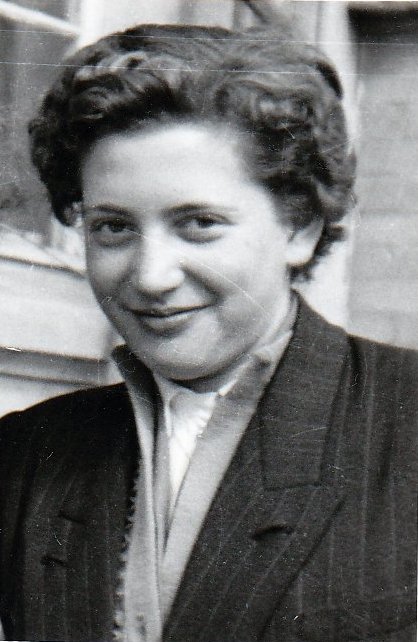
My sister Ingrid

Maybe it’s not my place to tell it. But who else can tell it? The two people involved cannot tell it and the others old enough to know the story have died and the younger ones don’t really remember the way it was. The story is about my third sister, Ingrid, who was such an easy going baby and child of whom people said: “Yes, later children are much easier.” I was six years old when Ingrid was born and had decided right then and there that I would only have “later children”. Our mother always admonished the others of us: “Look at Ingrid! She is never ever sick! And you come up with something all the time.”

We were four girls, each one born with our father’s hope to have a boy. It wasn’t meant to be. After the war he stated “I am so glad for my girls. At least they won’t be cannon fodder in the next war.” I, the oldest and the third, Ingrid, had Mother’s hazel greenish eyes and the second, Christel, and the fourth, Edith, were born with our father’s deep blue eyes. There also was a deep connection within the two pairs. That’s why I know Ingrid’s story. We were very much alike in our looks, our likes, our thinking and our love of books.

It was at my nineteenth birthday party with twenty of my canoe club friends plus our family. We were having fun, cooking pancakes on my new camping stove, flipping them over in the air, and a lot of laughter caused by some homemade wine. Late in the evening I started to “read palms”, telling fortunes and Ingrid was the last one who asked: “Can you read mine too?” Naturally I took a look and without thinking told her “For a start, you won’t have a long life. Your lifeline is very short…” She was only thirteen at the time. I shut up, shocked by my insensitivity. I could not shake a weird sense of premonition.

“Will I still marry before I die?” I knew what I saw but told her little white lies. At least I saw it that way. After all, this was just fun, I really didn’t know much about the “science” of telling fortunes. It wasn’t much later when the party broke up.

Ingrid was fifteen when my parents told me that she was seeing Benno, a boy of whom they did not approve. Benno was a year or two older than Ingrid but he was into drinking and always into fist fights with other boys. His parents could not handle him but he loved his grandma who lived next door to us. He often came to stay with her. I asked Ingrid “Why Benno, there are so many more nice boys around?” but she said “He needs me. With me he is nice and he talks and he wouldn’t drink. Nobody else understands him. I see no reason why I should not see him. We are good friends.”

Ingrid the swimmer

Ingrid the swimmer

In the summer next year she was sent to a children’s camp as a “sport teacher’s assistant.” Ingrid was an athlete; her fortè was swimming and diving. After about a week she was sent home because of terrible pain in her right shoulder. She could not even lift her arm to comb her hair. She was told by the family doctor not to train, not to swim, rest the arm and in general not to overdue anything. The pain did not go away, it got worse and at the end of August Dad took her to a private doctor. After a thorough examination his diagnosis was a shock: youth sarcoma. He told my father to immediately take her to the Charitè in Berlin, a special famous hospital. Within three days her whole arm was amputated. More tests revealed that the cancer had already gone into the shoulder blade and collarbone. She refused to have those amputated as well. Her statement was “I am already crippled enough; no boy will ever love me and I know I have to die anyway.” Six weeks later she returned home. Aunt Irene, a former army nurse came daily to renew the bandages and make sure she had enough painkiller pills. Ingrid refused morphine. “I want to die with my mind intact. I don’t want to be a vegetable.”

Ingrid post-op with family

Ingrid without her right arm.

Benno had given up drinking and my parents allowed him to make regular visits. In early December Ingrid’s cancer had grown out of the shoulder cavity as if a new arm was growing up to the elbow. The pain grew worse and she had to go into the local hospital. When Christmas was just a week away my parents asked her if she had a special wish. By this time I already lived in the west of Germany and kept sending items they could not get in East Germany: Chocolate, oranges, lemons; my parents would send a telegram with what Ingrid would like to have. I cried a lot during those weeks and once almost caused an accident with a bus and a car because I biked right into them. I couldn’t see for tears… Ingrid had only one Christmas wish: To come home, lie in her own bed to die. The doctors warned my parents, advised against it because it would be the hardest thing they ever did in their lives, they might not be able to stand it. They were adamant and wanted to grant Ingrid’s wish. They did.

Benno gave her a beautifully wrapped present, a long fancy night gown. It made her happy and sad at the same time. He told her he would wait for her and marry her when she got well, it didn’t matter that she only had one arm, he still had two and they would manage. My parents were upset about the fancy night gown Benno had given her, thought it inappropriate but there was nothing they could do about it. Ingrid had several good days during which she read a book I had sent her. I don’t remember the title. I had read it as well; it was something about five lives we each have of which the last one was about the afterlife. I had been impressed by its sensual spirituality. Mother wrote “Ingrid told me it gave her hope and she is not afraid of dying anymore.”

During January her pain was so bad that Aunt Irene, when injecting her pain medication mixed in a little morphine without telling Ingrid. It helped to ease her plight a bit without clouding her mind; yet sadly, the cancer had taken over her whole body.

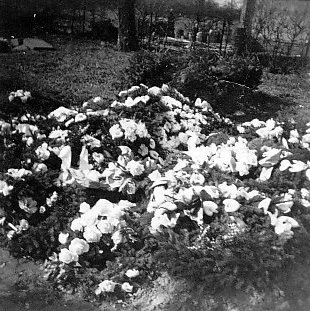
Ingrid's grave

Life – love – lost

On February 5th her fight with this horrible cancer, the same as one of the Kennedy boys had, was over. She died and was buried dressed in the night gown Benno had given her. He was totally devastated, started drinking heavily and three weeks after her funeral hanged himself.

August 4th is her birthday. She loved gladiolas. I always buy a bunch and think of her. There is no grave I can take them to – they are on my coffee table. She would be seventy-five this year but I cannot imagine her as an old woman. She is forever the young seventeen year old girl.

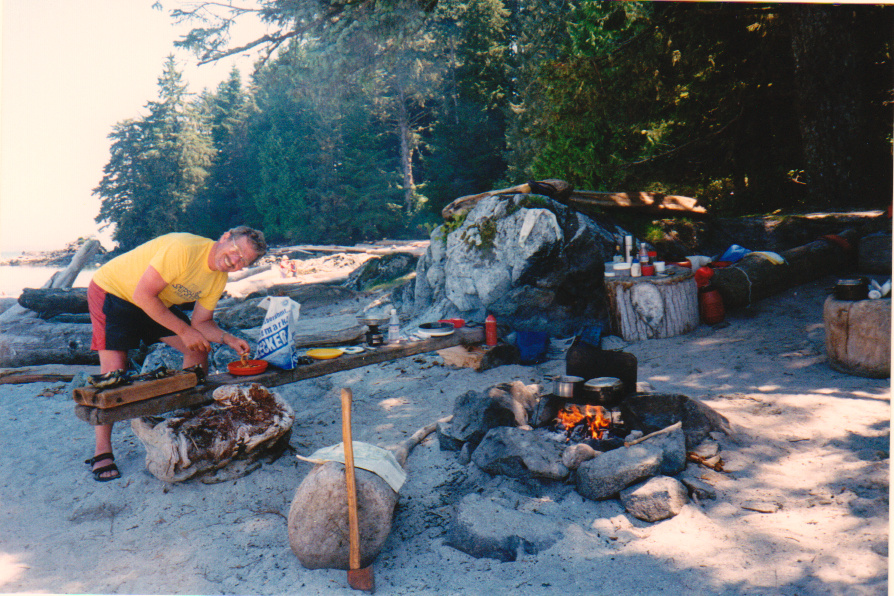
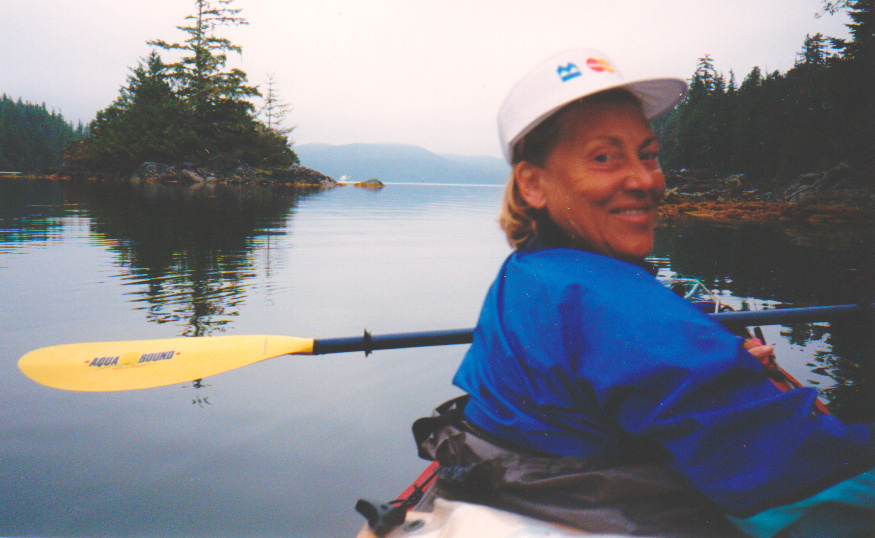
Paddling the ‘Broken Islands’

I have to share a very much appreciated review of my book “We Don’t Talk About That” from my good old friend, one who has written books and many essays himself, one who has started the first kayaking club in eastern Canada and tried to teach me to ski on Grouse Mountain on the west coast; one who has started and established architecture courses and taught at the university, involved in building an opera house and did all kinds of other incredible things. One thing we did together was a weeklong kayaking trip through the ‘Broken Islands’ starting in Ucluelet, B.C. on the west coast of Vancouver Island.

Broken Islands - 1I will never forget how I carried all our supplies to the boat close to the ocean where we were to take off. Gerhard had left to find a parking place for his car. Returning on my second trip with another arm full of ‘stuff’ I saw hundreds of seagulls ripping into our food bags, nuts and dried fruit was all over the place. I had to fight them off while I saved what I could. When I finally had everything piled up next to the boat the ocean had left, – the ebb tide had set in and I stood next to the kayak on the sand watching the water retreat farther and farther. Quite a helpless feeling!

I will also not forget how we had a fishing line attached to the kayak and all of a sudden the paddling seemed harder. Wow! A good sized salmon was on the line and fighting to get off. As my friend started to reel it in it took just a moment and an eagle dove down and stole our supper. We had to cut the line, we had no choice. Camping on different small islands we harvested mussels and oysters, cooked them in ocean water and sometimes shared them with other campers.

Broken Islands - 2Paddling towards a huge big rock off the coast we heard the howling of sea lions. As we came close one giant stood up and apparently gave a loud order and at least a dozen of them dove into the ocean and stood like a wall in front of us, bobbing up and down in the waves but never taking their eyes off us. I was scared and wanted to paddle away but Gerhard kept his course and only just during the last moment steered away. I am sure those beasts would have capsized our kayak and we would have drowned.

Broken Islands - 3It was my most exhilarating and exciting kayak adventure in the waters of the Pacific Ocean. Sometimes we had to fight huge waves but we made a terrific team as we were both experienced paddlers. Gerhard, an Austrian by birth knew the ways of the ocean while I was used to paddling on the Baltic Sea even though my kayak competitions were mostly on lakes and rivers of Germany.

Memories. And now Gerhard read my book. I was anticipating some critique from this widely read and educated man. I want to thank him from the bottom of my heart for what he had to say:

Giselle,

Finally I purchased your book. I started reading and couldn’t put it down. It isn’t just good it is very good. It is gripping, even though I have heard much of the story from you over the past twenty years. It is good to see the story did not change. It is well organized so that one knows who is who as we meet them over the years of age, old rural bliss, looming disaster, cataclysm and redemption.

You may have started a new genre with this book. It is not often we encounter a book showing fortitude and heroism amongst the despised losers of a bitter war, together with kernels of humanism remaining amongst the unspeakable brutality of vengeful victors when they encounter the only ones left: the innocent. Everyone should read it.

Gerhard S.

“In My Own Words” #memoirs #books #writers

A special event to chronicle four memorable memoirs at the West Vancouver Library

“We are always excited to celebrate literary talent” said Information Services Department Head, Pat Cumming. “For this panel we gathered an entertaining range of personalities, adventures and stories. Having the always enigmatic Eric R. Brown (author of the Edgar nominated novel ‘Almost Criminal’) on hand to moderate the panel is the icing on the cake. It’s going to be a great night.”

And ‘in my own words’, it was, so much so that I was not able to sleep the following night. There was so much to process, so much to digest and so much to think about. It was exciting to meet the other writers, first for me was Judy McFarlane, a calm and quiet pleasant woman, then I was startled by the gorgeous long-legged creature Cea Sunrise Person and, luckily, meeting former Judge David Roberts brought me back to earth. The room slowly filled up, the four of us were seated facing the audience and after Eric’s welcome address and the introduction he explained the program of the evening. Each writer had to read a 5-6 minute piece of their book after which he would ask the reader questions relating to the memoir for 15 minutes. At the end of the over an hour long program there would be time for questions and answers, interacting with the audience.

Cover-8I was appointed the first to read because “your memoir goes back the longest time”. From my book “We Don’t Talk About That” I had chosen the story about the miller who had no flour but my family was hungry and I decided I should go and ask him anyway. He must have felt sorry for me because he told me to crawl under the millstones and sweep up the powdery dust. He told me that one has to eat 400 pounds of dust anyway before one dies and this stuff would still be good with the bran in it to cook soup or bake bread. Then he asked me if I was hungry. Hungry? What a question! I was always hungry. He invited me into his house to have a sandwich. I was apprehensive because if my experiences with the Russians during the invasion but he seemed so nice I wanted to trust him. While he busied himself he asked me to tell him about me. I couldn’t. He kept prodding and all of a sudden it all came tumbling out of me, it was as if some flood gates had opened. I told him about the Russian invasion, what they did, how we lost our home, the walk to nowhere next to the Russian war machinery towards Berlin, the diphtheria and the sleep in the strawberry patch, the train and the murder of the young woman and her daughter, what the murderer did to my mother and how the next morning she pushed us out of the moving train and more of the cruelties to which we were subjected. The miller had one hand on the bread, a knife in the other, stared at me and just said: “Oh my God…”

The questions from Eric, who apparently had read all the books, were about writing a memoir like this, how I remembered, how we dealt with and survived the horrors of rape and murder and starvation and how years later my life took a different turn.

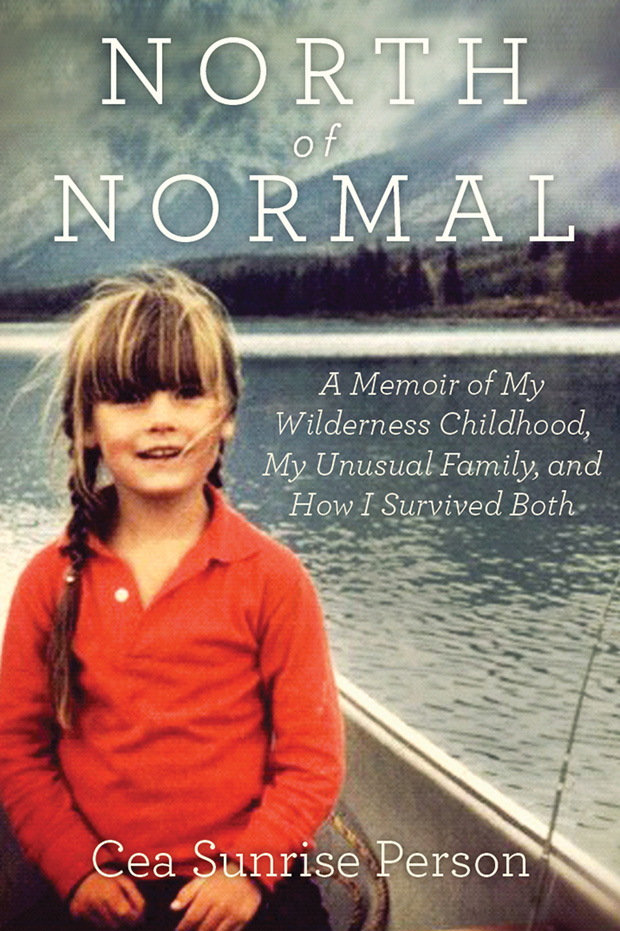
Cea PersonThe next one to read was Cea Sunrise Person, the youngest of us. Cea was born into an unusual family consisting of grandparents, aunts and uncles, grew up in the wilderness and in teepees living from the land and nature during the so-called counter culture. I assume it is safe to call it the hippie time with its sexual freedom, nudity and drugs. For me a look at a totally new way of life I had never been able to comprehend. I also had never met anyone who was involved in it. She mentioned several times that even as a child “I always felt I did not fit into it”. In my mind remains the question how she, as a very young child, would know that and how and when or at what age was she able to compare her life with another? Reading several chapters of her book “North of Normal” online I was intrigued by her memoir and it was mainly “SHE” and her story that had kept me awake that night. To really understand I guess I’ll have to read her book. As a writer of a story I never told for seventy years I know it must have taken guts for her to tell all and open herself up to judgement. She says “it took me seven years…” Yes, Cea, I believe it. She read a story from her book about being invited to a birthday party, had no idea that she needed a gift and decided to give away her most beloved item, she also had no dress and on arrival naturally felt totally out of place. By chance she happened into the room of the birthday girl, saw a dream dress on the bed, took off her t-shirt and tried it on. It was too small but the picture she saw in the mirror took her breath away….It was sad how the story ended. She went home in her old outfit and took her unappreciated ‘gift’ with her. For a child of about five (?) it must have been heartbreaking. But let me tell you, Cea went on to become a model at thirteen, lived in New York, Los Angeles and Paris, she modelled in Munich and even then “I felt like a freak, never fit in.” Now she is married, the mother of three and people who read her memoir wonder “how were you ever able to become so normal?”

David RobertsDavid Roberts, a former judge and attorney wrote “Letters to His Children from an Uncommon Attorney”. Cea was a very hard act to follow but within minutes David had the attention of the audience. He had picked a humorous story to read and there was not a person in the room who did not join in the laughter! Let me try to somehow piece it together. For some reason David had to go to a liqueur store and as he entered he glimpsed a man standing not too far from the entrance holding out a cup. He briefly thought of the people needing to beg and avoided looking at him. When he came back out with a huge bag with bottles in his arms he pushed the door with his backside and then dropped the change of three quarters he had received, into the man’s cup. He was surprised and shocked when he heard a splash and now, glancing at the man, was told “My goodness, I am just holding my coffee and waiting for my wife…” The voice sounded familiar and the man was also known to him: Another judge! The 15 minute interview by Eric following the laughter was surely a release of tension in the room caused by the previous readers. It revealed that David had four children, three boys and a daughter. He often told them stories from his life and it was the daughter who had told him “to write it all down before you die.” The result is this at times humorous and at times harrowing memoir of a father, a husband and an attorney.

Judy MacFarlaneLast, but not least, it was former lawyer Judy MacFarlane’s turn to read from her book “Writing with Grace”. One could be under the impression she had written guidelines to write with ‘grace’ and be surprised to learn that it was a twenty-four year old girl with Downs Syndrome named Grace Chen who had come to seek help with a poem. The mother of this girl was in the audience and was introduced. It was heart wrenching when Judy read about Grace telling Judy “My real truth is too scary, I like to hide my real truth” when talking about her poem and Judy is taken in by the earnest desire of this girl to become “a famous writer”. When Grace was born the grandfather had told her parents ‘put her away and forget about her’. Judy traveled with Grace when she gave her own book to this grandfather. Judy read a piece about Grace’s memories about the Titanic, what happened, her fears, a helicopter coming to save the people.

The book Judy wrote about her involvement with Grace is an account of her own and others prejudices and the often dark history of Downs Syndrome. The book is called inspirational, exceptional and I am sure of great interest to all people having to deal with this disease that is no disease and not a birth defect but, according to the Canadian Down Syndrome Society ‘a naturally occurring chromosomal arrangement that has always been part of the human condition’. I could tell by Judy’s tone of voice that the story of Grace is still deeply troubling her and close to her heart.

Check out the books on Google by name or title. I think reading any one of them will enrich your life. The evening when all of us writers came together will long stay with me and I am extending a big THANK YOU to the West Vancouver Library to making it possible.

Upcoming Special Event

I am proud to be included in this event at the West Vancouver Memorial Library

West Van Library logo


For immediate release
In My Own Words to chronicle four memorable memoirs at Memorial Library
Thursday, June 11, 2015, West Vancouver, B.C. – One grew up off the grid in the wilds of BC. Another helped a woman with Down’s syndrome write her Cinderella story. One spent her formative years in East Germany during the Second World War. Another wrote lovely letters to his children about his experiences as a father and lawyer. Join us for these and other stories at 7 p.m. on Wednesday, June 24 at In My Own Words, a memoir panel featuring four eclectic and fascinating local writers, moderated by celebrated author E.R. Brown.
“We’re always excited to celebrate literary talent,” says Information Services Department Head Pat Cumming. “For this panel, we gathered an entertaining range of personalities, adventures and stories. Having the always enigmatic E.R. Brown on hand to moderate the panel is the icing on the cake. It’s going to be a great night.”
– In North of Normal, Cea Sunrise Person recounts the story of her wilderness childhood, her unusual family and how she survived both.
– David Roberts wrote Letters to His Children from an Uncommon Attorney after his daughter convinced him to write his stories down “before he dies.” The result is this at times humorous, at others harrowing, memoir of a father, husband and attorney.
– Writing with Grace, by Judy MacFarlane, explores the challenges and perseverance of an aspiring writer with Down’s syndrome as she tries to fulfill her dream of writing a book.
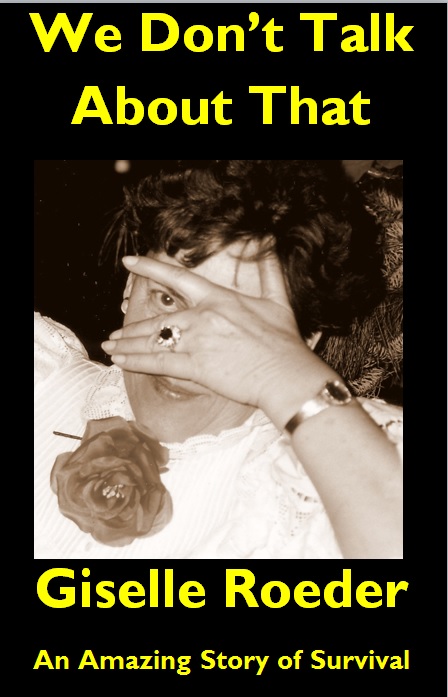
– In We don’t Talk About That, Giselle Roeder tells the often hushed story of growing up in Second World War Pomerania and her post-War move to East Germany.
– Moderator E.R. Brown is the author of the Edgar-nominated Novel Almost Criminal.
All of the authors participating in the panel are available ahead of time for interviews and photos. Please contact David Carson at the phone number or email address below to make arrangements.
More information about the Memoir Panel is available on our website.
-30-
Media Contact David Carson, Communications and Event Coordinator 604.925.7407 dcarson@westvanlibrary.ca

Learning to Kayak #Kayaking #EastGermany

Getting that balance right

Getting that balance right

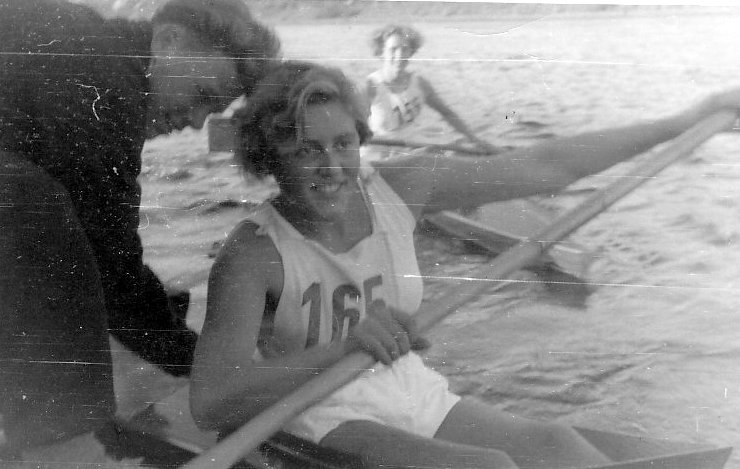
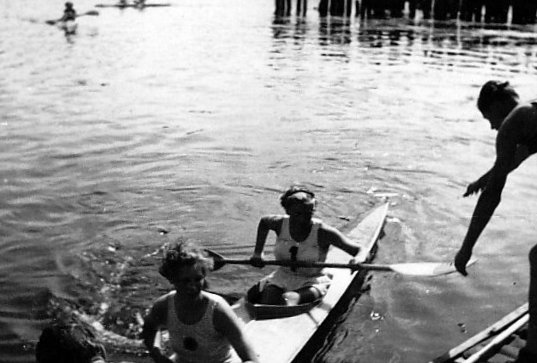
It was probably the best thing that could have happened to me: Afred, a young man in charge of the kayak racing team, came to my office to get the permission stamps for the team to go to a regatta taking place in a different city. As I asked him questions he invited me to come to a training session and see if I would like to join the club. Well, I said ‘yes’ right away and his girlfriend Christa showed me how to get in and out of a kayak. Balancing wasn’t easy as I was trying to sit in that narrow nut shell. When I mastered it without tipping over I was in love, – in love with the novelty of it and in love with the water. Christa also let me try out the KII. I became obsessed with kayaking, I was determined to be in the top group and secretly even promised myself to become better than all the other girls. And, you know what?

image1It was only a year later that I won the District Championships in the KI over 500 and over 3.000 meters. Mind you, after the 3.000 meter race I fell out of the kayak as soon as I crossed the finishing line. Christa, my trainer and also my KII partner was disappointed because up to now she had won all the races. But we won the 500 and the 3000 meters in the KII, it made up for it.

image3We became very close friends. Even now, more than sixty years later we are still close but mostly in telephone contact since we live on different continents. She saved nearly forty five years of the letters I wrote to her from Canada after my emigration. She gave them to me last time I saw her. To read them again was quite a revelation for me. In my memoir “We Don’t Talk About That” you’ll enjoy reading about my kayaking and the great love I had for my own paddle boat “Max”. The best years within my first 30 years I cover in that book have to do with the water, my boat and my desolation in leaving it behind when I had to escape from East to West Germany. As it happened, my racing abilities helped me to find a job in West Germany. I am sad to say that I never reached the top groups again. I just had to work too many hours and did not have as much time for the necessary training.

image2You might find it interesting that in East Germany every sport was very highly promoted and financially supported, it hardly cost anything for either memberships or competitions,– but in West Germany you were on your own. And as I made very little money I could not really afford to participate anymore either. When I was 5th once at a competition I dropped out. I thought it was better if people remembered me and said “oh, she was good” rather than “yaaah, she got too old and had to drop out”!


start 'em early

Start ’em early!

Did you know they now have real racing kayaks for kiddies? And train them very early? Just like Austrian kids start to ski as soon as they can walk, at the Baltic Sea where I lived the kids can start at two or three years old getting into a kayak. Amazing! Start to train early for future Olympics? Yes, the children are our future in more ways than one. Kayaking is healthy, you breath fresh air, develop muscles but mainly around the upper body. So training included running, all-body exercises and during the winters we went to gymnastics and played competitive table tennis. One more thing: The comradery. I give it ten points out of ten. It’s wonderful and becomes a big part of your life. I just LOVED it.