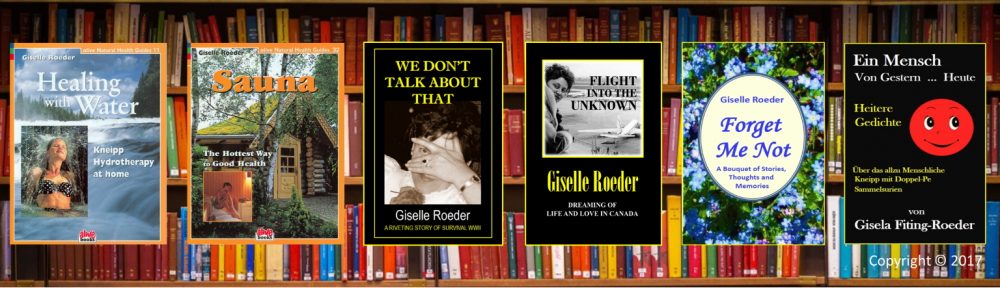
Next to dogs books are my best companions. They don’t fight with me and when they ‘annoy’ me I can just close them and put them away. The material I have read might go around and around in my head; sometimes I understand but always I want to know more and I open them up again a day or a few hours later. Even a book I don’t totally like I will finish because I know there must be a reason the writer wrote it. I dissect the story. I sometimes think about how I would re-write it, or parts of it. But that’s not what I wanted to talk about today. I want to tell you of the books I have read so far this year. Most of them have a connection to my own book “We Don’t Talk About That”. My writing created an incredible thirst in me to know more about war history, especially WW I and WW II. So I started reading instead of writing my next book.
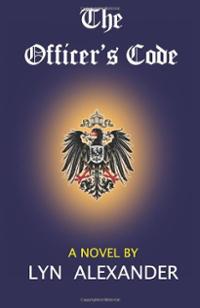
“The Officer’s Code”
 Lyn Alexander’s way of telling a story puts you right into it. You identify with one of the characters and you become that person. In this book you re-live the life of a young English man who could not satisfy his father since he did not like to study law and take over the family practice. He failed and as punishment was sent to Germany to study in Heidelberg and “prove” himself. He married a German girl, changed his name to his mother’s German aristocratic name ‘von Schellendorf’ and fought on the German side during WWI. An incredible story based on fact and fiction .
 “The Versailles Legacy”
This is the second of four books in what is known as “The Schellendorf Series” by Lyn Alexander. It puts us in the picture of a Germany in tatters and the impossible hardships imposed on the country by the ‘Versailles Treaty’ after the war is lost. The German Representatives argued the stipulations laid on Germany would be counter-productive. A young Austrian WWI corporal, Adolf Hitler, promised jobs and bread and peace for all Germans and his hypnotic speeches swayed many mistrusting Germans to vote for him because they had nothing to lose but everything to gain. The years between 1920 and 1939 lead to WWII.
 “The English General”
Once you read those first two books you cannot help but want to read the third one. The establishment of Hitler’s ‘Thousand Year Reich” brought many changes. The old military, the Reichswehr, with the former generals in charge tried everything to stop the new developments but one after the other mysteriously disappeared or was killed. They also plotted to assassinate Hitler but he always got away. One of Hitler’s close allies established the “Brown shirts”, known as the SA which numbered in the hundred-thousands already during the 1936 Olympics. The young Englishman became a German General and deeply ingrained within him was “the Code of honour”. We see him struggle with blackmail by his birth country while once again fighting for Germany during WWII.
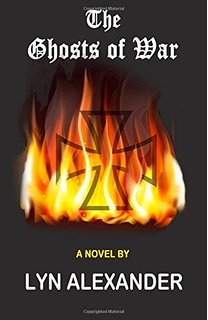
 “The Ghosts of War”
This, the fourth book in the ‘Schellendorf Series”, finally helps us understand a lot of what happened when the Allied Forces entered Germany. Imprisonment, lies, deceit, interrogations, and, to top it all off, the Nuremberg Trials where the blackmailing English arranged that the famous lawyer, the father of our by now beloved General defends him. His return to England, the ups and downs during the years after 1945, and his secret visits to Germany.
I never mentioned General von Schellendorf’s wife but she plays a huge part throughout all four books, love, deceit, lies, divorce, her re-marriage and abuse by her demented father. At the end of book four we hope for reconciliation and maybe a joint new venture in Heidelberg. Once you read these books and you travel to this wonderful city you’ll know it. These four books feel so “real” that you think you lived through it all. In time I’ll read them again.
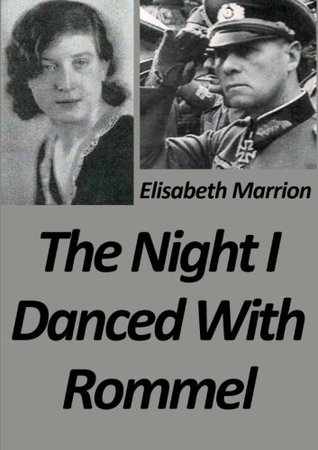
 “The Night I danced with Rommel”
Elisabeth Marrion wrote this heart wrenching memoir of her mother’s life. Married to a soldier who fathered a baby every time he was on leave, her mother had to look after and somehow provide food for five small children. Dealing with the bombing of her hometown of Hildesheim, and being a hands-on woman a lot of neighbors relied on her. When her husband was transferred to Africa to fight alongside General Rommel she was relieved of the scary thought of him being killed in Russia. As the story moves on General Rommel’s Regiment happens to be stationed in this city for a few days on their way to France and she was singled out by him to do the first dance during a party the towns-people organized to honour him.
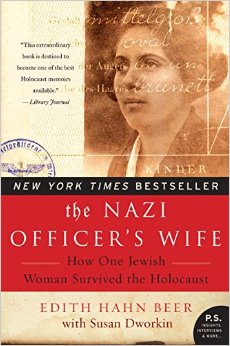
 “The Nazi Officer’s Wife”
Two authors, Edith H. Beer and Susan Dworkin told the story of Jewish women who married Nazi Officers to save their lives. In many cases the husbands had no idea they were Jews. These women were known as “U-Boats” or “Submarines” living normal lives when they were everything else but normal. This story is gripping, has been made into a movie, documentaries and has received worldwide accolades. It is hard to believe what the author, Edith, has endured during the time of the Nazi take-over of Austria to the end of the war living in the Russian occupied Germany. I had no idea that these women even existed and was touched to my deepest soul after reading this book.
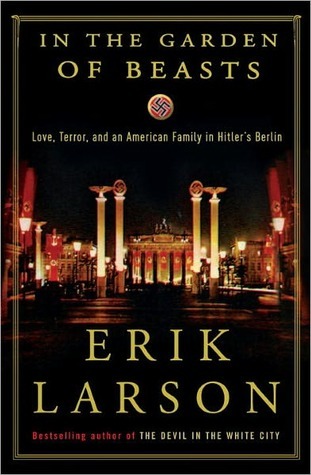
 “In the Garden of Beasts”
Eric Larson does not need an introduction. In this book he tells the story of the American Ambassador to Berlin during the early years of Hitler’s reign. The book is based on hundreds of letters to the American President, the diaries of the daughter and one is overpowered by the incredible research Larson must have done over several years to write this book. It is rather a lengthy book and towards the end I felt as if I myself went through WWII again. Exhausted.
 “Louisa Elliot”
How I loved this book by Ann Victoria Roberts, a gifted writer! The novel is set in York in the 19th Century and involves a family drama that sometime just takes your breath away. Despite the fact that it has about 700 pages (e-book) I was sorry when it ended. Not a surprise to me when I found out that it sold over a million copies when it first came out. Luckily there was another book for me to read following this one, called
 “Liam’s Story”
Also a big book and I tell you, this one occasionally makes your blood boil. How can a writer write books that you simply cannot put down? How can she make you identify and suffer with the protagonist? How does a brain like Ann’s work to come up with these tales just because she happened to find a small diary of a family ancestor? Each novel can stand on its own but read “Louisa” first…
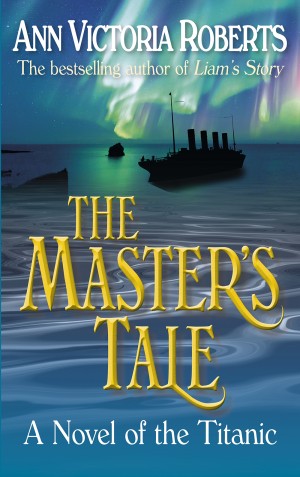
 “The Master’s Tale”
Another Ann Victoria Roberts book – this one is based on her research about Captain Smith, Captain of the unsinkable “Titanic”. She portrays the rich and famous guests, the interactions of many of them, love triangles, affairs, and intrigues. When the ship hits the iceberg you can hear the cries, you will feel the cold water and you see the listing of the big ship from your life boat and finally see it disappear as if it had never been.
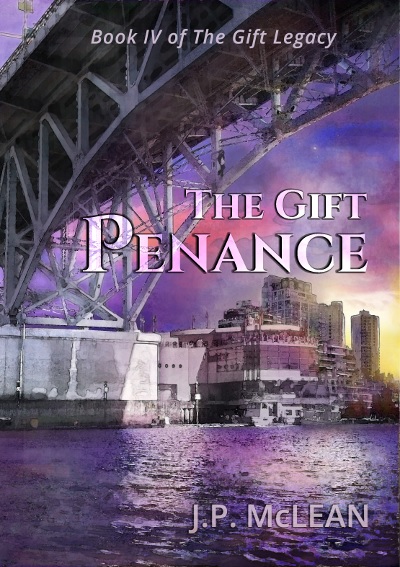
 “The Gift Pennance”
Jo-Ann McLean writes ‘thrillers’. I have never read thrillers and cannot recall how, or when, I read a couple of chapters of this book on Linkedin, Amazon (Look Inside) or perhaps came across Jo-Ann’s website. Because it involved kayaking I wanted to read more. The story is set in Vancouver and since I know and lived in this fair city I was intrigued. When I started reading I realized I had never ever read a book like it, totally fictional and an imagination I can only marvel at. Some scenes in it caused me to contact her (bless the Internet!) and ask what her family or her husband thinks about some of the scenes. This book is part of a series, the previous one is the “Gift Legacy” but I have not read it.
“North of Normal”
 Cea Sunrise Person took seven years to write this shocking memoir of her childhood, growing up during the ‘counter culture’. Her grandfather moved the family from California to the North Country wilderness. They were growing pot, smoking and selling it, living off the land, fishing and wildlife. Periods of plenty changed with periods of hunger. Little Cea’s home was a tipi/tepee shared with her very young mother and a number of other adults who thought nothing of nudity, open sex, changing partners. Cea invented her own games and amused herself without contact with other children until she had to go to school. Seeing the first pair of underpants and a fancy frilly dress made her realize that there was another life out there and she had only one wish: To survive the crazy life she was living and her ‘crazy family.’ After her book was published her friends asked her: “How did you ever turn out so normal?”
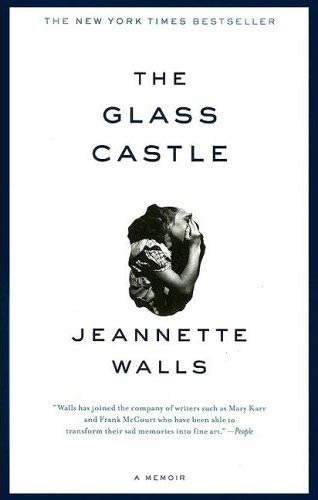
“The Glass Castle”
 I had no idea what living in the sixties for the people who chose to live the ‘free life’ was like and I must admit that the book “North of Normal” had deeply disturbed me. Friends, whom I told about it, encouraged me to read ‘The Glass Castle” – a similar book by Jeannette Walls. The language is not quite so vulgar because Jeannette’s parents were actually educated, but they chose a life of nonconformity, poverty and their children had to fend for themselves. When hungry the older two went through garbage bins and ate what others had thrown away. Their clothing was bought in Thrift shops. They were dirty, they smelled and other children did not want to have anything to do with them. Jeannette could be compared to Cea in ‘North of Normal’ as both girls were trying to get an education and create a better life. Both succeeded. Paramount bought the movie rights to this book. It has been a bestseller for years and Jeannette has been interviewed repeatedly.
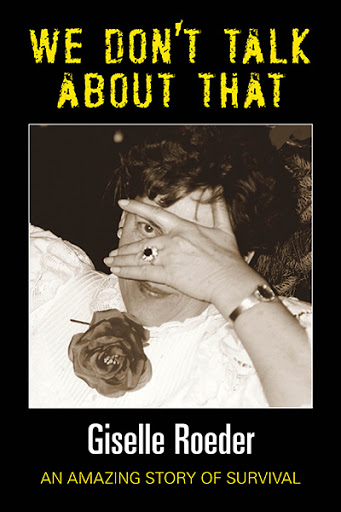
 “We Don’t Talk About That”
This is the book I am re-reading now. It came out in April 2014, I have read it before, but I am surprised how it “gripped” me again. Another one of those books “hard to put down.” I am so sorry not to have more time to read. But I have to write. My readers are constantly reminding me and asking “when is the sequel coming out? Are you writing it? How far into it are you?”
I have given you a number of fantastic books to consider reading. None of them will disappoint you. So, – find a cozy corner and READ books – books – books. Live in a different world for a while, a different time zone, on a different continent or even a different dimension. Enjoy!










 Giselle Roeder