Upcoming Special Event

I am proud to be included in this event at the West Vancouver Memorial Library

West Van Library logo


For immediate release
In My Own Words to chronicle four memorable memoirs at Memorial Library
Thursday, June 11, 2015, West Vancouver, B.C. – One grew up off the grid in the wilds of BC. Another helped a woman with Down’s syndrome write her Cinderella story. One spent her formative years in East Germany during the Second World War. Another wrote lovely letters to his children about his experiences as a father and lawyer. Join us for these and other stories at 7 p.m. on Wednesday, June 24 at In My Own Words, a memoir panel featuring four eclectic and fascinating local writers, moderated by celebrated author E.R. Brown.
“We’re always excited to celebrate literary talent,” says Information Services Department Head Pat Cumming. “For this panel, we gathered an entertaining range of personalities, adventures and stories. Having the always enigmatic E.R. Brown on hand to moderate the panel is the icing on the cake. It’s going to be a great night.”
– In North of Normal, Cea Sunrise Person recounts the story of her wilderness childhood, her unusual family and how she survived both.
– David Roberts wrote Letters to His Children from an Uncommon Attorney after his daughter convinced him to write his stories down “before he dies.” The result is this at times humorous, at others harrowing, memoir of a father, husband and attorney.
– Writing with Grace, by Judy MacFarlane, explores the challenges and perseverance of an aspiring writer with Down’s syndrome as she tries to fulfill her dream of writing a book.
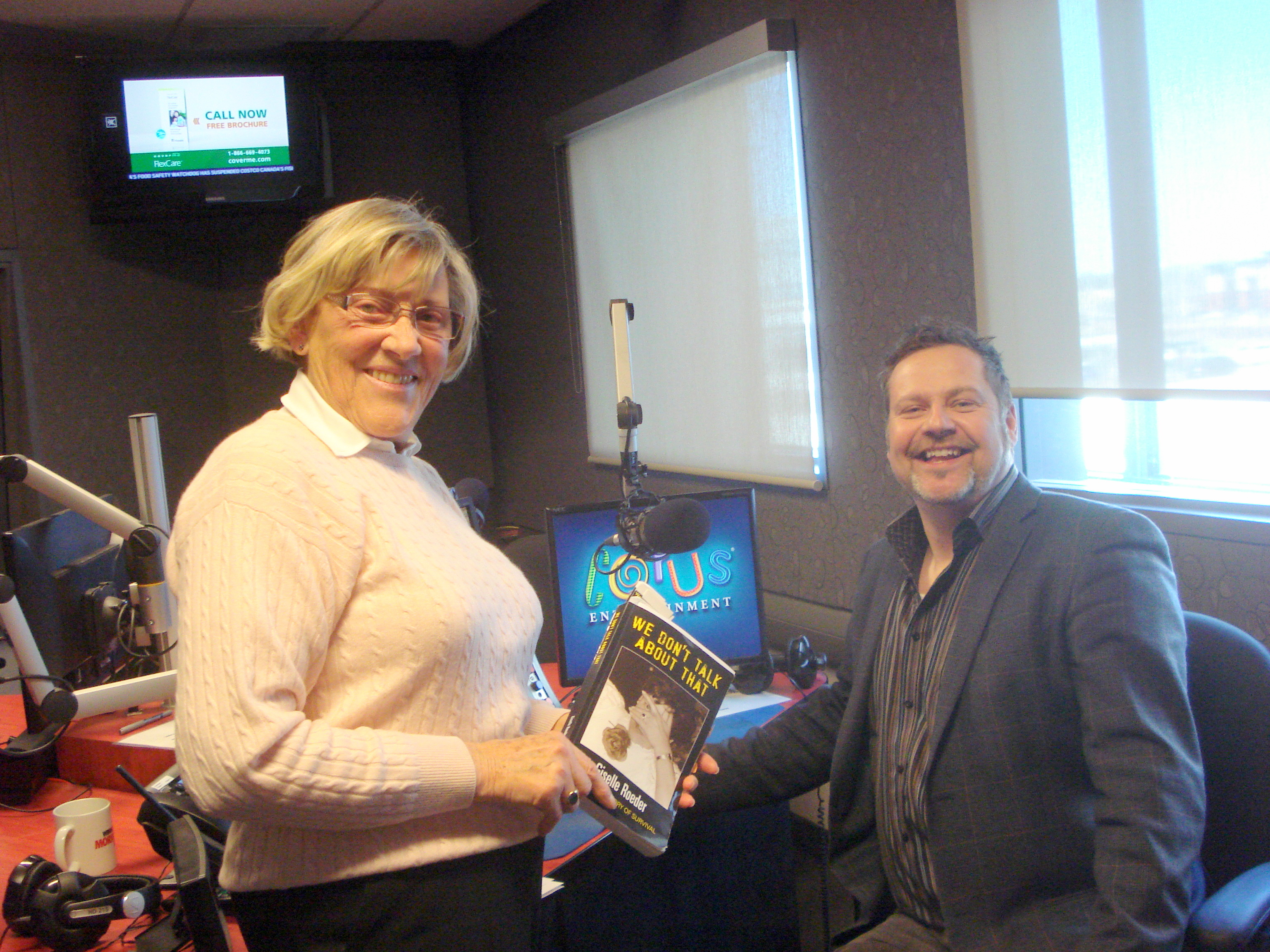
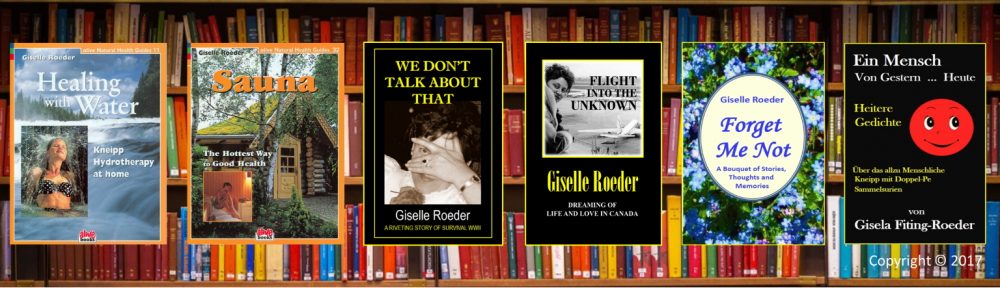
– In We don’t Talk About That, Giselle Roeder tells the often hushed story of growing up in Second World War Pomerania and her post-War move to East Germany.
– Moderator E.R. Brown is the author of the Edgar-nominated Novel Almost Criminal.
All of the authors participating in the panel are available ahead of time for interviews and photos. Please contact David Carson at the phone number or email address below to make arrangements.
More information about the Memoir Panel is available on our website.
-30-
Media Contact David Carson, Communications and Event Coordinator 604.925.7407 dcarson@westvanlibrary.ca

Learning to Kayak #Kayaking #EastGermany

Getting that balance right

Getting that balance right

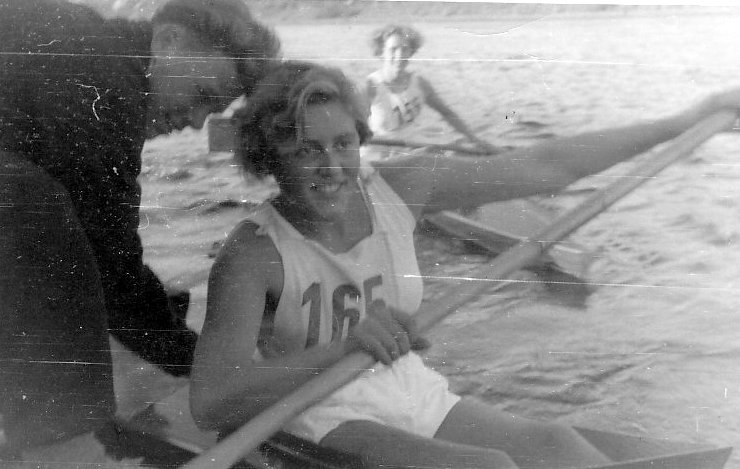
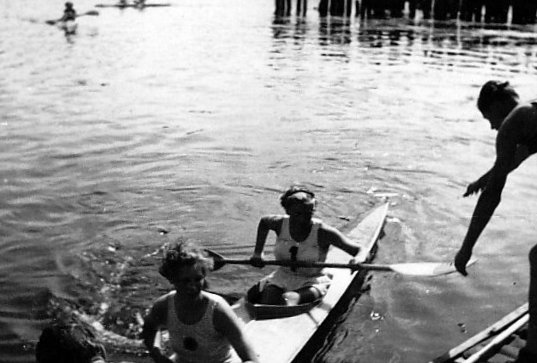
It was probably the best thing that could have happened to me: Afred, a young man in charge of the kayak racing team, came to my office to get the permission stamps for the team to go to a regatta taking place in a different city. As I asked him questions he invited me to come to a training session and see if I would like to join the club. Well, I said ‘yes’ right away and his girlfriend Christa showed me how to get in and out of a kayak. Balancing wasn’t easy as I was trying to sit in that narrow nut shell. When I mastered it without tipping over I was in love, – in love with the novelty of it and in love with the water. Christa also let me try out the KII. I became obsessed with kayaking, I was determined to be in the top group and secretly even promised myself to become better than all the other girls. And, you know what?

image1It was only a year later that I won the District Championships in the KI over 500 and over 3.000 meters. Mind you, after the 3.000 meter race I fell out of the kayak as soon as I crossed the finishing line. Christa, my trainer and also my KII partner was disappointed because up to now she had won all the races. But we won the 500 and the 3000 meters in the KII, it made up for it.

image3We became very close friends. Even now, more than sixty years later we are still close but mostly in telephone contact since we live on different continents. She saved nearly forty five years of the letters I wrote to her from Canada after my emigration. She gave them to me last time I saw her. To read them again was quite a revelation for me. In my memoir “We Don’t Talk About That” you’ll enjoy reading about my kayaking and the great love I had for my own paddle boat “Max”. The best years within my first 30 years I cover in that book have to do with the water, my boat and my desolation in leaving it behind when I had to escape from East to West Germany. As it happened, my racing abilities helped me to find a job in West Germany. I am sad to say that I never reached the top groups again. I just had to work too many hours and did not have as much time for the necessary training.

image2You might find it interesting that in East Germany every sport was very highly promoted and financially supported, it hardly cost anything for either memberships or competitions,– but in West Germany you were on your own. And as I made very little money I could not really afford to participate anymore either. When I was 5th once at a competition I dropped out. I thought it was better if people remembered me and said “oh, she was good” rather than “yaaah, she got too old and had to drop out”!


start 'em early

Start ’em early!

Did you know they now have real racing kayaks for kiddies? And train them very early? Just like Austrian kids start to ski as soon as they can walk, at the Baltic Sea where I lived the kids can start at two or three years old getting into a kayak. Amazing! Start to train early for future Olympics? Yes, the children are our future in more ways than one. Kayaking is healthy, you breath fresh air, develop muscles but mainly around the upper body. So training included running, all-body exercises and during the winters we went to gymnastics and played competitive table tennis. One more thing: The comradery. I give it ten points out of ten. It’s wonderful and becomes a big part of your life. I just LOVED it.


Two Interviews #BookPromotion #SkinCare

I want to thank Tracy Koga and Shaw TV in Winnipeg for sharing two interviews made during my recent book promotion in Winnipeg. They appear on my YouTube page but you can also see them here:

Interview 1First interview about “We Don’t Talk About That”
https://youtu.be/jh_e43m0xyo


and here:

Interview 2


Second interview about Giselle’s Skin Care
https://youtu.be/7vk9s6VLyE4

Interview with Fiona McVie #BookInterview

Fiona McvieI was recently interviewed (on-line) by Fiona Mcvie who posts her interviews with authors on her web site. She lives in Scotland and likes to learn more about the authors of books she has read. She poses some interesting questions. Thank you, Fiona, for this great opportunity to describe how my book “We Don’t Talk About That” came to be written.

You can find the full interview here.

This Happens When You Talk About It! #Winnipeg #BestSeller

I was on a book promotion in the prairie city of Winnipeg which owns the reputation of being one of the coldest cities in Canada. Can you believe it was 15°C above on March 13th when I arrived, 18°C two days later and reasonably warm during the whole week I was in “Friendly Manitoba”. No snow in sight but lots of sand used to sprinkle the slippery streets earlier and now the wind blew it around. Everything was muddy and grey and holy. Sorry, I mean to say “pot-hole-y”! The day after I left it snowed again. The snow makes everything look so clean. It makes a beautiful cover-up – at least for a while.

One thing the Winnipeggers still do is read a lot of books: real books, not e-books. Many told me “I like to feel a book, look at a book, leaf through it, put it down and pick it up again. I like to have it on my book shelf or on my night table.” I hardly ever saw one person walking out of one of the three enormous book stores where I was autographing my book with fewer than two, three or more books. The stores where open ‘til 10.00 PM and people walked in as late as two minutes to ten and shopped. Does the climate have something to do with this? Do the prairie people still know how to relax at home with a glass of wine and a good book? You tell me!

I was interviewed on CJOB Radio and had a lively conversation with the charming host, Greg Mackling. An hour long TV interview was taped by the Shaw crew of “go! Winnipeg” and it will soon be available on YouTube. Book readings, autographing and lots of discussions about my memoir “We Don’t Talk About That”, the story of ordinary German families before, during and after WWII filled my time. The members of a Rotary Club where I was the luncheon speaker were very attentive and another Rotary Club wanted me at their meeting as well, but my time was already totally booked.

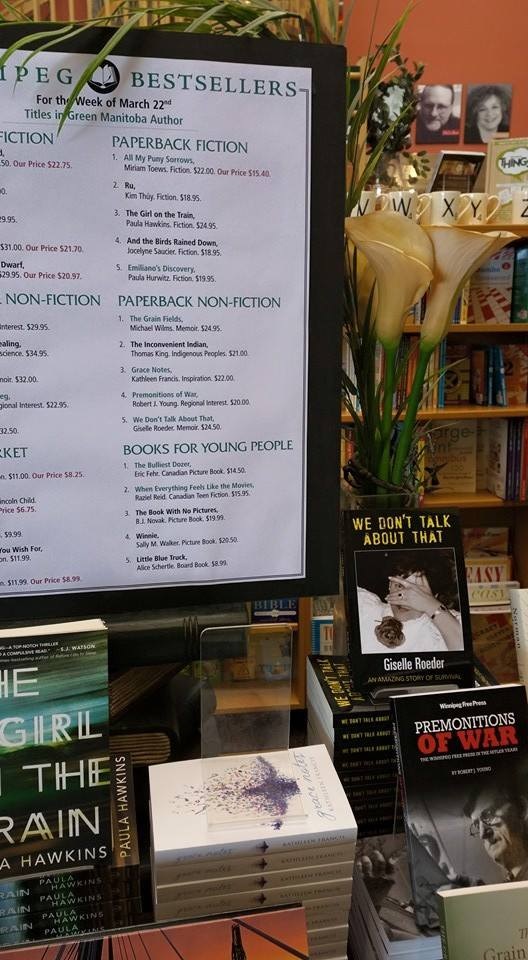
Best sellerWhen I came home I had lost my voice. But I had lots of fun. In one of the biggest and architecturally most beautiful and largest book stores, McNally Robinson’s my book became a “Bestseller” and I hope it will remain so and be displayed on the bestseller table for a while longer. In both the very large Chapter Book stores, people were already waiting for me despite the fact that I always come half an hour earlier than expected. And they stuck around, wanting to catch every word of every discussion I had with one of them. Amazing! For seventy years I “Didn’t talk about it” and now I can hardly “shut up” with people around me.

Everybody wanted to know more. Did I open a can of worms? Is it based on real interest or is it rather the sensation “Thank God it didn’t happen to me”? After reading my book they write to me. “It reads like a Spielberg movie” said one. Another said “I look at my eleven year old granddaughter and just shiver to think…what, if, when, how can I protect her?” Still another sent me an e-mail “Are you alright? I just need to know…”

And dozens of readers of “We Don’t Talk About That” are telling me their own or their parents’ or grandparents’ stories of their life during WWII – how little they were told and now they can relate and want to hear more. “I wasn’t interested when I was younger and THEY wanted to talk about it, and now they are gone and I have nobody to ask anymore. Your book is a huge eye opener. While reading it I was with you every step of the way.” Still another says “When they talk about the probability of WWIII on the News I switch the TV off. I don’t want to hear or think about it.”

The last comment came from one of those Europeans who had experienced ‘close encounters’. To stick one’s head in the sand like an ostrich will not help to avoid or protect any one. It’s like the few of the leading Germans who knew how futile World War II was likely to be, knew what was happening all around them and still did not believe it. To save their life they did not talk about it. One of their mottos was something like “I know it’s better not to know what I think I know or might not even know.” I found this phrase in one of Lyn Alexander’s books “The Schellendorf Series,” – four books spanning the time from before WWI to the Nueremberg Trials after WWII. For us today it is not healthy to be ignorant or pretend not to know.

A WWIII with sophisticated weaponry will not be happening in just certain areas of the globe, – all continents will be affected. Don’t say “what can we do about it?” – think! You have voting power; but I’m with you. I also think that we, the ordinary people, will be caught in the middle as always, will not be able to stop the politicians if they put their minds to it. After all, we don’t go around shooting the people whom we don’t like or with whom we do not agree. Like the Texan in the bar pointing to three others and saying “I don’t like that guy.” When asked “which one” he shot two and said “See the one sitting there? That’s the one I don’t like”. Sorry. Just a joke I heard. Life isn’t like that.


The Amazing All Grey City #Winnipeg #Prairie #Potholes #Bookstores

DSC06738

CJOB Radio interview with Greg Mackling

Once upon a time I lived in a green flower filled city alongside the sometimes peaceful, sometimes wild Pacific Ocean, deep blue with white crested, crowned waves. I was a woman living and drinking in this beauty wishing to have talent to paint until the day my mate tells me about an exciting opportunity for him to move to a city in the Canadian Prairie. He talked about Winnipeg, a city known as the Canadian Siberia with nine months of winter and the coldest corner in the whole wide world, Portage and Main and three months of hot summers with lots of mosquitos. But, – Winnipeg was also known for its “dry” cold and always blue sunny skies. Supposedly this climate was much healthier than the “wet” rainy coast and the propensity for getting rheumatism and arthritis. You can dress for the “dry” cold but the “wet” cold gets right under your skin.

We were told Winnipeg is a good place to bring up your family within the beautiful residential areas; it had large lakes for summer fun only about ninety miles away. Winnipeg was the birth place of “Winnie-the-Pooh”, the real little bear who became a mascot for the Canadian Army stationed in England before and during WWI, living out his life in the London Zoo. Millions of children still love A.A. Milne’s story about Pooh and name their teddy bears after him. Now his statue greets you at the entrance to the Winnipeg Zoo. This Prairie city of about 270.000 at that time offered lots of cultural and social life, clubs, theatre, concerts and the world renowned Winnipeg Ballet, on a par with the Moscow and the French Ballet troupes. One-hundred-and-four different ethnic groups were living peacefully together with lots of their typical eating places, loved and visited by all. Eat in a different part of the world every day! But the best: Winnipeg was well known for its friendly people! Every vehicle licence plate tells you: “Friendly Manitoba”, the Canadian province where it is located.

DSC06740

McNally Robinson Booksellers

Life has a way of interrupting your life; channel it into a different direction. I lived there for twenty years, became a corporate citizen, an employer, a Community Television Producer before the winds of change blew me back to my green country at the Pacific Ocean. No, I could not paint paintings but I could paint pictures with words. So I became a writer.

My recently published book “We Don’t Talk About That” is a memoir about my first thirty years of life. I tell the story of my first ten years during the Nazi period, the next ten years under Communist rule, and the next ten years, after my escape before the infamous Berlin Wall, trying to re-configure my life and hurt from being considered a second class citizen in the “Golden West” which was not so golden after all.

Chapters St Vital

Chapters, St Vital

This book brought me back to Winnipeg recently for a week long book promotion in March with a book launch and book signings in three big book stores: McNally Robinson, the largest bookstore I have ever seen, Chapters St. Vital with surely the friendliest staff and Chapters Polo Park in probably one of the most beautiful book store buildings. Winnipeggers still read and love the real thing: Books, physical books. Many mentioned that they don’t like eBooks. My book reading at a Rotary Club was well received and a CJOB radio interview with Greg Mackling reminded the listeners about my history within their fair city and many old friends, former customers and even former employees came to see me, say Hi and buy my book. And the Shaw TV’s Community Channel taped an hour long interview about my book and my history in Winnipeg when my first name was a household word.

Chapters Polo Park

At Chapters, Polo Park

Let me tell you what startled me most after arrival and the drive from the airport to the midtown hotel: Winnipeggers were driving only grey cars. All the busses were grey as well. One cornflower blue VW Beetle stood out as the only color spot as far as I could see down the road trying to avoid one pothole after another. You could not read any licence plates as they were covered with a thick grey coating. It dawned on me that nobody washed their car during the winter to avoid having their door locks frozen. I remembered! It was thirty-four years since I was living here! I learned that the winters are not Siberian anymore and climate change is taking its toll. That the previous week they still had 24 below Celsius but now for several days double digit degrees up to 18 above Celsius, the snow gone but the sand, used to sprinkle over the ice was coloring everything: Cars and buildings and roads and if you didn’t wear glasses, it got into your eyes, it covered your hair and it was impossible to keep your shoes clean longer than from the house door to your car.

My grandson Jack, born and raised in Winterpeg as the Winnipeggers lovingly call it, told me: At the entrance highway from the west used to have a sign:

Welcome to Winnipeg. I live here – what’s your excuse?

 For my stories from those first 30 years in Germany please read my book “We Don’t Talk About That” available from all major bookstores as well as on-line.

Radio Interview #TheBeach

Another day – another interview!

The Beach logoI am looking forward to meeting David Graham on the airwaves of CIBH The Beach Radio 88.5 FM at 8:45 a.m. on Tuesday, March 31st.

Book Launch – #Winnipeg

Book Promotion in Winnipeg for “We Don’t Talk About That”

March 13. to March 20, 2015

will find me negotiating the frozen, hopefully not too snowy streets, in my old hometown, Winnipeg, Manitoba.

McNallyBook reading/signing – McNally Robinson, March 15th from 2:00 p.m.

I look forward to meeting a number of you when I visit the McNally Bookstore on Sunday, March 15th to read selections from my book and sign copies. – http://www.mcnallyrobinson.com/event-14067/Giselle-Roeder—-Book-Launch/#.VOyrCi4eorg

CJOB Radio, Dahlia Kurtz will interview me on March 16th from 2.00 to 3.00

Dahlia Kurts is scheduled to interview me on her afternoon radio program “The Show With No Name” on CJOB Radio 680 AM

Dahlia KurtzShe will remind you that I was the founder of ‘Giselle’s Professional Skin Care’ years ago and also the host of the Cable TV Show “Giselle’s for Skin & Health’ which run for 9 ½ years! CJOB was also the station where I was interviewed after my “Health Books” were published.

 Chapters Polo Festival in Polo Park – hosting the book launch/signing March 19th 6-9 PM

Cahpters logo“We Don’t Talk About That” has made quite a splash internationally and dozens of readers have told me “I couldn’t put it down.”. I would like to see many of you come and help Chapters and me make this event festive and exciting.


Do you belong to a group who might need a speaker for a meeting during the above mentioned dates? Any other bright ideas to make my week in Winnipeg successful? Please contact me by e-mail: giselleroeder@hotmail.com  I appreciate your input.

Updates to this announcement will be posted here. Please click on “Follow” to receive updates by email.

Winnipeg

Winnipeg – Photo Credit: AJ Batac via Compfight cc

“Blue Hawaiian”…the Hula dance and Aloha #Hawaii

Pot of Gold?

Pot of gold?

Is there anybody out there who has NOT dreamed about at least once going to Hawaii? The TV series “Hawaii 5-0” and many movies filmed on these beautiful islands with some of the highest mountains in the world (measured from the ocean bottom), the many waterfalls and, for the history buff, the books about Captain Cook and Pearl Harbour have inspired generations, and they still do. Some of the most beautiful beaches in the world, the highest waves attracting world class surfers, the infamous ‘Road to Hana’, the drive up to Haleakala to see the most incredible sunrise and the rare silver thistle growing up there in the cold, the active volcano Kilauea, the pineapple fields, the romantic music and the Hula dancers telling stories with their movements and hands attract thousands of visitors year round.

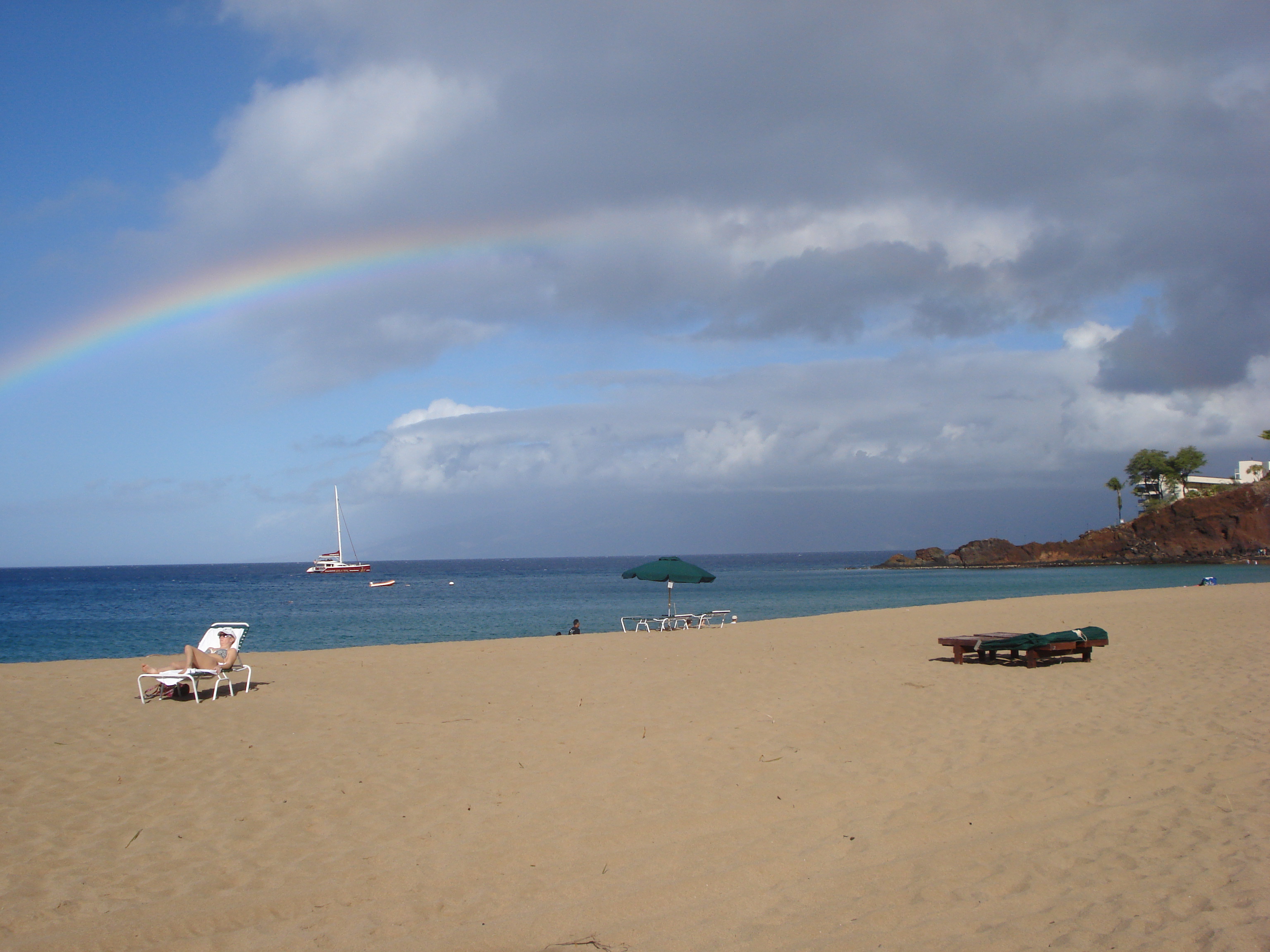
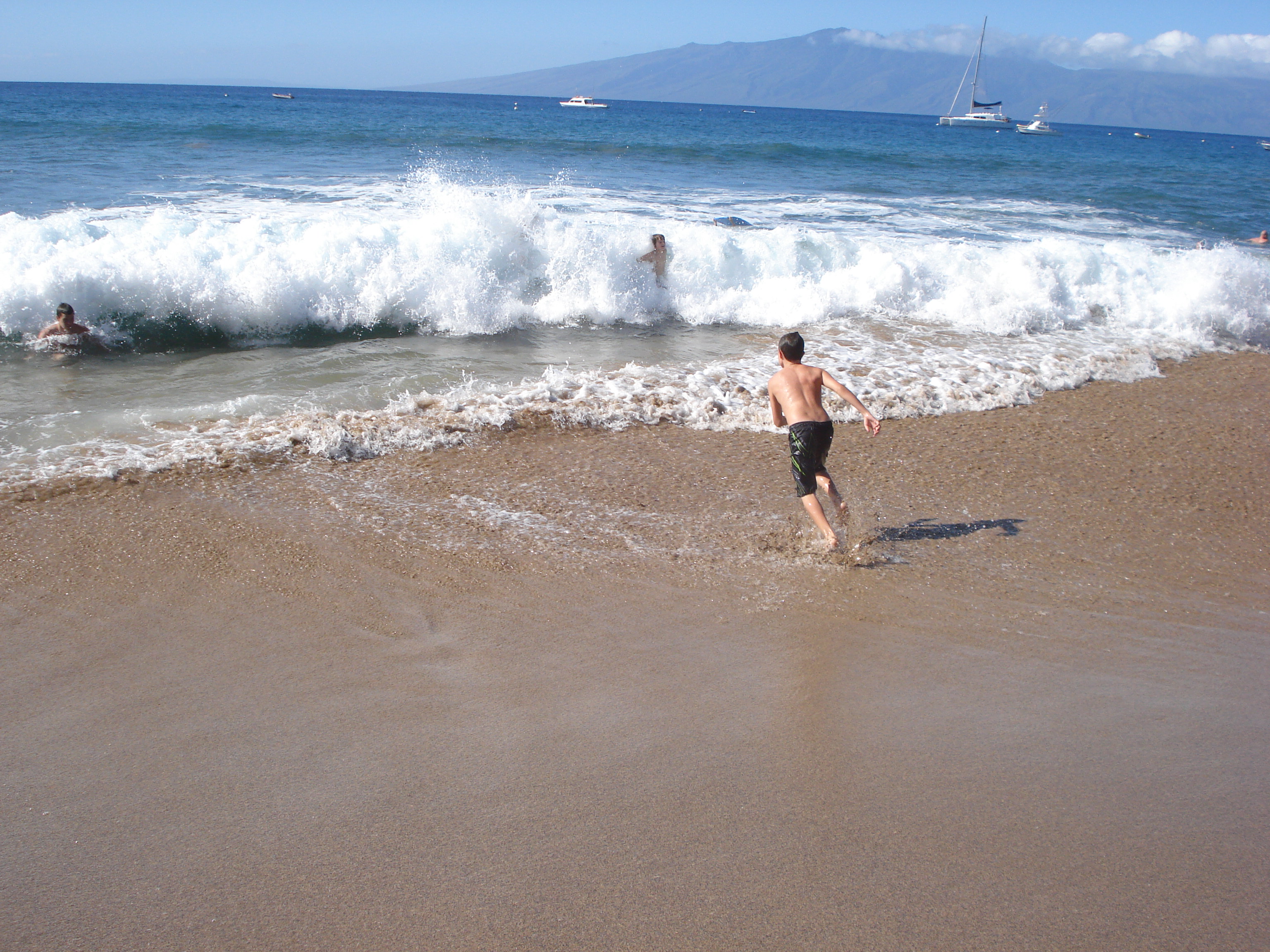
DSC04016

Catch the wave

I just came back from a two-week holiday on Maui. After probably fifteen visits to the different Hawaiian Islands Maui has become a favourite and the Ka’anapali Beach Hotel our ‘home away from home.’ Why this hotel? Because the KBH is the most Hawaiian of all the Hawaiian hotels, employing Hawaiians with a team spirit that lets the visitor wonder who is actually in charge. You never notice it. The word ‘Aloha’ means many things: Love, compassion, affection, good wishes, hello, good bye and many more. The hugs you receive when coming back show you that you are part of the ‘Ohana’, – the Hawaiian family. At the end of your first holiday you receive a dark kukui nut lei (necklace), and each time you come back a pale beige kukui nut replaces a black one. Just count the beige nuts, add one year and you know how often a guest has been there. Since the employees wear these leis as well you wonder why so many have only light nuts around their neck. Those who do have been working there for 25 years and longer, no room anymore for black nuts…and everyone greets you with a big smile and ‘Aloha’, is happy and incredibly helpful. They truly make you welcome and feel like family.

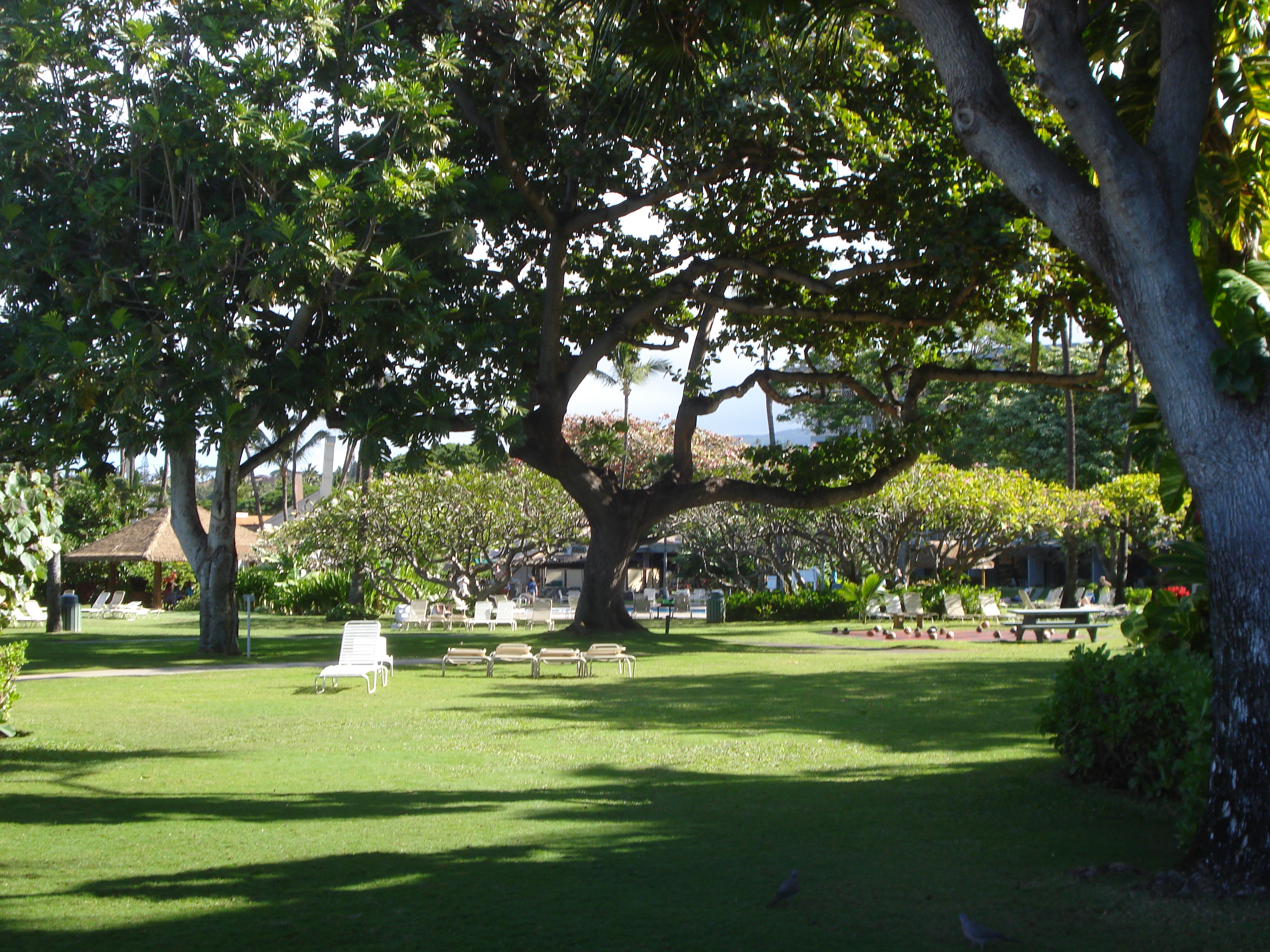
Ka'anapali Grounds

Extensive grounds

The best thing about KBH along the famous Ka’anapali Beach with well-known hotels like the Westin, Hyatt, Sheraton, Marriott and many others is the very large green space with old trees, the privacy and choice you have to tan in the sun or rest in shade, unlike the other hotels where beach chairs are lined up side by side with no room to move. Free daily activities like pineapple cutting demonstrations, sand images, Hawaiian language instruction, cultural garden walks, lei making from flowers or leaves, leaf weaving, kiddies programs, ukulele lessons, singing, storytelling and last, but not least, hula dancing, which, next to the language lessons, is my favourite. Did you know that the Hawaiian language only has five vowels and 7 consonants in their alphabet? That’s why many words seem to be doubled up: “Humu humu nuku nuku apua’a” That’s the name of the Hawaiian Statefish! Naturally the grounds face onto the beach and the approximately two km long beach walk is the delight of all morning joggers and remains busy all day. If you see a group of people staring out to sea you know they are watching the whales playing, jumping, blowing and waving their tail greetings.

I needed a holiday. I was stressed out after my book “We Don’t Talk About That” came out in April 2014 and kept me very busy with lectures, book signings, book readings and mail from all over the world demanding or asking me for a second book, the continuation after a rather “abrupt” ending of my WWII memoir. Do you know what happened the second day?

Young Hula dancers

Children’s hula

You guessed it. A beautiful Hawaiian lady approached me asking if it would be possible to get together with several of her friends and her husband who had read my book and had questions…Another of my Hawaiian friends waited to have her book signed by me only to be asked by a guest from Minnesota who overheard our conversation to loan it to her to read on her trip home. With her ‘Aloha’ compassion she could not say “no”. She was promised that it would be sent back – I hope she receives it soon!

“Aloha”, my friends!

“We Don;t Talk About That” can be ordered from Amazon, Barnes & Noble, Chapters, Coles, iTunes, Kobo, FriesenPress

Dutch Clogs and a Nazi Flag Dress

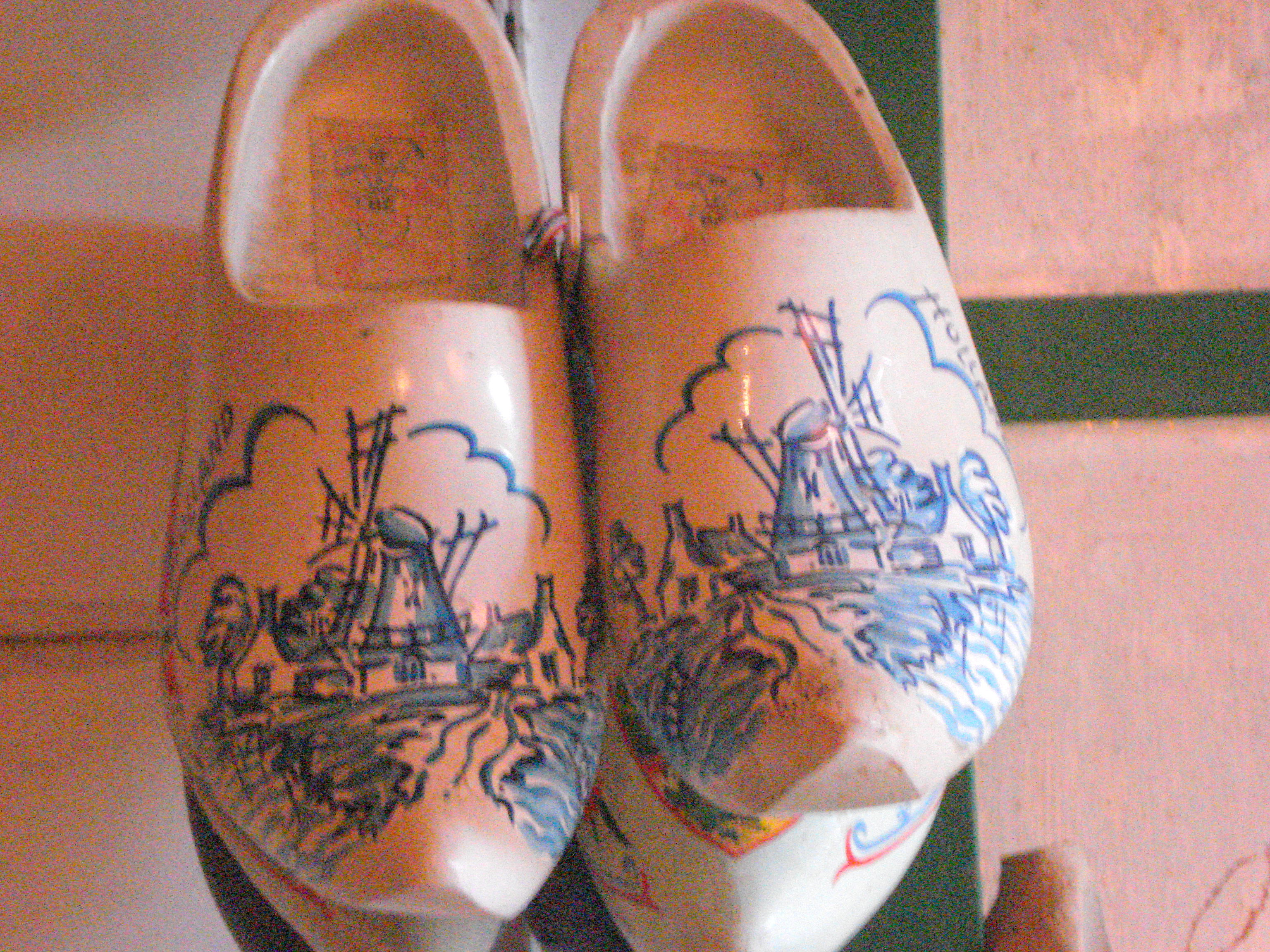
Several years after WWII ended life ever so slowly had returned back to a bit more normal and I had become a teenager. We lived in the eastern sector of Germany, a country without shops of any kind. I had outgrown the clothing my mother had made from rags and “one dress out of two”. Would it ever have been nice if jeans had been invented already because then all the kids would have looked more alike and there would not have been so much heartbreak with the teasing and bullying for the weird clothing I and my sisters had to wear to school. I will never forget the three winters I had to wear an old torn black form-fitted ladies coat with green patches and a huge big bust typical Dutch designline, stuffed with horse hair. I was only eleven, starved and thin as a stick. There was no choice: I was lucky to have found the coat under a bush where someone had discarded it. At least I had a coat at all during the winters 1945, 1946 and 1947. Uncle Fritz did a deal by exchanging fish for some Dutch clogs and those wooden shoes kept my feet very warm. But imagine the picture:

A small, starved thin eleven year old kid with a big busted fitted ladies coat and Dutch clogs! I wish I had a photograph! Today I can smile or laugh about it but back then it caused me many tears and I refused to go to high school when the time came. I had nothing to wear. The teasing was already bad enough in the small village where we lived, – but going to a city school? I’d have died…

Giselle

Modelling my “Nazi flag” dress

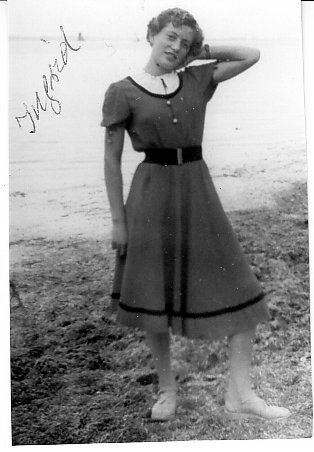
I got a chance to learn to sew but I had to bring my own material. You couldn’t buy anything, but a kind neighbor gave me a big Nazi flag she had found in an old trunk in her basement or attic. Her family and mine would have been arrested if anybody would ever have found out about it. To own a Nazi flag was forbidden after WWII. I undid all the seams, took the white center and the black stitched on swastika apart and my seamstress teacher helped me to design a pretty kind of ‘country dress”. The body of the dress was fashioned out of the red material with a wide swinging skirt, a white insert around the neck and small strips out of the swastika around the skirt and the insert and a black belt. It wasn’t quite Bavarian style, but very similar. I was proud and wore that dress happily. When I grew out of it my third sister Ingrid wore it. Well, – look at the pictures taken a few years down the road with my first camera, a very simple box camera. To find out how I got such a treasure

Ingrid modelling her "hand-me-down" dress

Ingrid modelling her “hand-me-down” dress

you’d have to read my book “We Don’t Talk About It”. (Chapter: ‘Berlin – here I come’)

I wish I could share several letters from a lady who picked my book up on impulse at Chapters just a few days ago. She read several hours in her car in the parking lot, “I couldn’t put it down” she writes, – “went to the gym, read while doing a workout on the bike, drove home, read some more, couldn’t sleep, and finished it the next morning”. I know that she really read every word of it because she asks questions about different things she couldn’t have known had she just ‘skimmed’ through it. So, – click on the links to the bookstores and order it now! You will be looking at the present world problems a little differently and have hours of reading to keep those little “grey cells” (as Hercule Poirot says) very stimulated.